Books & Literature
England East
The farewell volume: Jones closes his life's work with a journey from the Thames to the Scottish border, saluting Durham coalminers alongside Northumbrian castles, under an epigraph about ashes and graves (1954).

A Private Archive of Antiques & Historical Objects
Books & Literature
The farewell volume: Jones closes his life's work with a journey from the Thames to the Scottish border, saluting Durham coalminers alongside Northumbrian castles, under an epigraph about ashes and graves (1954).
For the epigraph of his final book, Jones reached three hundred years back to Sir Thomas Browne of Norwich: "Man is a noble animal, splendid in ashes, and pompous in the grave." Browne wrote that during the upheavals of the Civil War; Jones quoted it while watching post-war England demolish its own past in the name of progress. The parallel was entirely deliberate. This is the closing volume of a life's work: an artist in his seventies, finishing the last of three books, telling the reader plainly that with this volume his adventures in books are done.
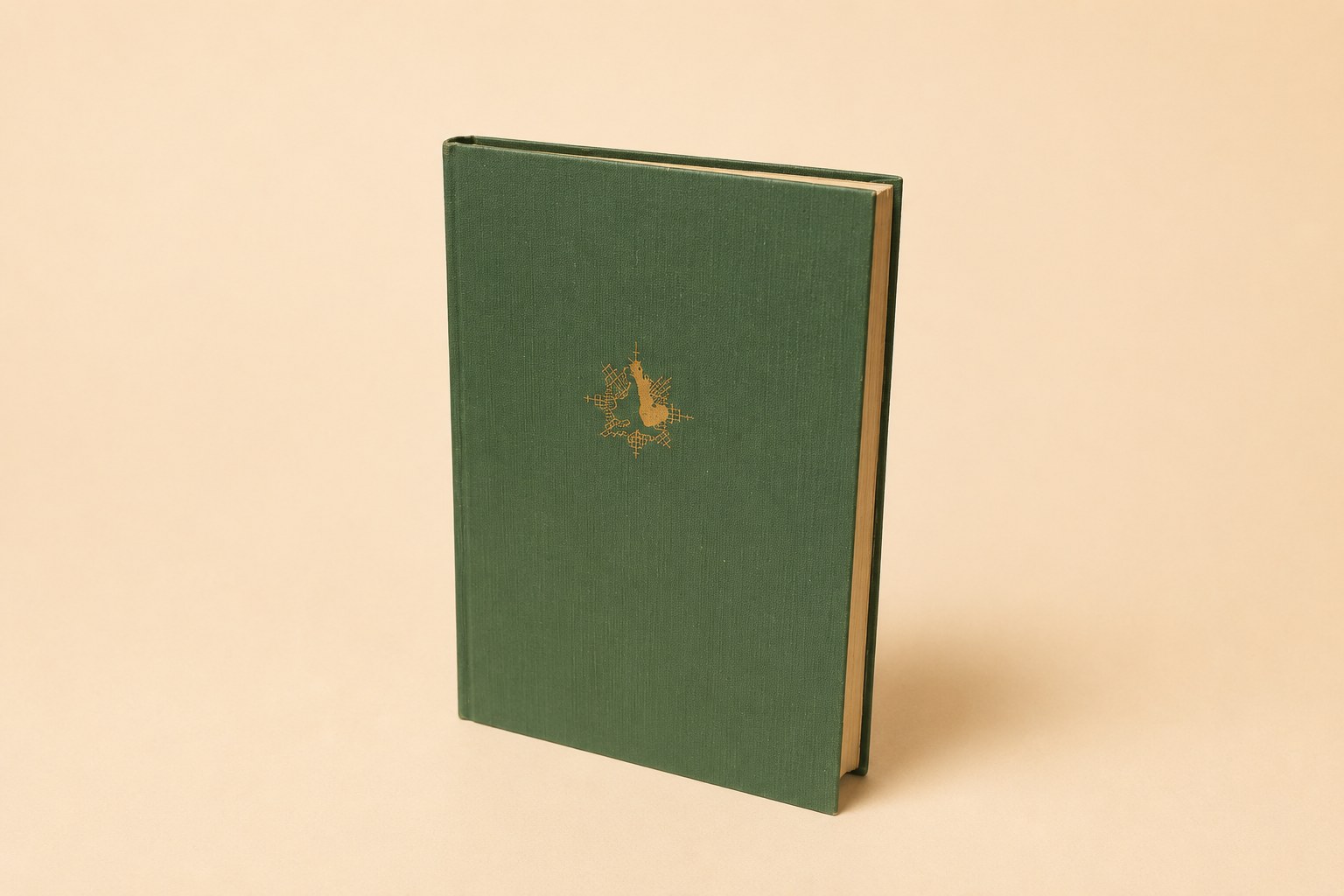
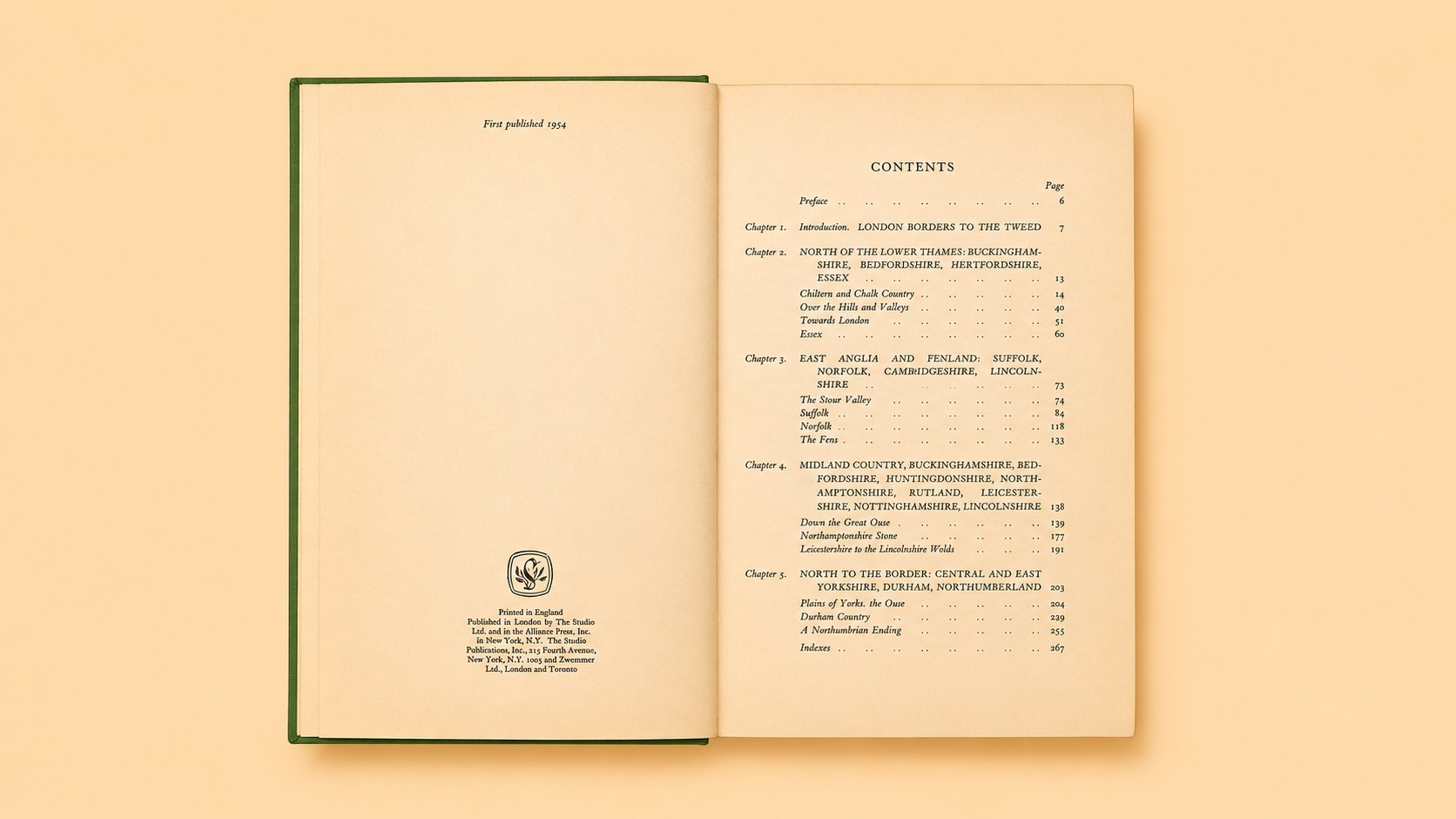
England East is the third and final volume of Sydney R. Jones's illustrated survey of England, published in 1954 by The Studio Publications of London and New York, uniform with its companions: green cloth, gilt lettering, around 272 pages, printed by William Clowes & Sons of London and Beccles, with seven hand-drawn regional maps.
Its territory is everything east of the publisher's imaginary line from the Thames to the Tweed. The journey runs from the home counties north of London through East Anglia and the Fens, across the East Midlands, and up through Yorkshire, Durham, and Northumberland to the Scottish border. Blickling Hall opens the plates; Burghley, Holkham, Castle Howard, Fountains Abbey, Durham Cathedral, and Alnwick Castle follow, but so do Suffolk wool churches, Fenland abbeys, and the colliery landscapes of County Durham. Jones salutes the Durham coalminers in the same breath as the Northumbrian Percys, a quietly radical gesture for a topographical book in 1954.
Sydney Robert Jones (1881–1966), born in Birmingham and trained at the Birmingham School of Art, spent five decades drawing English buildings for The Studio, The Sphere, and a long run of his own books. His drawings are held in the Victoria and Albert Museum and the Art Institute of Chicago. England East was his final major published work: the title page credits England South and England West before it, and the preface announces the close of his publishing life. He died at Wallingford in 1966.
The trilogy's six-year span (1948–1954) tracks England's passage from austerity to the eve of the consumer age, and the parallel race to record the country's fabric before redevelopment reached it. Pevsner's Buildings of England began appearing in 1951; Betjeman was campaigning in verse and prose. Jones's contribution was different in kind: personal where Pevsner was systematic, drawn where the surveys were photographed, literary where the gazetteer was clipped. The two approaches are now used together: the catalogue for the facts, Jones for how it actually felt to stand in front of the building.
This copy is in excellent condition, uniform with its two companions, completing the full trilogy within this collection: the set as Jones and Mercer intended it, increasingly rare to find together.
Completion is the meaning of this volume. Six years, three books, five decades of sketch-books: one of the most sustained acts of topographical documentation in twentieth-century British publishing, finished by a man in his seventies who chose a meditation on mortality as his send-off. The East Anglian chapters (Stour Valley, the Broads, the Fen abbeys) preserve drawn detail that predates most post-war photographic surveys, and the Durham and Northumberland pages refuse the usual pastoral edit, admitting industrial England into the record. Splendid in ashes, indeed: much of what Jones drew is now ash and archive, and this book is the archive.
Provenance
No inscriptions or ownership marks. Title-page credits both earlier volumes, confirming the 1954 setting. Acquired February 2026 with its two companion volumes as a complete trilogy.
England South
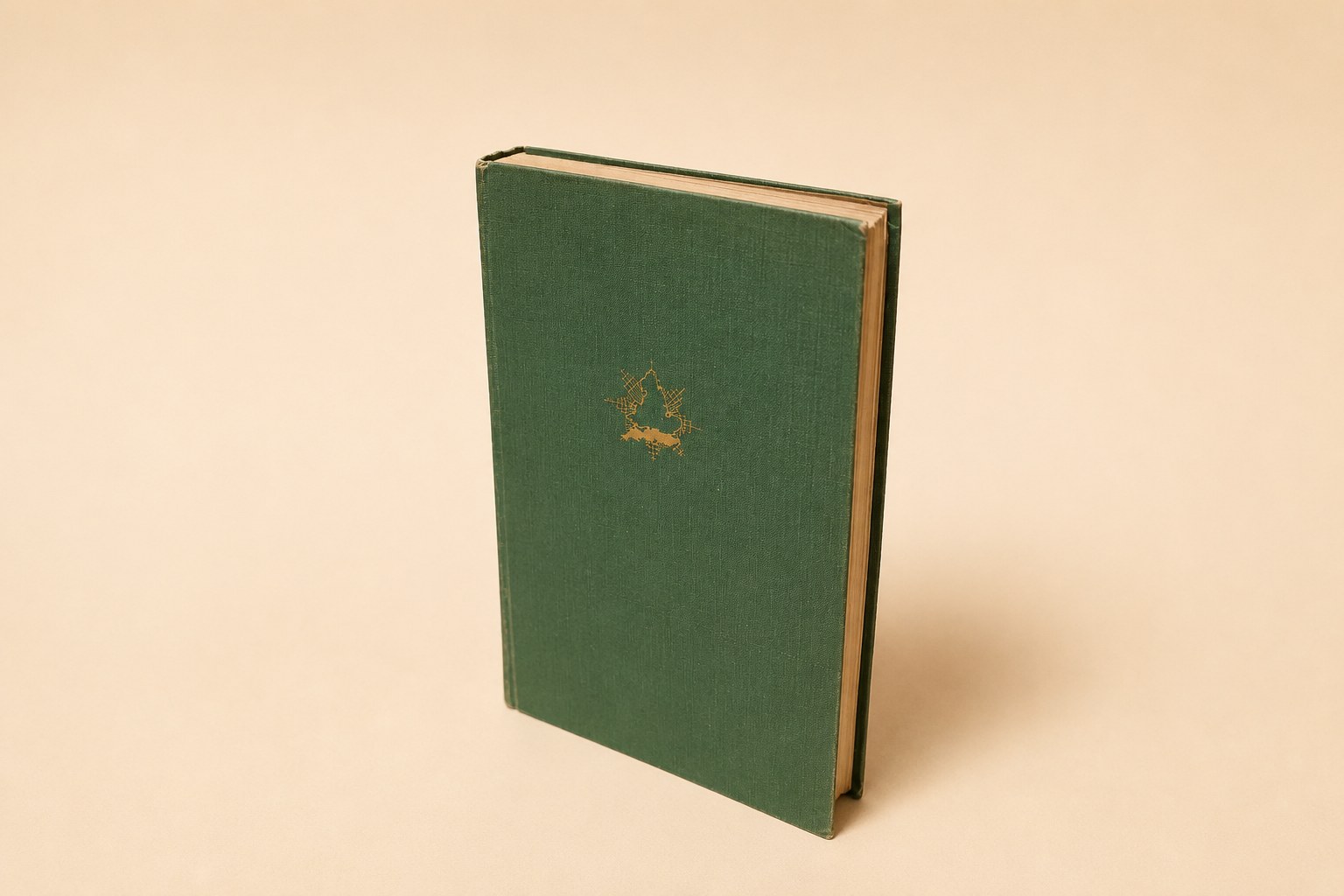
Forty years of sketch-books opened in the year England needed them most: the first volume of Sydney R. Jones's illustrated journey through the southern counties, from London to the very end of Cornwall (1948).
England West
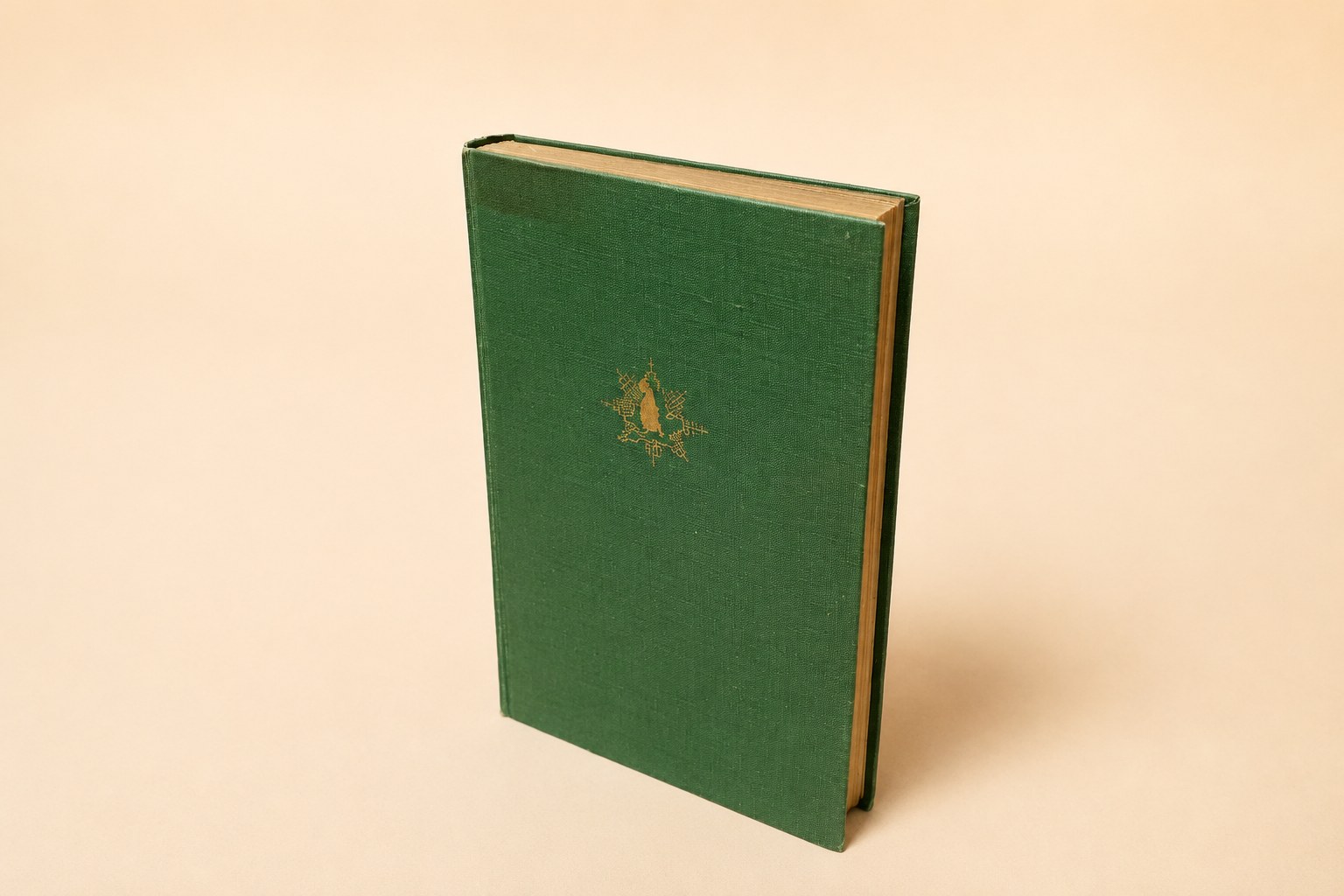
The trilogy's longest journey: Thames to Hadrian's Wall through Cotswold wool churches, Shakespeare country, the Marches, and the industrial North. The richest of the three volumes in architectural range (1950).
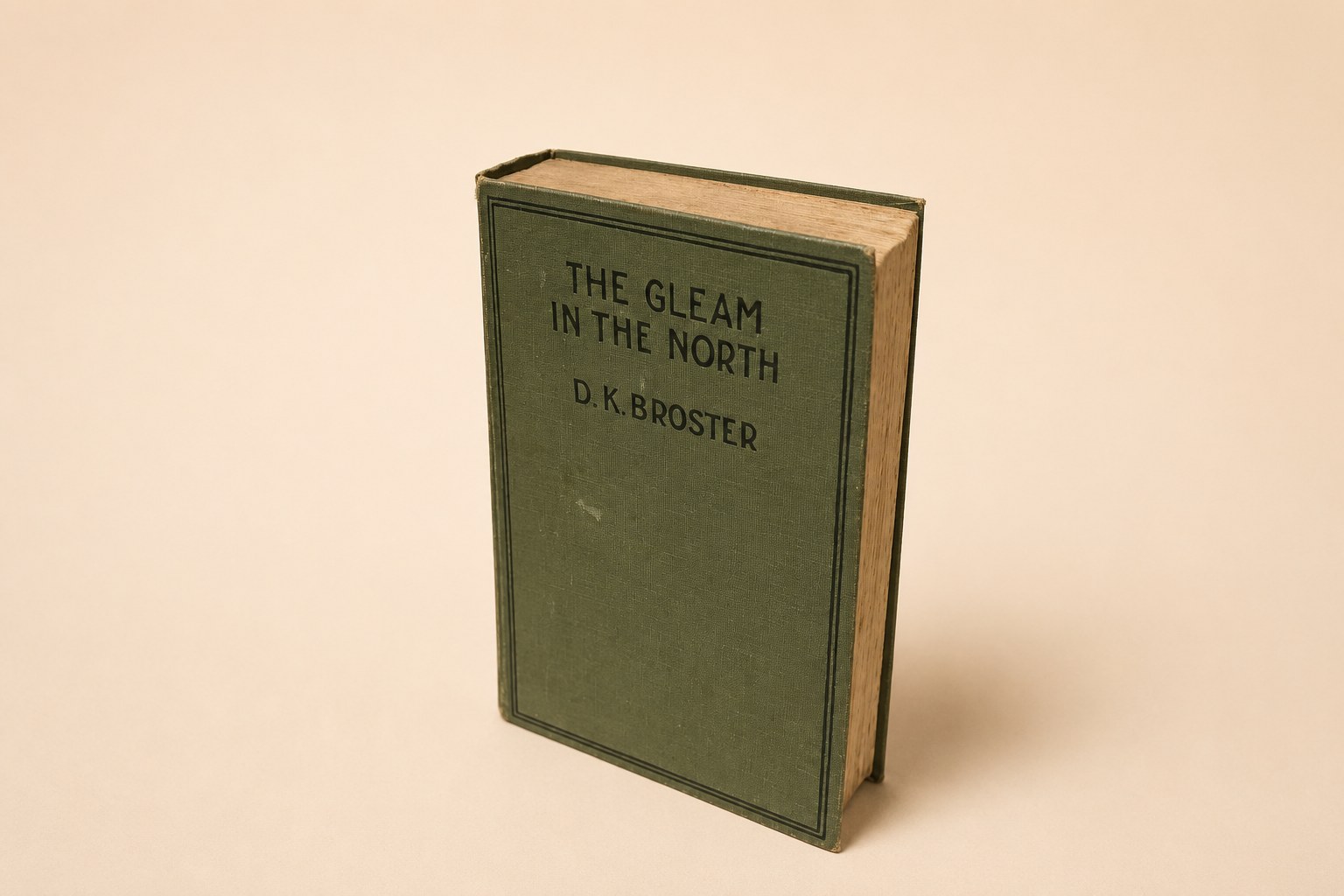
The Gleam in the North
A novel that keeps a promise: its final scenes use the actual last words of Dr Archibald Cameron, the last Jacobite executed for treason. Heinemann, 1930 impression, the trilogy's fifth printing in three years.