Books & Literature
England South
Forty years of sketch-books opened in the year England needed them most: the first volume of Sydney R. Jones's illustrated journey through the southern counties, from London to the very end of Cornwall (1948).

A Private Archive of Antiques & Historical Objects
Books & Literature
Forty years of sketch-books opened in the year England needed them most: the first volume of Sydney R. Jones's illustrated journey through the southern counties, from London to the very end of Cornwall (1948).
In the preface to this book, Sydney R. Jones describes going back through forty years of his own sketch-books as "a body-snatching performance of ransacking one's own sarcophagus." Then he adds, almost in passing, that some of the buildings he drew no longer existed by the time the pages were printed. He was not exaggerating. England in 1948, bombed, broke, and rebuilding, was losing its old fabric at speed, and this book is one artist's forty-year head start on the demolition crews.
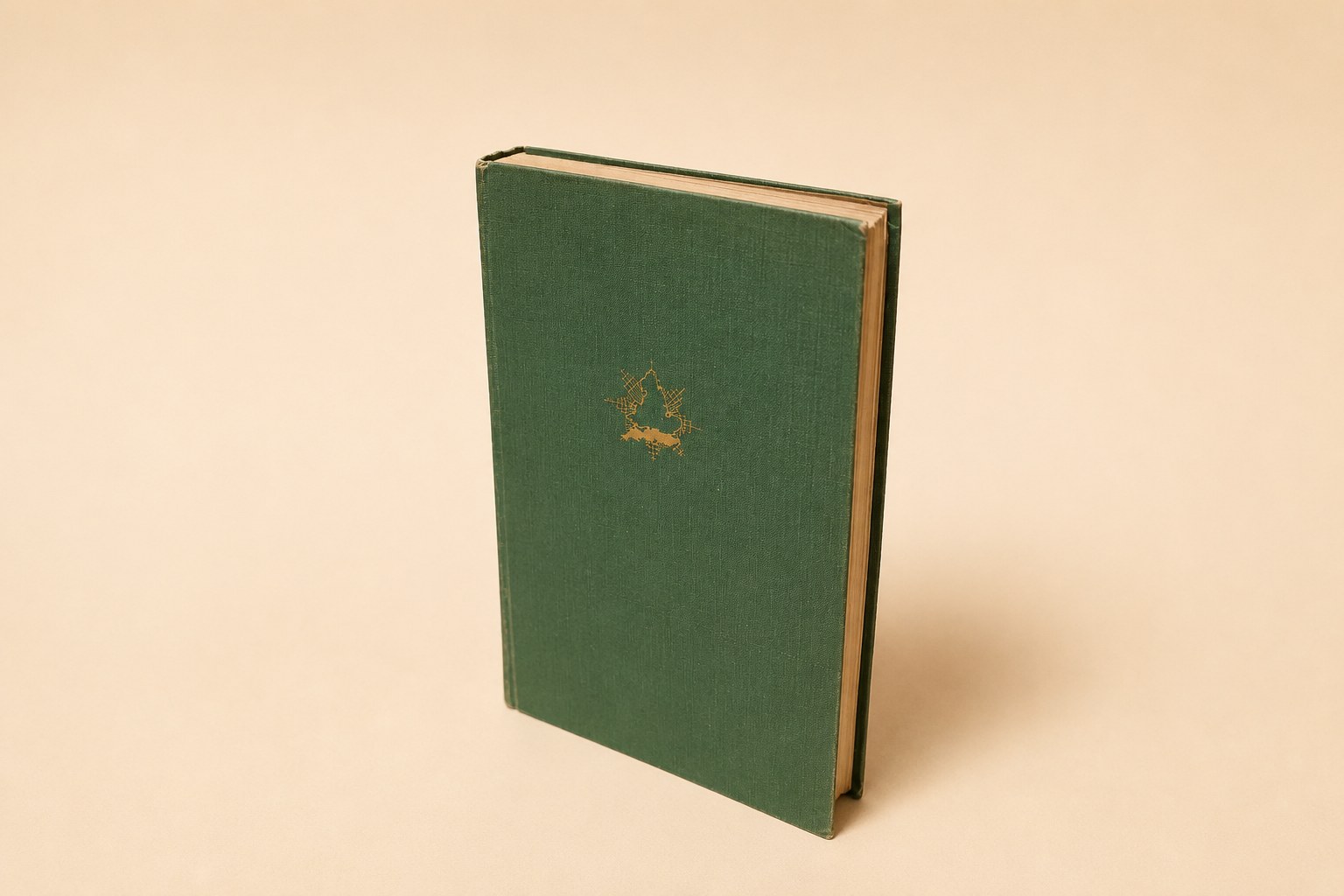
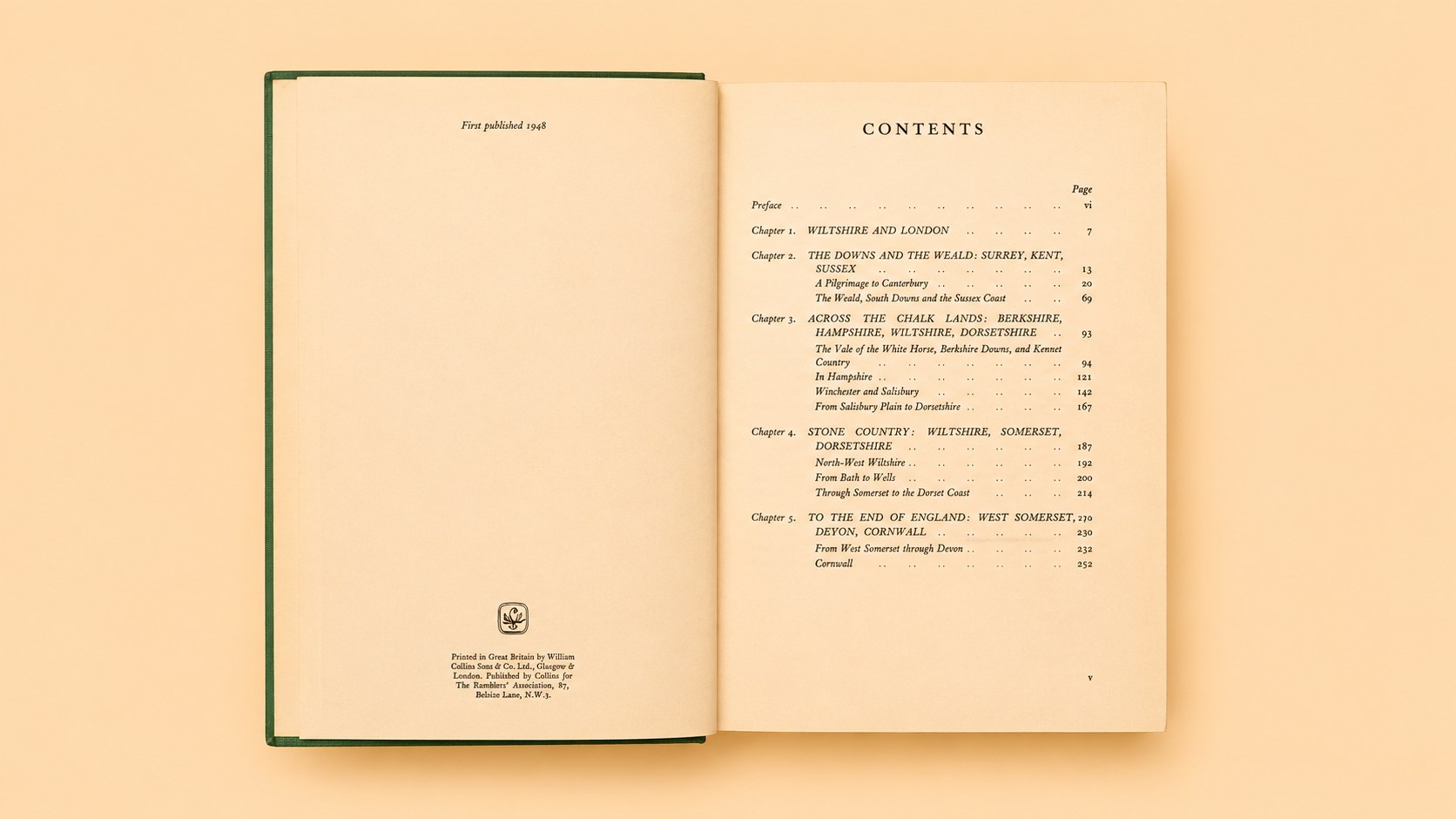
England South is the first volume of Sydney R. Jones's three-part illustrated survey of England, published in 1948 by The Studio Publications of London and New York: a green-cloth hardback, gilt-lettered, around 272 pages, illustrated with the author's pen-and-ink drawings on nearly every opening, printed by William Clowes & Sons of London and Beccles with offset plates by Bradford & Dickens.
Its journey runs south and west in five chapters (Wiltshire and London; The Downs and the Weald; Across the Chalk Lands; Stone Country; and To the End of England), finishing in Cornwall at, as Jones puts it, the very end of England. Along the way the great set-pieces (Canterbury, Salisbury, Wells, Bodiam Castle, Montacute) share the page with tithe barns, market crosses, pilgrim tracks, and Dorset hamlets too small for guidebooks. Jones trained as an architectural draughtsman, and it shows: the drawings are structurally exact but never cold. Four hand-drawn regional maps and a full index complete the volume.
Sydney Robert Jones (1881–1966) was born in Birmingham, studied at the Birmingham School of Art, and built a career as an illustrator and architectural artist, working for The Studio and The Sphere and illustrating a long shelf of books on English buildings: Old English Country Cottages, Village Homes of England, and the wartime morale pieces London Triumphant (1942) and Thames Triumphant (1943), both credited on this title page. His original drawings are held in the Victoria and Albert Museum (strengthened by a bequest through the Art Fund after his death) and in the Art Institute of Chicago. The England trilogy, South (1948), West (1950), and East (1954), was the summing-up of his working life: four decades of field sketches finally marshalled between covers.
The timing is the point. The Blitz had torn holes in every historic city in the south; post-war reconstruction, road-building, and plain neglect were finishing what the bombs began. A generation of writers and artists (John Betjeman, Nikolaus Pevsner, the young Georgian Group) responded by racing to record and defend what remained. Jones's trilogy belongs to that movement, but with a difference: his record reached back before the war, to an England he had been quietly drawing since the Edwardian years. Where Pevsner catalogued, Jones remembered. The Studio Publications designed the books to be owned by ordinary readers (large, generous, affordable), and they sold through multiple impressions.
This copy is in excellent condition, with the green cloth and gilt lettering well preserved. The title page carries the credit line of Jones's earlier works (London Triumphant, Thames Triumphant), identifying it as the 1948 first edition setting. Together with its two companion volumes, also in this collection, it completes the full trilogy, something increasingly uncommon as sets are broken up.
England South is an accidental archive. Jones meant to celebrate the southern counties; history arranged for him to embalm them. Buildings in these pages were already rubble when the ink dried, and many more have gone since, which is why local historians still cite the trilogy as primary visual evidence for how specific places looked in the late 1940s. The book is also simply a pleasure: the work of a man who spent his whole life looking carefully at England, delivered in the year the country needed reminding what it had been fighting for.
Provenance
No inscriptions or ownership marks. 1948 first edition setting identified by title-page credit line (London Triumphant / Thames Triumphant). Acquired February 2026 with its two companion volumes as a complete trilogy.
England West
The trilogy's longest journey: Thames to Hadrian's Wall through Cotswold wool churches, Shakespeare country, the Marches, and the industrial North. The richest of the three volumes in architectural range (1950).
England East
The farewell volume: Jones closes his life's work with a journey from the Thames to the Scottish border, saluting Durham coalminers alongside Northumbrian castles, under an epigraph about ashes and graves (1954).
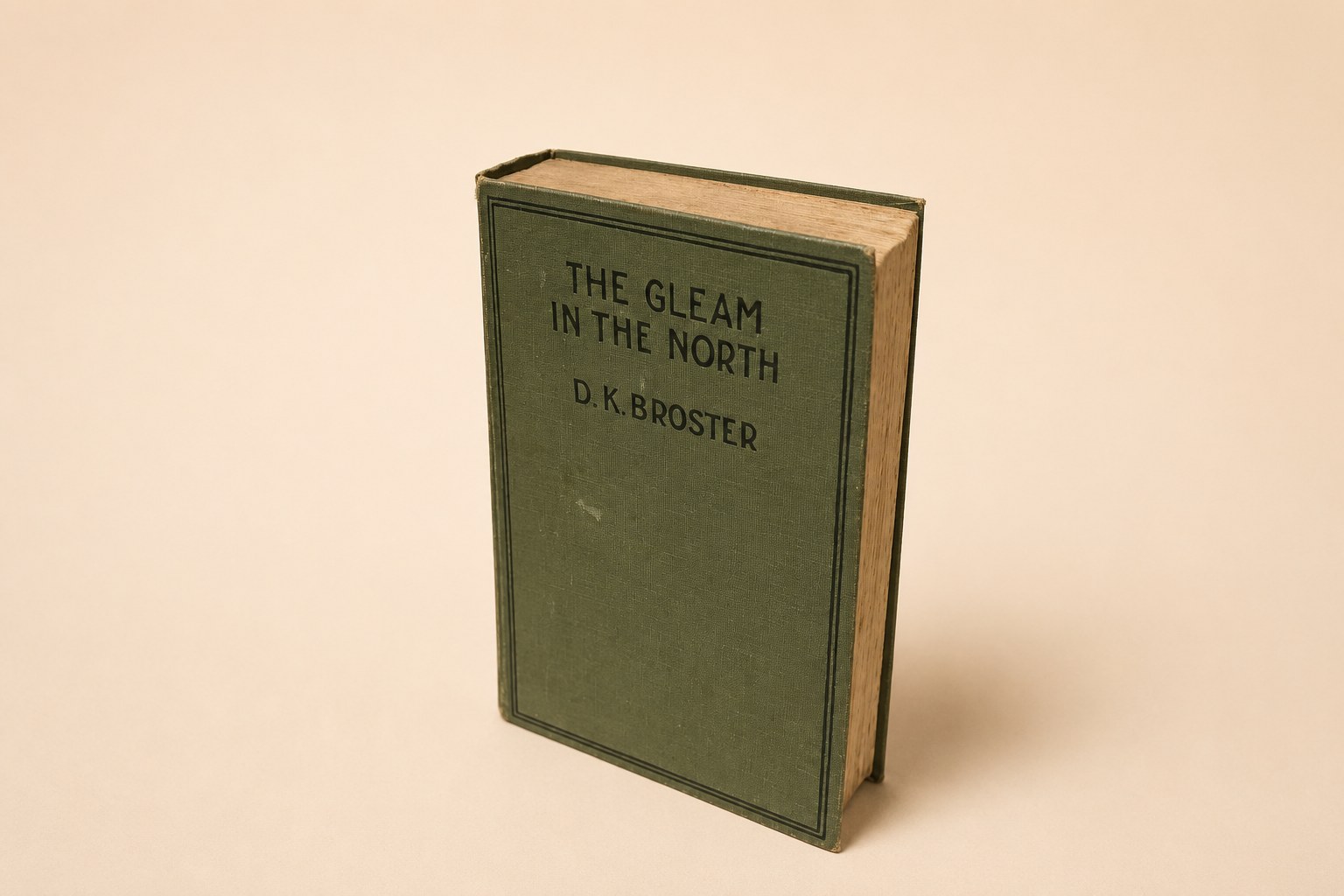
The Gleam in the North
A novel that keeps a promise: its final scenes use the actual last words of Dr Archibald Cameron, the last Jacobite executed for treason. Heinemann, 1930 impression, the trilogy's fifth printing in three years.