Opening
A Highland chieftain's family carries an old prophecy: five sightings of a heron will mark the turning points of a life. Around that piece of second sight, D. K. Broster built the most beloved Jacobite novel of the twentieth century: the story of Ewen Cameron of Ardroy, who rises for his Prince in 1745, and Keith Windham, the English officer sworn to defeat him, who keeps finding his fate tangled with his enemy's. Readers in 1925 bought out two printings in the first month. This copy is the affordable edition rushed out two years later for everyone else.
The Object
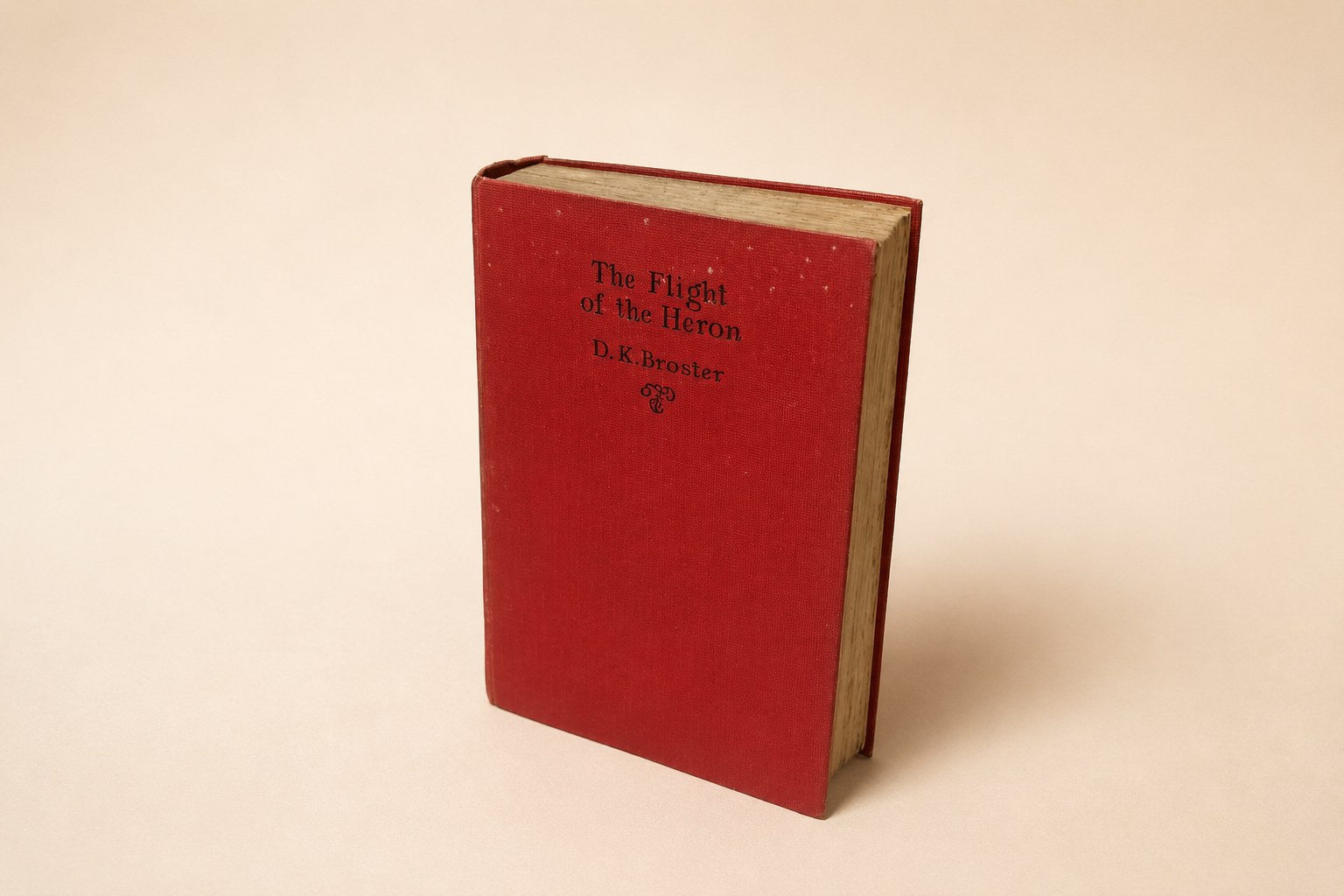
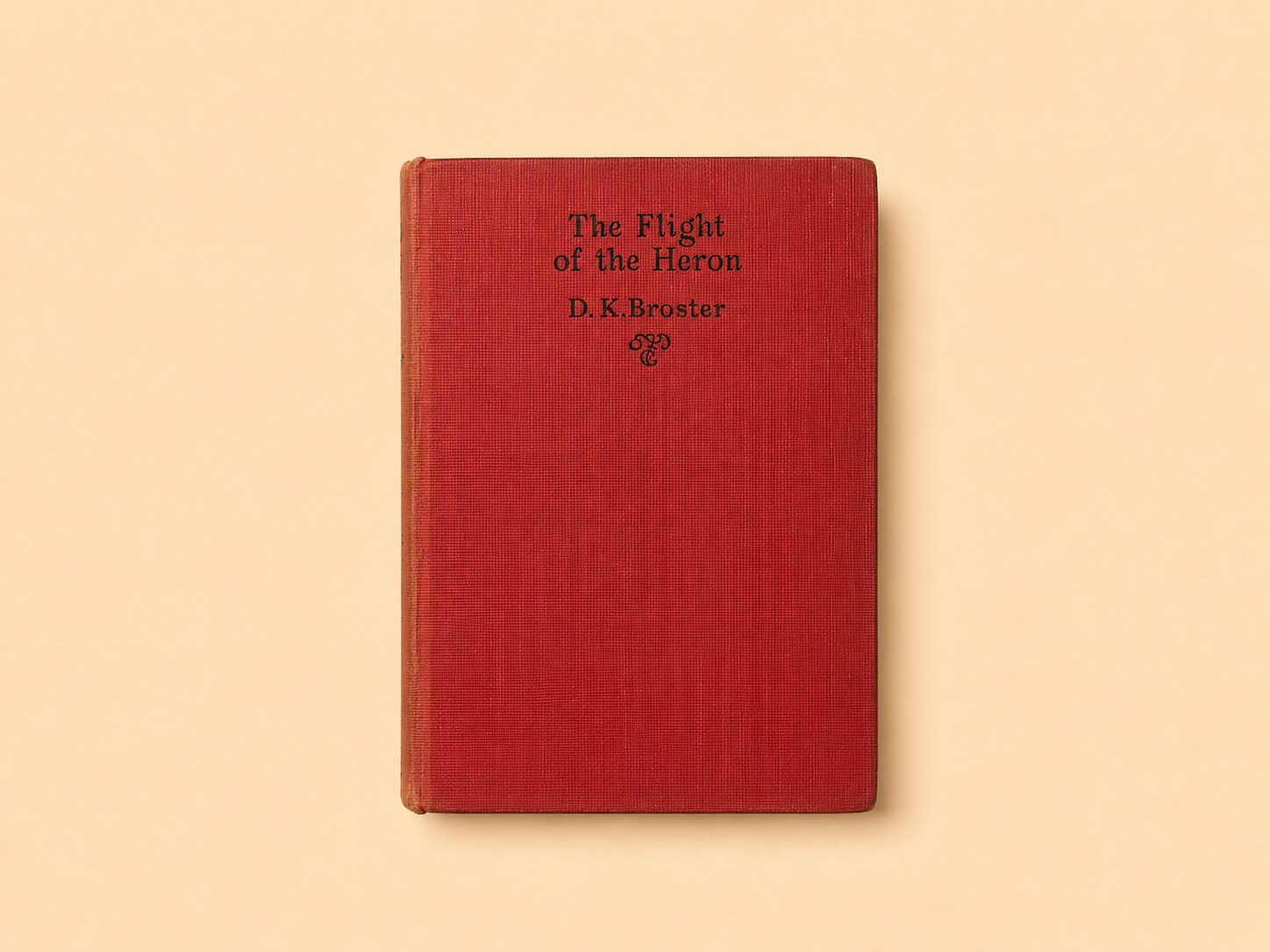
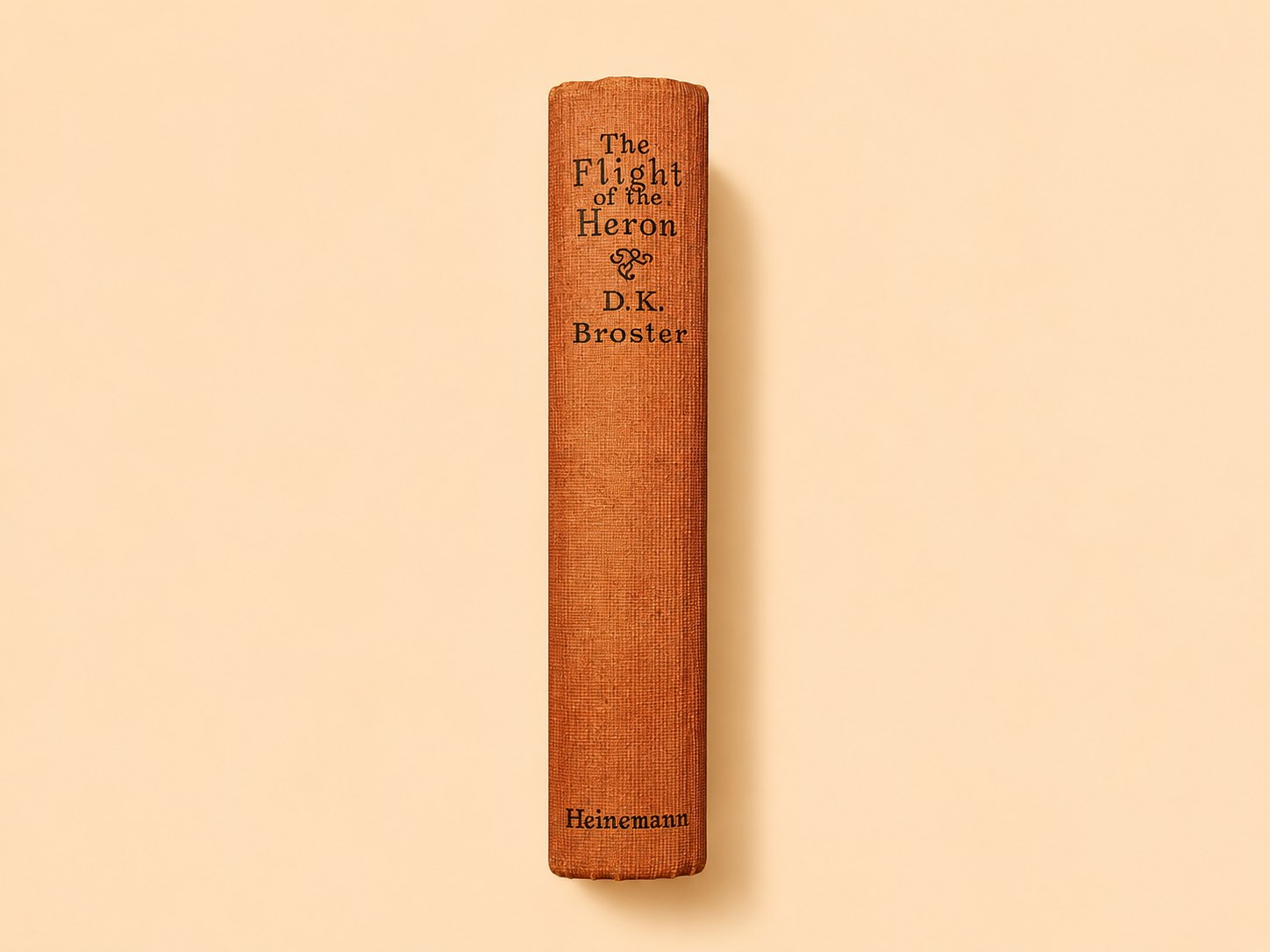
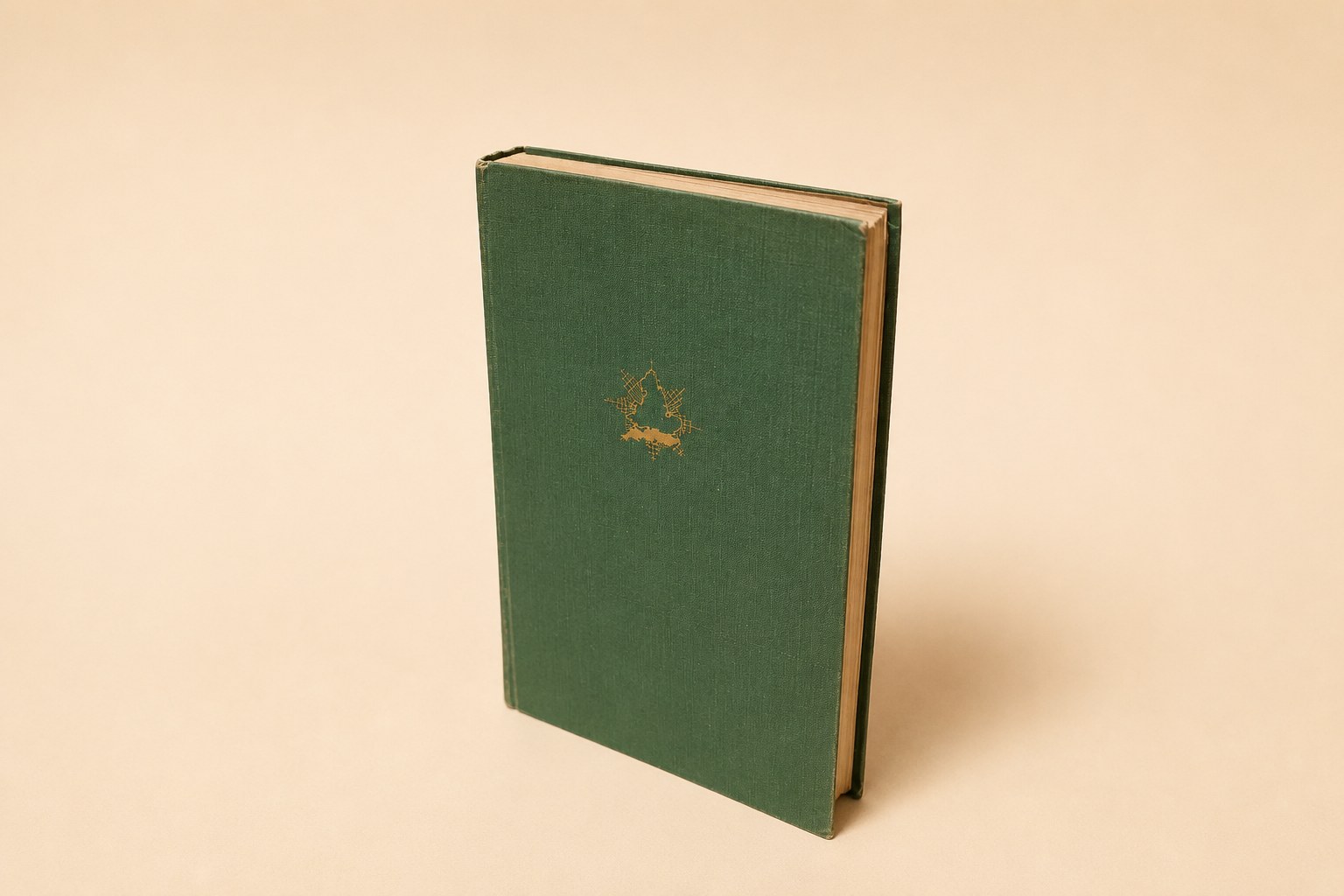
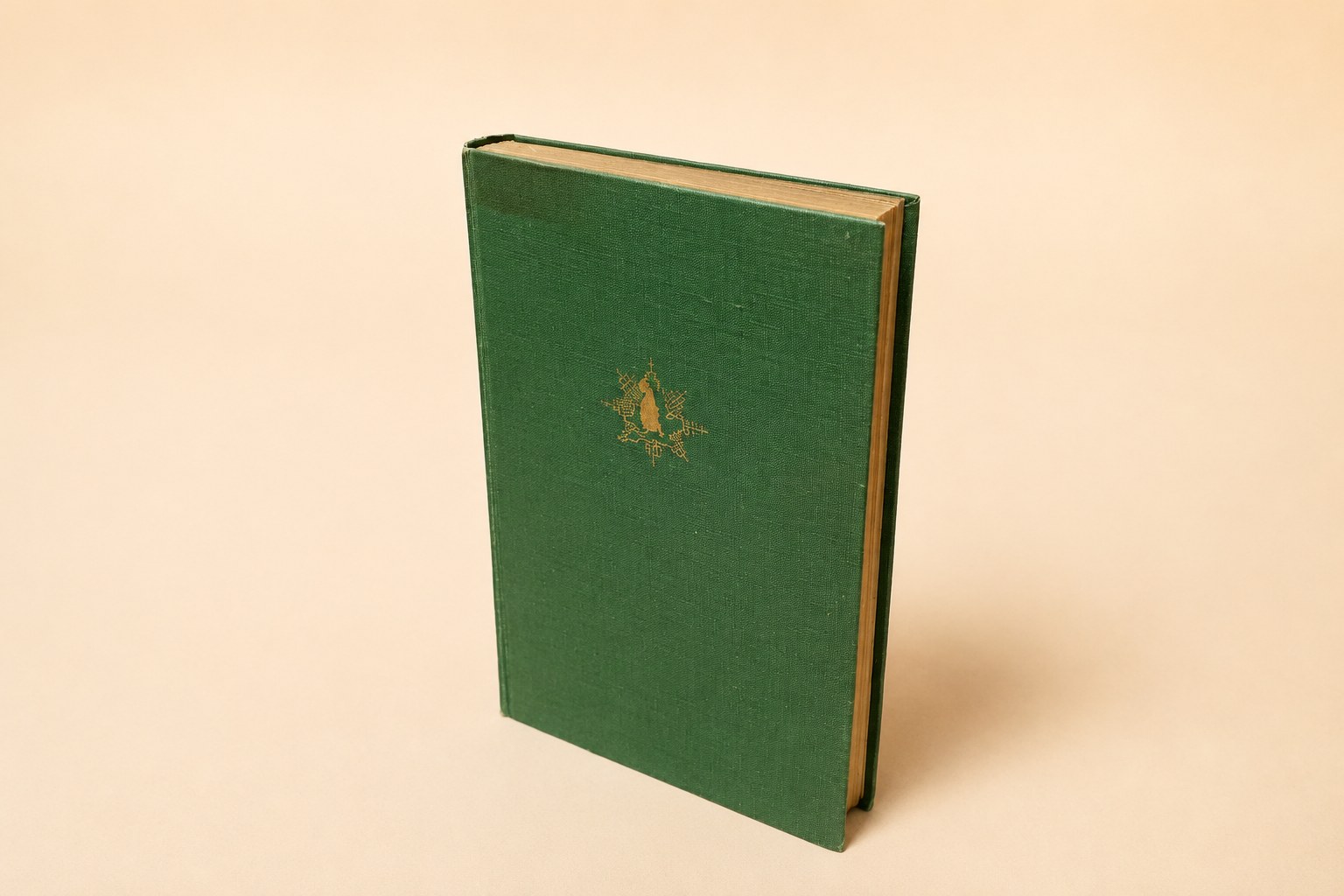
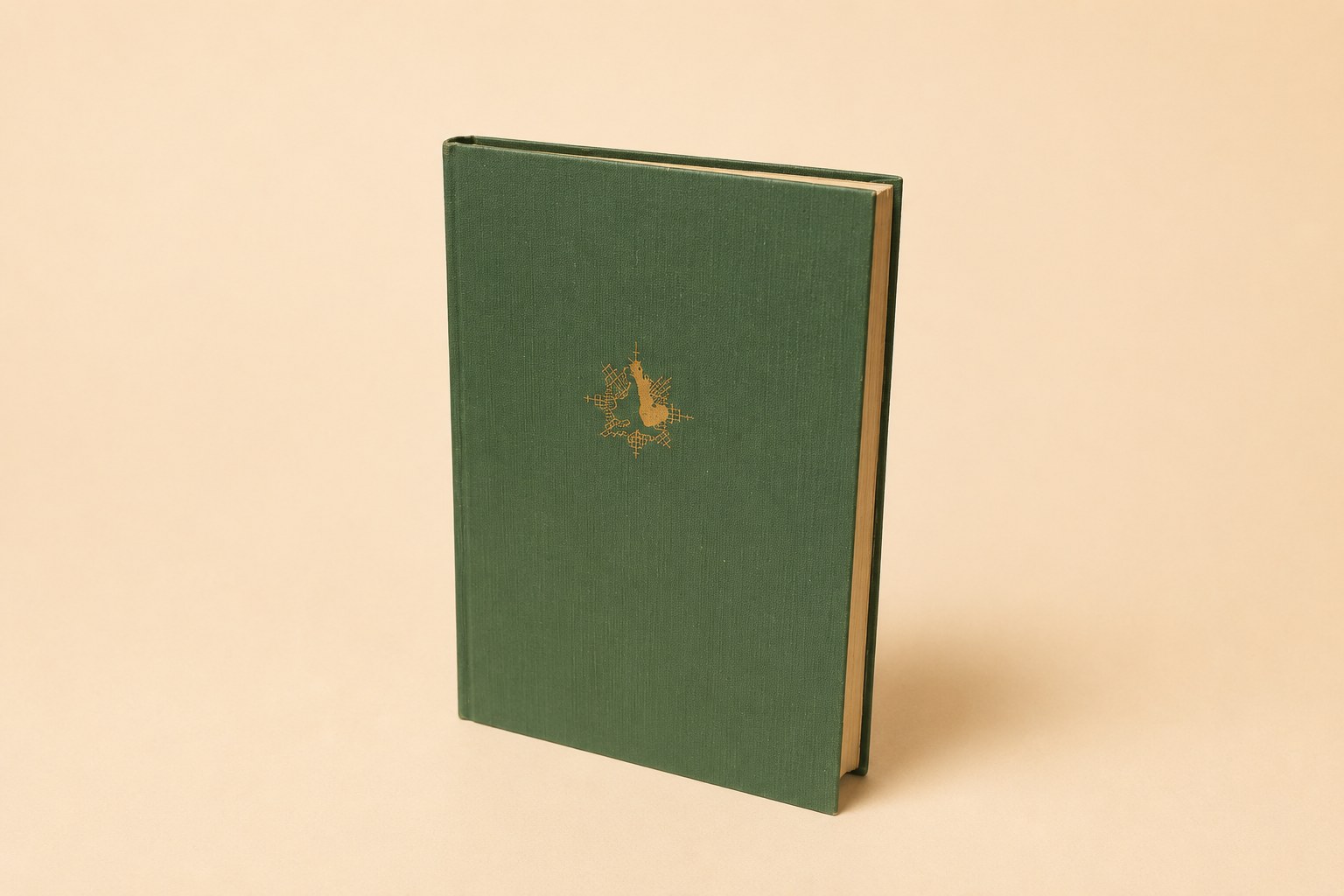
The Flight of the Heron was first published by William Heinemann in October 1925. This copy belongs to the cheaper edition of February 1927, priced at 3s. 6d. (or its August 1927 reimpression); the title verso lists the full sequence: first publication October 1925, new impressions November 1925 and April 1926, then the cheaper edition. Two printings in the first month, then a budget edition within eighteen months: the bibliographic fingerprint of a runaway success. It was printed by Butler & Tanner of Frome, in the standard handsome Heinemann fiction binding of the period.
The novel runs past 400 pages in a prologue, five parts, and an epilogue, the part-titles tracing the rising's whole arc, from A Promise of Fair Weather and Flood-Tide through The Ebb to The Heron's Flight is Ended, with each part anchored to one sighting of the prophesied heron. A short Author's Note confesses the book's one deliberate liberty with the historical record, concerning the Earl of Loudoun; everything else (battles, clans, chronology) is closely observed.
The Maker
Dorothy Kathleen Broster (1877–1950) qualified for second-class honours in History at Oxford in 1900, in the years when women could sit the examinations but not receive the degree; her BA and MA were finally conferred in 1920, in the first cohort of women Oxford allowed to graduate, then spent a decade as secretary to the Regius Professor of History and served as a Red Cross nurse in France in the First World War. She published behind her initials and let readers assume what they liked about her gender. She reportedly consulted some eighty reference works before writing this novel, and a five-week visit to friends in Scotland lit the spark. The dedication reads TO VIOLET JACOB, IN HOMAGE; Jacob's novel Flemington (1911) had pioneered fiction of the '45 from inside Scotland, and Broster was openly acknowledging the lineage.
The World It Came From
The rising of 1745 (Bonnie Prince Charlie's march south, the retreat, and the catastrophe at Culloden) had been romantic-novel territory since Walter Scott's Waverley. Broster's innovation was emotional rather than scenic: she built the book on the charged, reluctant bond between two honourable men on opposite sides of a war, and on the Highlands experienced in defeat rather than in tartan pageantry. Writing in the shadow of her own war nursing, she made loyalty, obligation, and loss the real subject. The novel became the defining popular image of the '45 for the interwar generation, and its central friendship has kept it alive, studied, reprinted, and loved, long after most 1920s bestsellers vanished.
This Copy
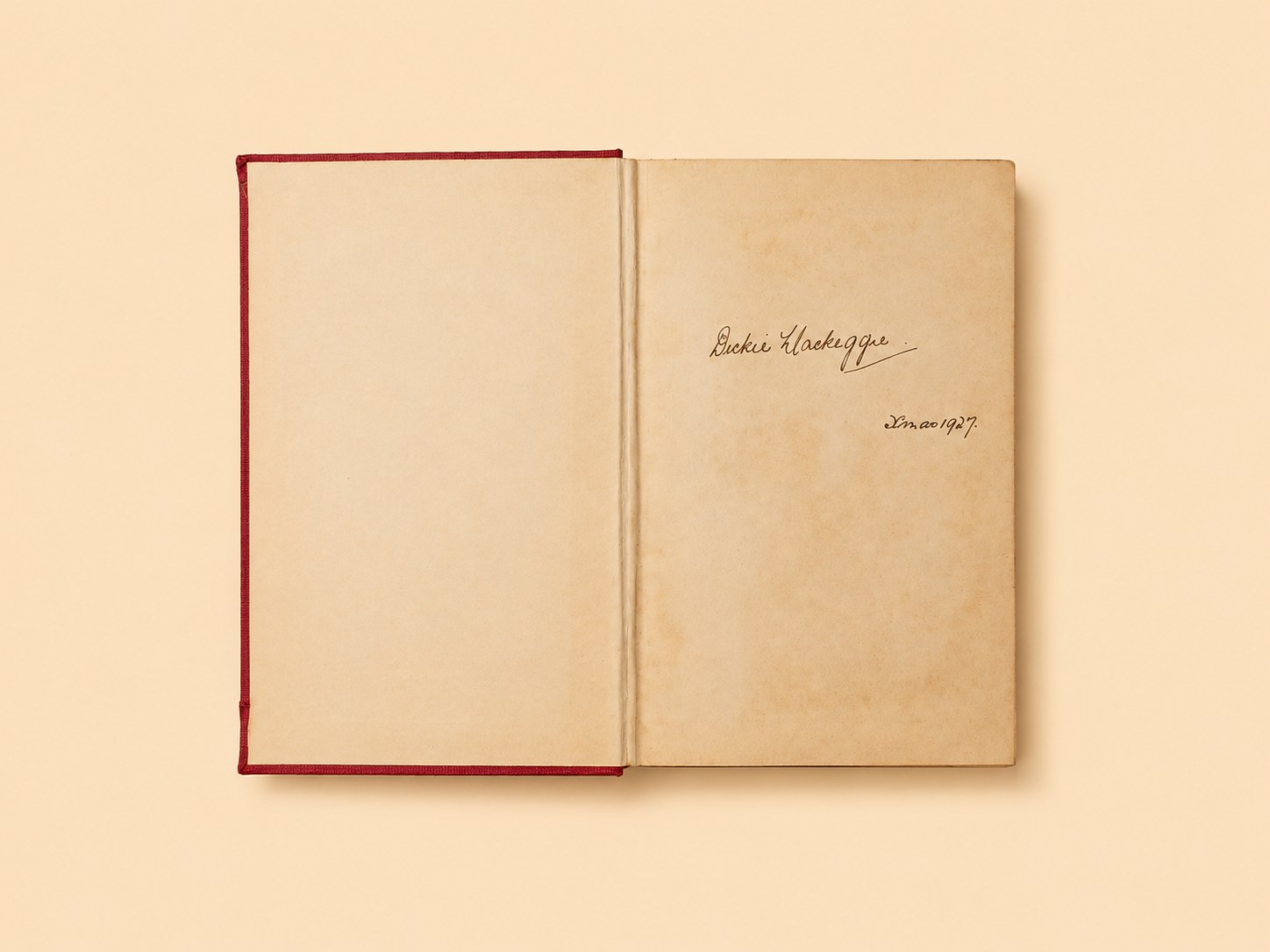
The front free endpaper carries an ownership inscription: Dickie Mackenzie, Xmas 1927, a reader who received or bought the book within the cheaper edition's first year — and at Christmas, suggesting a gift. Nothing further is known of him, though a Mackenzie reading a Jacobite novel adds its own small poetry. The "By the Same Author" list names four earlier titles, ending at The Yellow Poppy; The Gleam in the North was published later that same year. Condition is good, consistent with an interwar novel that has been read rather than shelved.
Why It Matters
This is the cornerstone of the trilogy and of Broster's reputation: the book that did for the '45 in the twentieth century what Waverley did in the nineteenth. The cheaper edition matters in its own right: it is the moment a literary success became a mass possession, priced for ordinary readers like Dickie Mackenzie. Together with its two sequels, also in this collection, it completes the full Jacobite Trilogy in interwar Heinemann printings.
References
- D. K. Broster, Wikipedia
- The Flight of the Heron, Wikipedia
- The Flight of the Heron, Project Gutenberg
- Violet Jacob, Wikipedia
- Flemington (novel), Wikipedia
- Jacobite rising of 1745, Wikipedia
- John Campbell, 4th Earl of Loudoun, Wikipedia
- William Heinemann (publisher), Wikipedia
- Butler & Tanner, Wikipedia
- Dorothy Broster, Novelist — Battle & District Historical Society (PDF)