Opening
Before the story begins, the author makes the reader a promise. Printed alone on its own page, the Author's Note reads: "In all that concerns Doctor Archibald Cameron this story follows historical fact very closely, and its final scenes embody many of his actual words." It is an extraordinary thing for a novelist to say, and she kept the promise. The gentle Highland physician at the heart of this book was a real man, and on 7 June 1753 he became the last Jacobite ever executed for high treason. The words he speaks at the end of this novel are, substantially, the words he actually said.
The Object
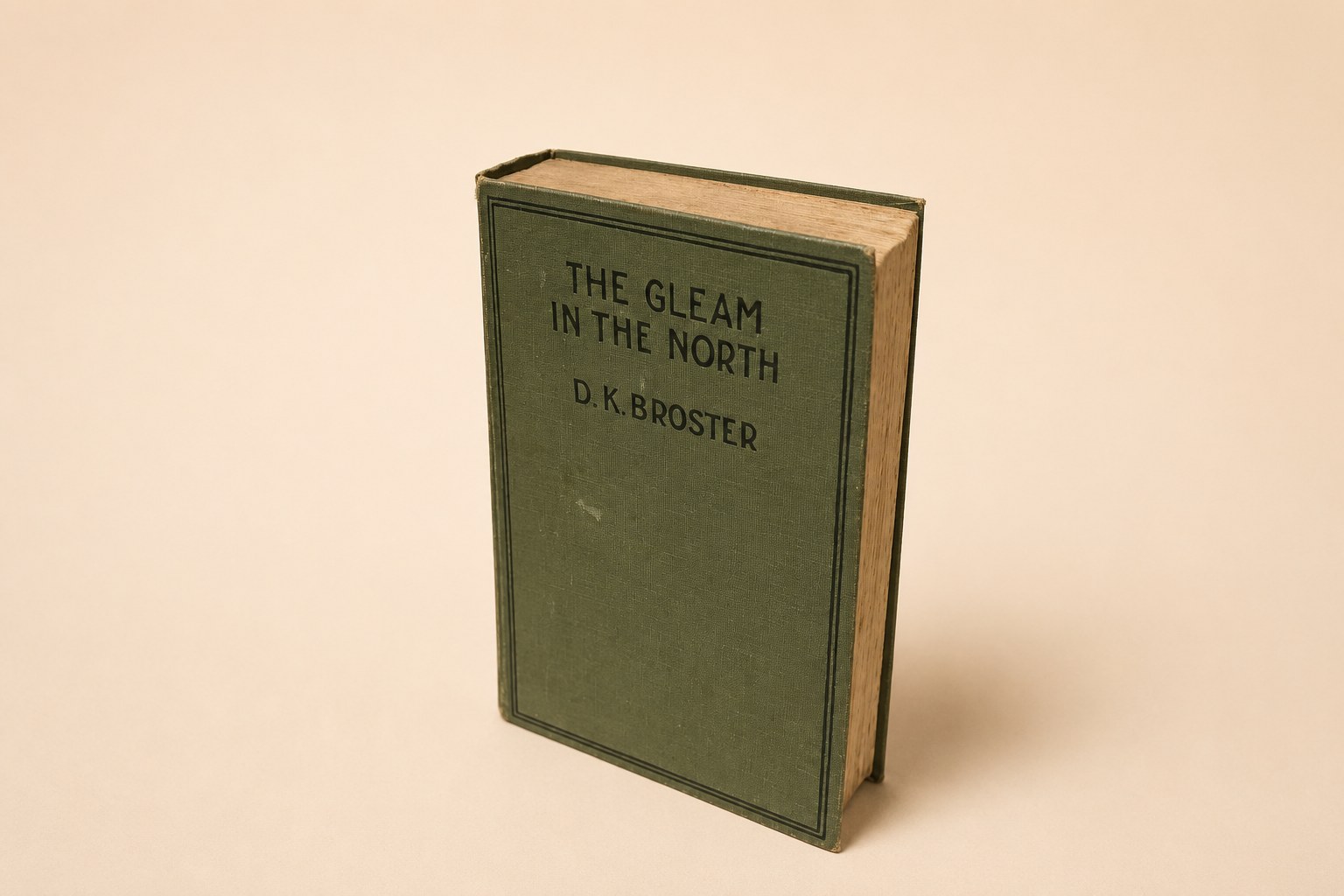
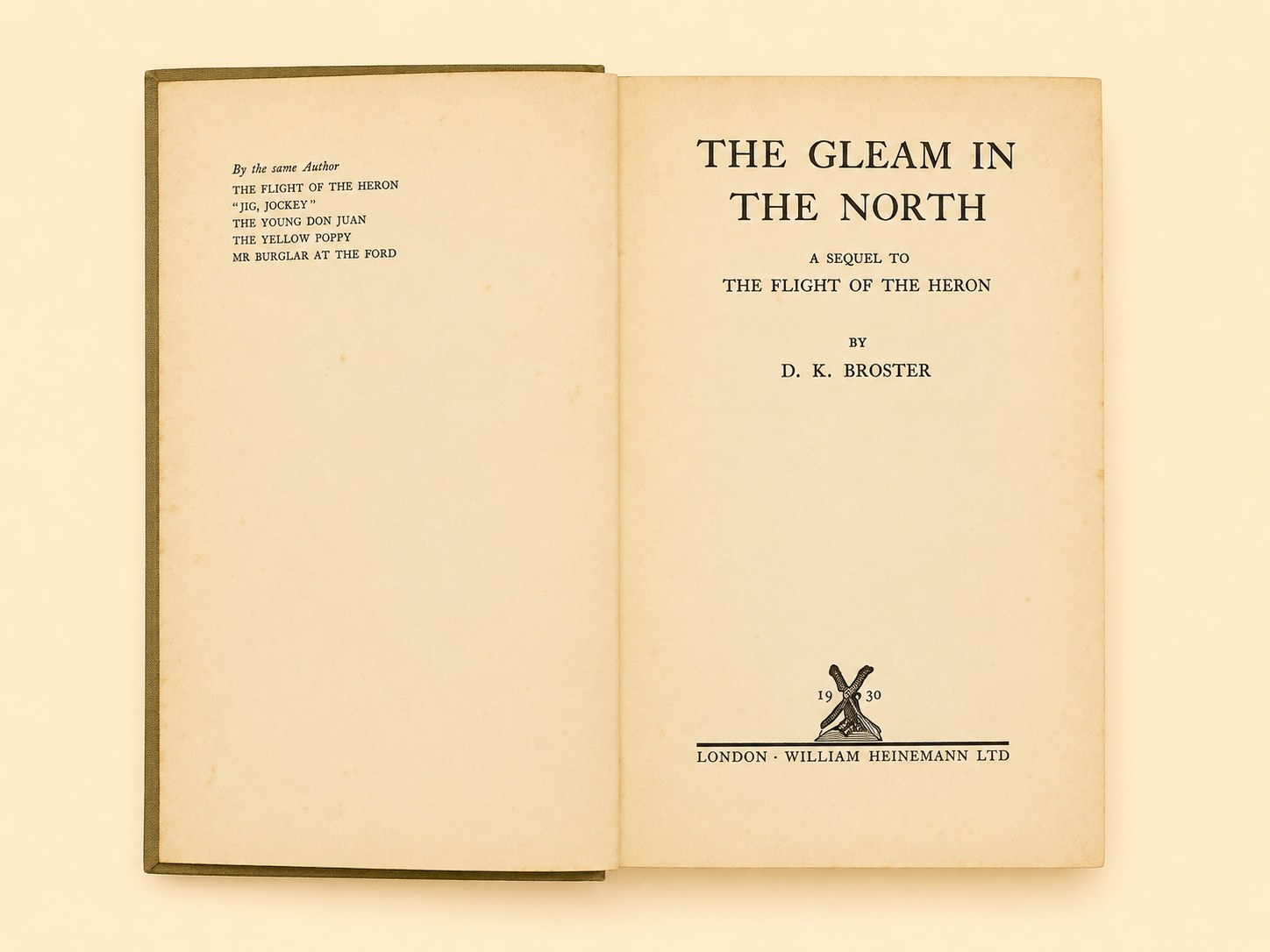
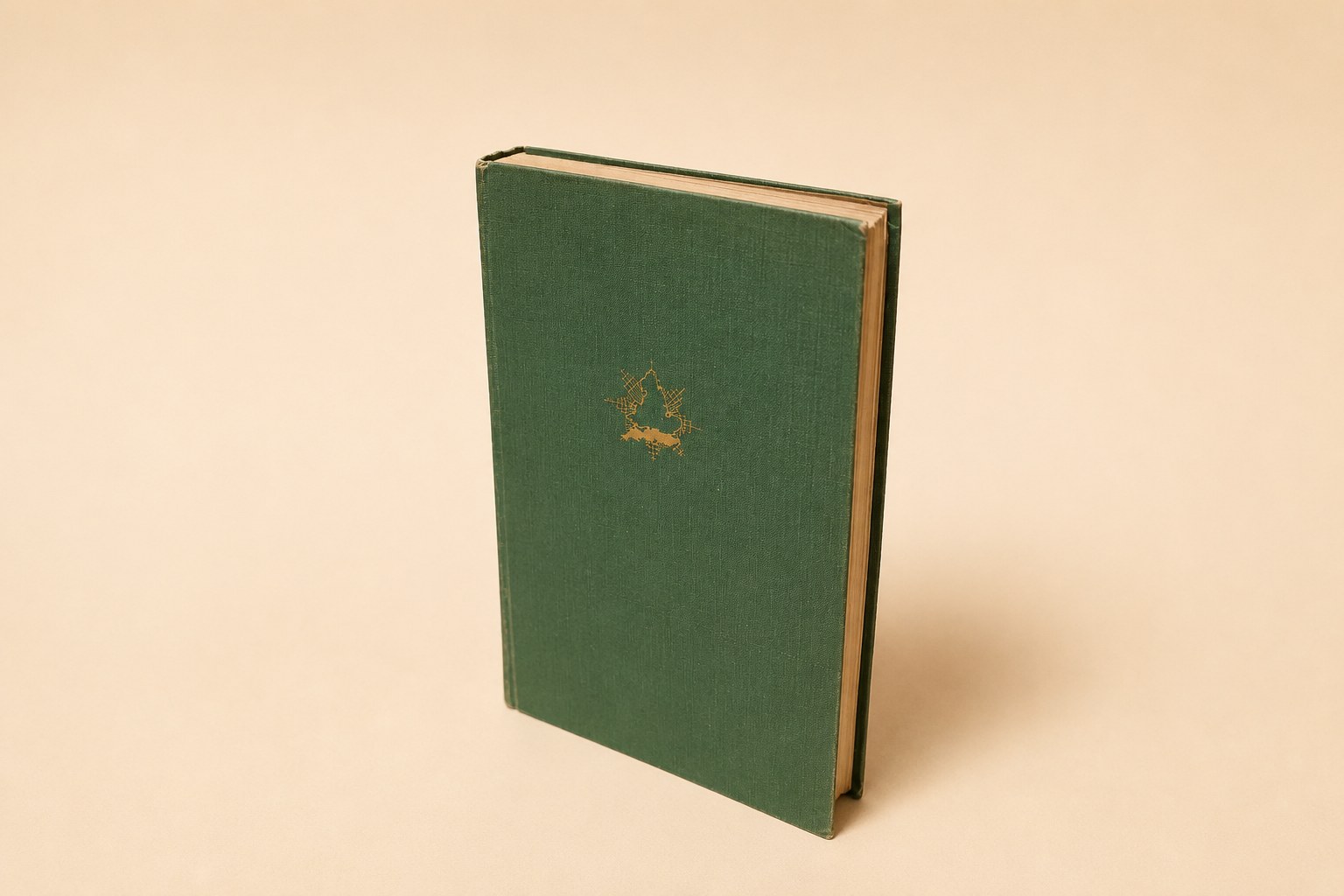
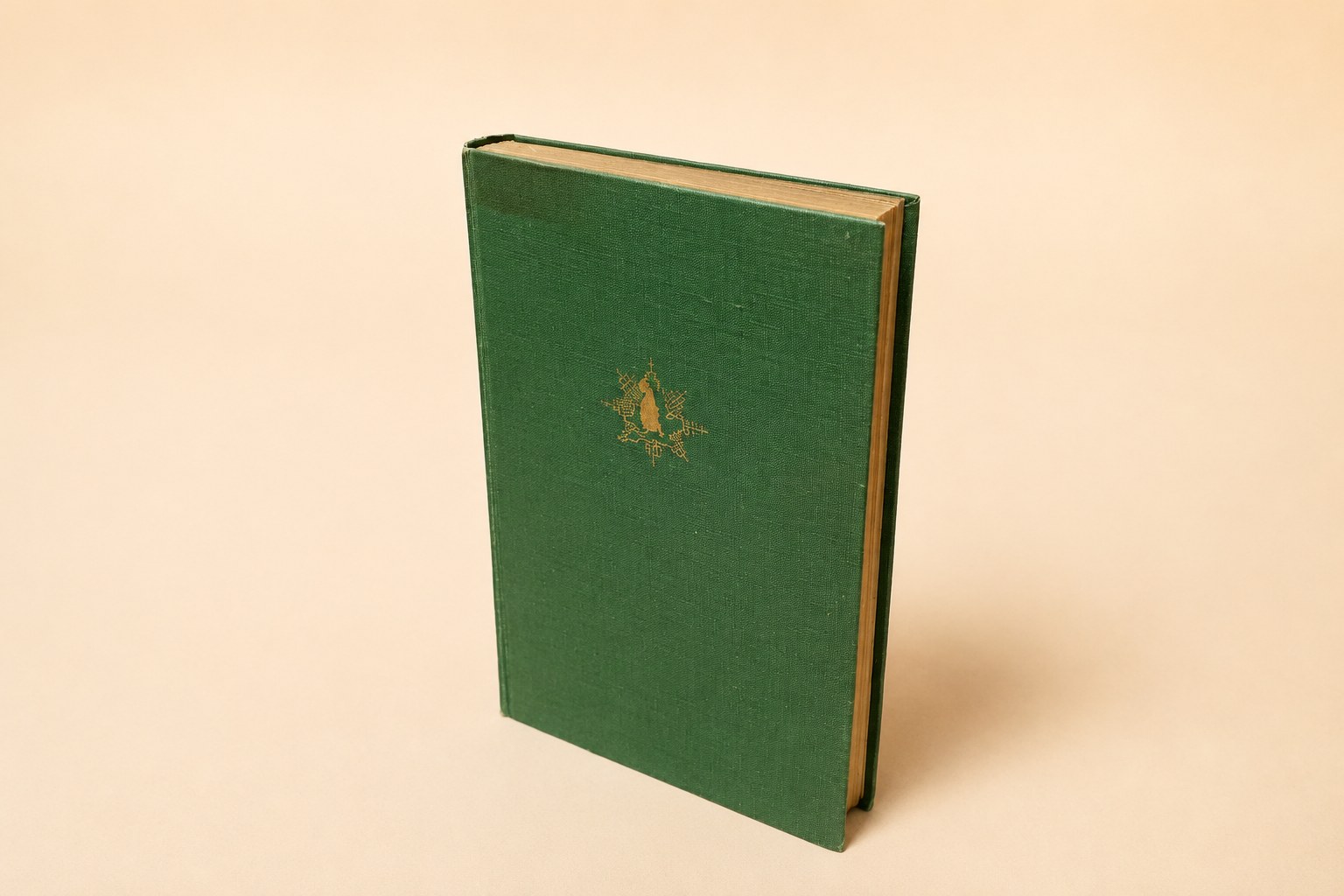
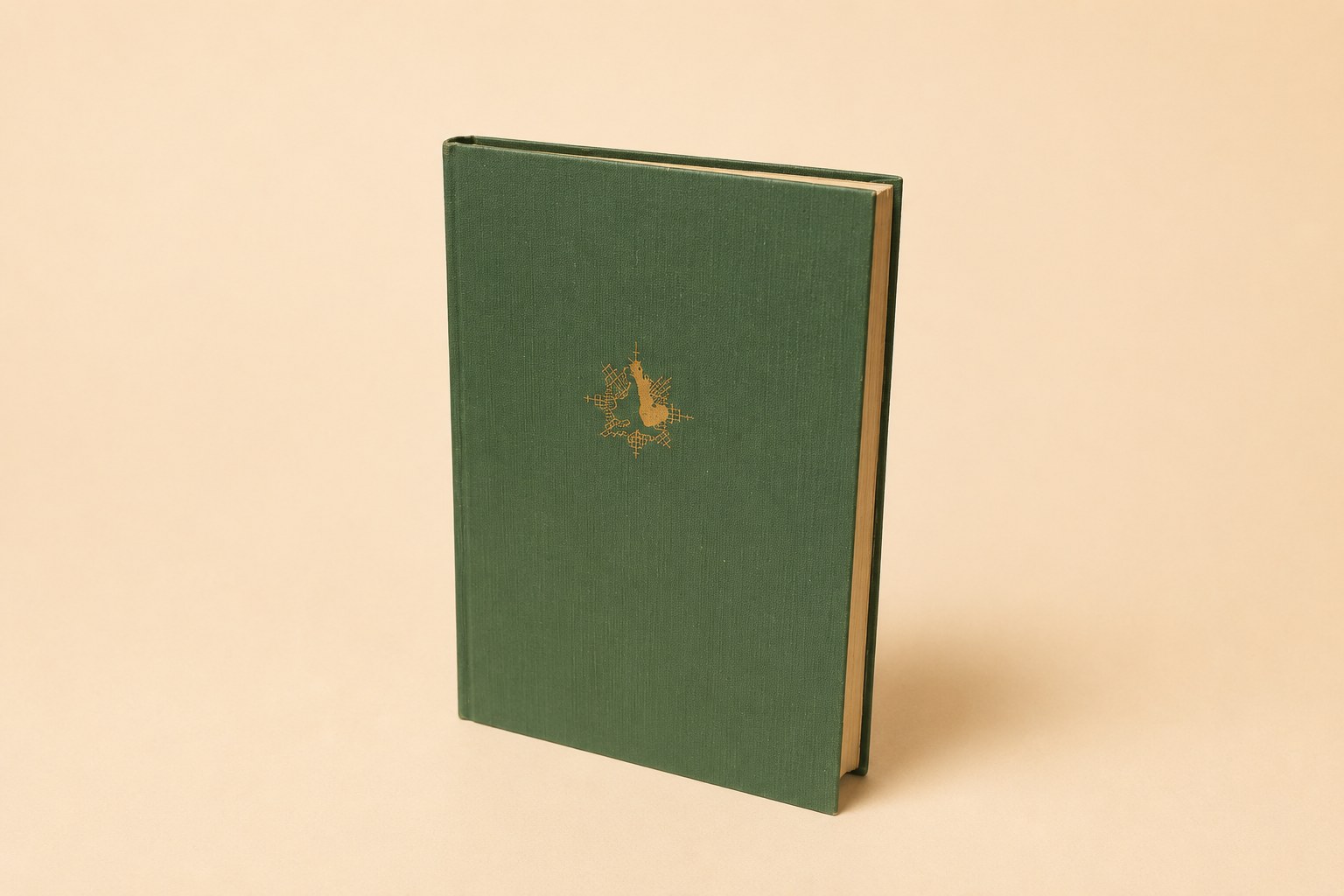
The Gleam in the North is the second novel of D. K. Broster's Jacobite trilogy, subtitled A Sequel to The Flight of the Heron, published by William Heinemann of London. This copy is a 1930 impression: the title verso records first publication in July 1927 followed by new impressions in November 1928, June 1929, March 1930, and October 1930, making this the fourth or fifth printing in three years, a measure of how steadily the trilogy sold. It was printed by The Whitefriars Press of London and Tonbridge, the firm that had once printed Punch, and whose Tonbridge works, rebuilt after a catastrophic 1926 fire, were newly modernised when this book came off the machines.
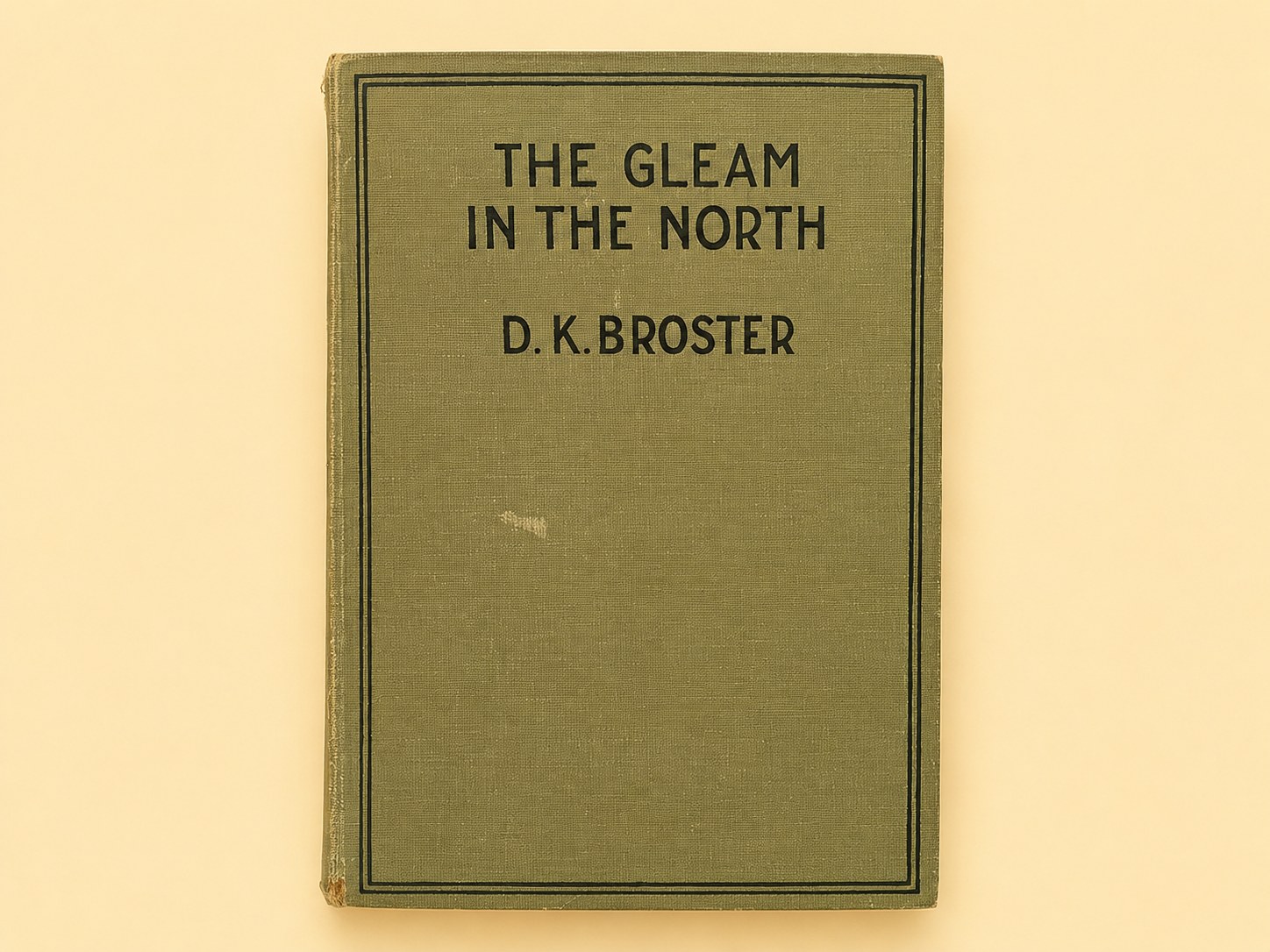
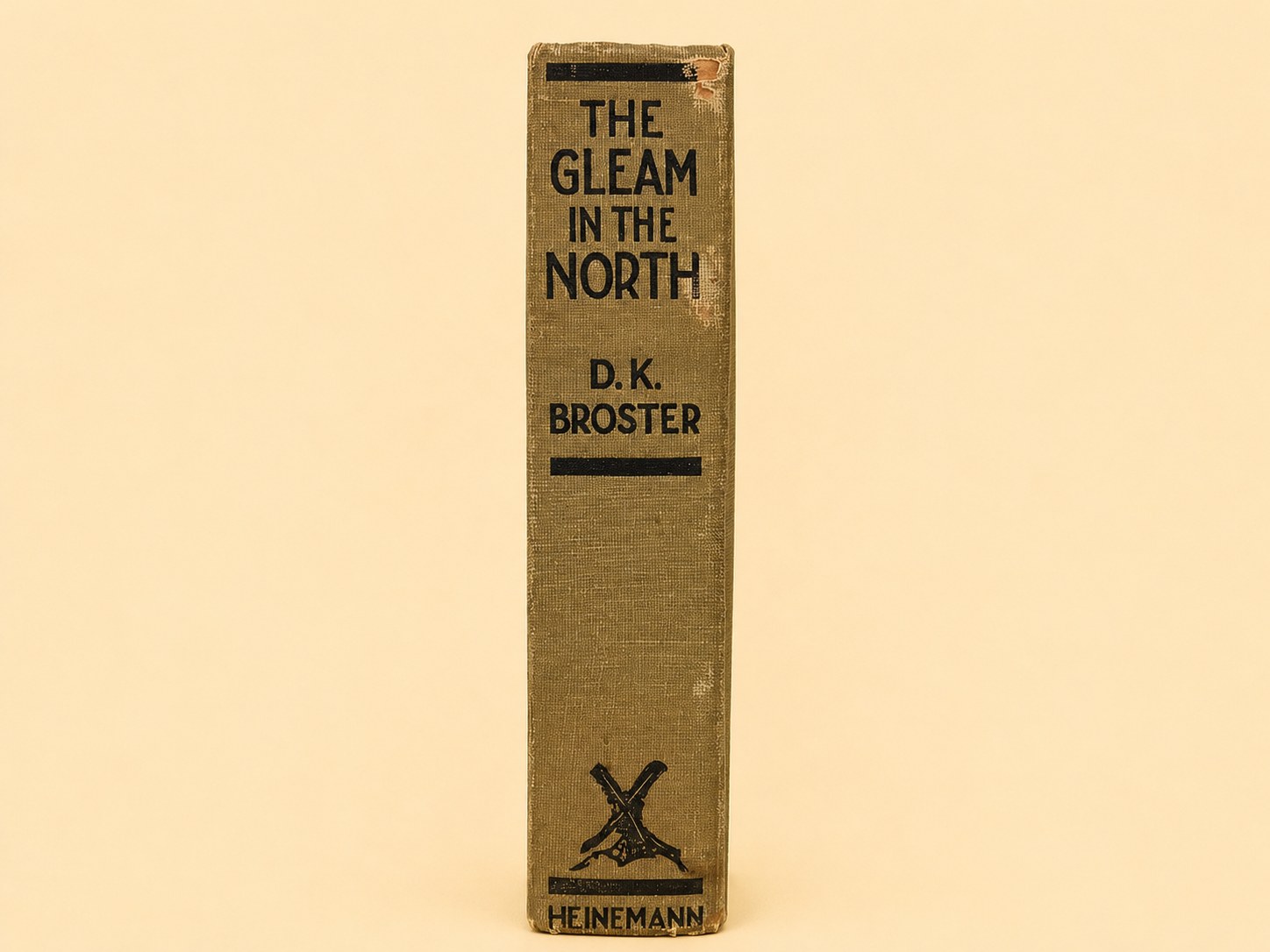
The binding is sage-green cloth with a double black rule border, the title in bold black lettering, and the Heinemann windmill device at the foot of the spine: the standard, handsome Heinemann fiction style of the late 1920s. The novel runs to 346 pages in 24 chapters and an epilogue.
The Maker
Dorothy Kathleen Broster (1877–1950) hid in plain sight behind her initials; many readers assumed D. K. Broster was a man, and she did nothing to correct them. Born near Chester and educated at St Hilda's College, Oxford, she spent a decade as secretary to the Regius Professor of History (a professional apprenticeship in archival rigour) and nursed with the Red Cross in France during the First World War. She reportedly consulted some eighty reference works before writing The Flight of the Heron, and a five-week stay with friends in Scotland grew into the trilogy that made her famous. The dedication of this volume returns the favour: TO MY FRIENDS NORTH OF TWEED.
The World It Came From
The novel is set in the bitter aftermath of Culloden: fugitives in the heather, Highland dress and arms banned under the Act of Proscription, and exiled Jacobites serving in French regiments. Through it moves Dr Archibald Cameron: "Doctor Archie," younger brother of the Gentle Lochiel, an Edinburgh- and Paris-trained physician who treated the wounded of both sides in the '45. Returning secretly to Scotland in 1753, he was betrayed, taken to London, and hanged at Tyburn, conducting himself with a composure that impressed even his enemies. His scaffold speech and last letters were printed within days of his death; Broster built her final chapters directly from them.
The two epigraphs announce the theme. A Jacobite officer of Gask: "He sent our Lawfull Prince amongst us, and I followed him." And Clarendon on a Royalist hero of another lost cause: "A brighter courage and a gentler disposition were never married together", chosen, surely, as the perfect anticipatory description of Doctor Archie himself, a man executed for being brave and gentle in the wrong cause.
This Copy
This copy carries no ownership inscription. The "By the Same Author" list on the title verso names five titles ending with The Flight of the Heron, a snapshot of Broster's career in 1927, before The Dark Mile completed the trilogy. Condition is good: the cloth clean, with wear at the head and foot of the spine and some foxing to the page edges, the honest marks of a novel that was read, as it deserved.
Why It Matters
This book sits on the boundary between fiction and historical record. By embedding a documented execution (actual words, actual final scenes) inside a popular novel, Broster carried the memory of the post-Culloden persecution to a mass interwar readership, humanising the Jacobite cause at a time when mainstream British fiction rarely bothered. It is also simply one of the great tear-jerkers of British historical fiction: generations of readers have reached the Tyburn chapters knowing exactly what must happen, because it did happen, and found that foreknowledge makes it worse. The fifth printing in three years suggests the readers of 1930 agreed.
References
- D. K. Broster, Wikipedia
- The Flight of the Heron, Wikipedia
- Archibald Cameron of Lochiel, Wikipedia
- Dr Archie Cameron — the last Jacobite, Scottish Field
- Dr Archibald Cameron's intended scaffold speech (1753), Law Book Exchange
- Dr Archibald Cameron, Lord Amulree, Medical History (Cambridge)
- Battle of Culloden, Wikipedia
- Act of Proscription 1746, Wikipedia
- Jacobite rising of 1745, Wikipedia
- William Heinemann (publisher), Wikipedia
- Whitefriars Press, Tonbridge History
- Laurence Oliphant (Jacobite), Wikipedia
- Edward Hyde, 1st Earl of Clarendon, Wikipedia