Opening
Here is Fleet Street selling the Savoy. In the early 1930s the News Chronicle — one of Britain's great popular dailies — issued the operas of Gilbert and Sullivan as a handsome red-cloth part-work in four volumes, giving readers the stories, the words, and the music of the “famous numbers” of each opera for a few shillings. This is Volume Three, and it carries an appreciation by the man who, more than any other, was Gilbert and Sullivan on the stage between the wars: Sir Henry Lytton.
The Object
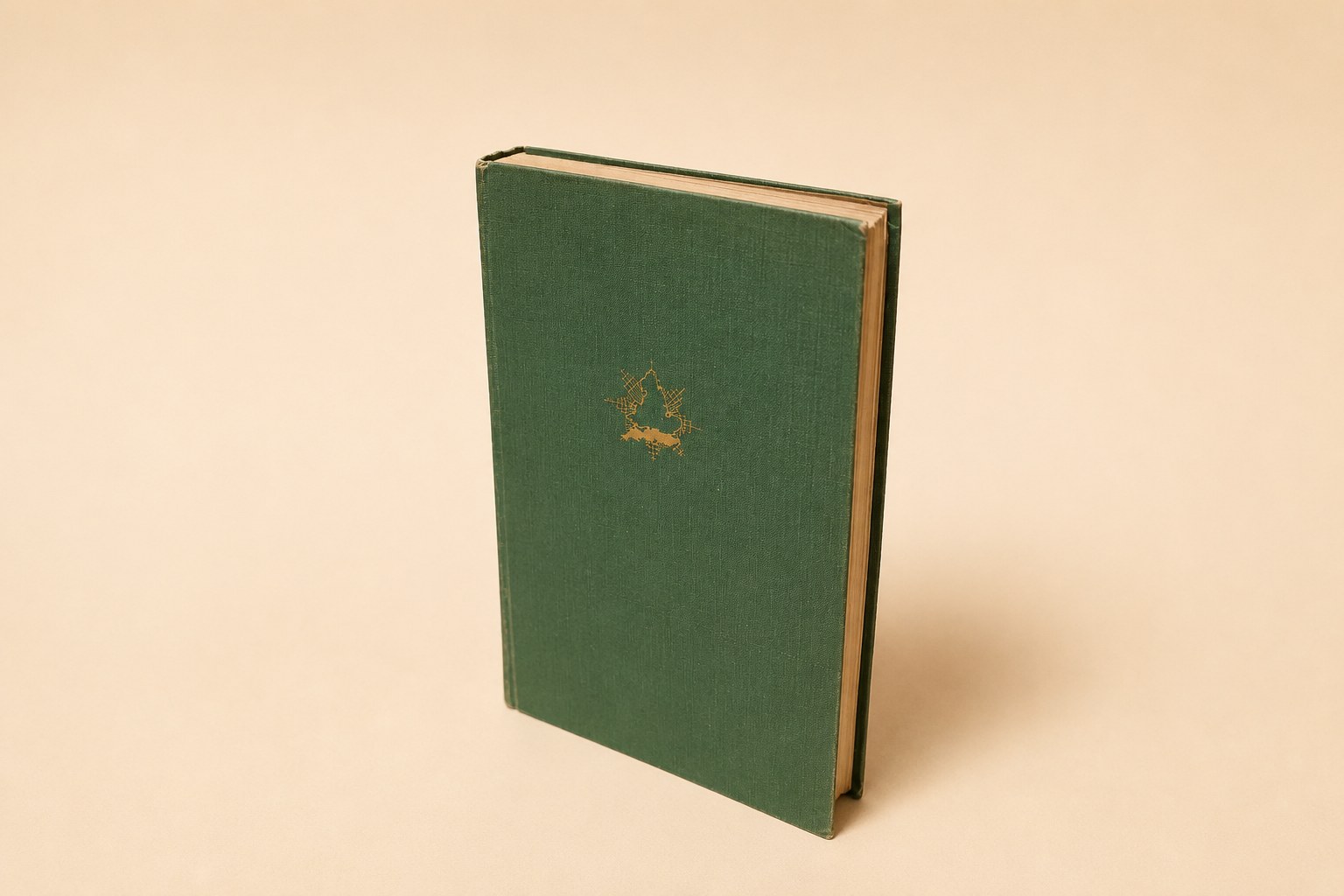
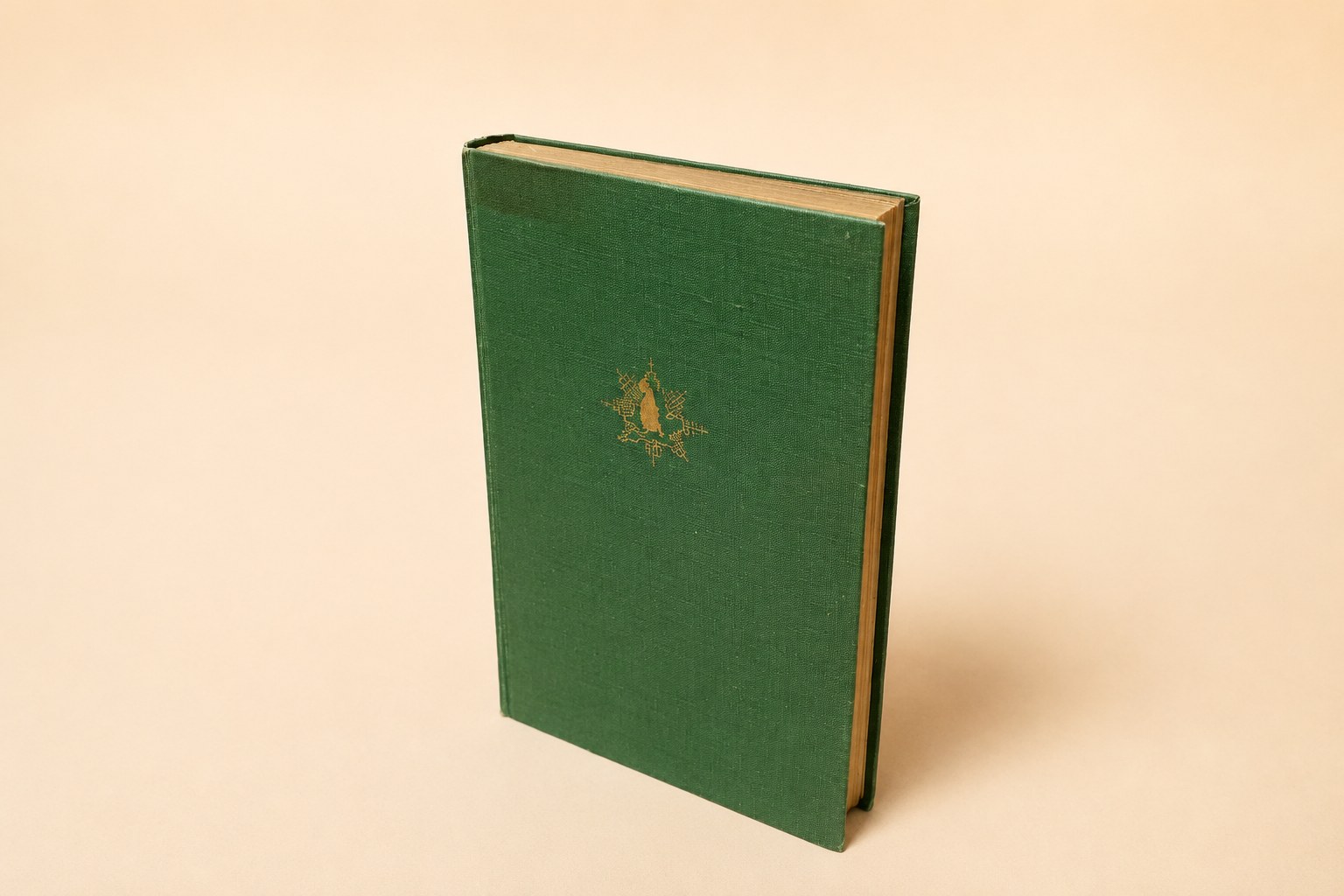
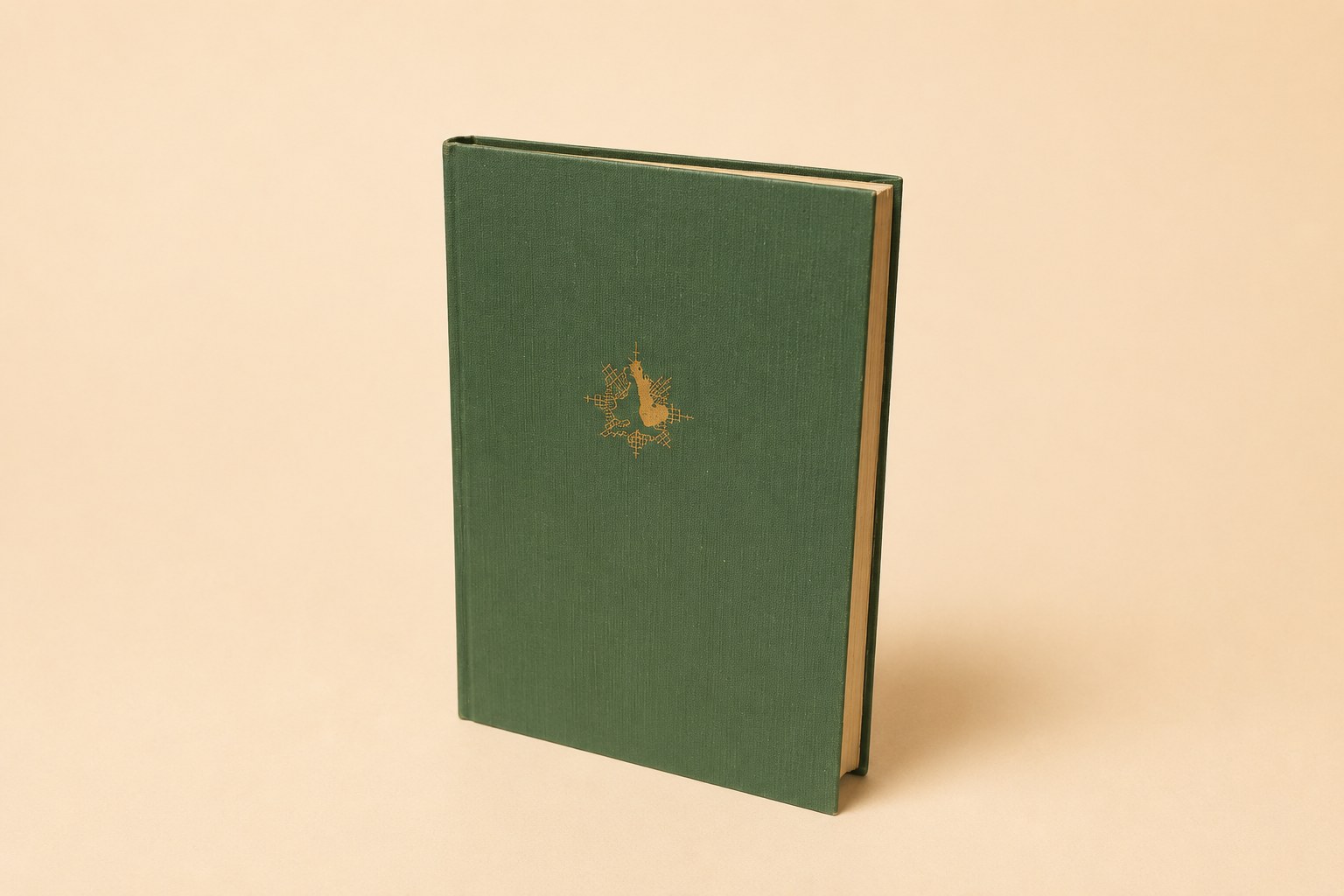
The cover, blocked in blue and cream on bright red cloth, announces The Immortal Gilbert & Sullivan Operas — Vol. 3 around a central Art-Nouveau G&S monogram worked into a comic theatrical mask, with harps and lyres in the corners. The title page inside gives the fuller, statelier form: The Immortal Operas of Gilbert and Sullivan, containing the Stories of the Plays and the Words and Music of Famous Numbers from each Opera, with an appreciation by Sir Henry Lytton — Volume Three. It was published “by arrangement with Chappell & Co. Ltd. and J. B. Cramer & Co. Ltd.” — the firms that held the Sullivan copyrights — by the “News Chronicle” Publications Dept. at “Chronicle House,” Fleet Street, London, E.C.4.
The Four Operas of This Volume
Volume 3 is, in a sense, the odd volume — the one that gathers the beginning and the end. It holds Trial by Jury (1875), the one-act comic operetta that was Gilbert and Sullivan's first real success and the seed of everything that followed; Patience (1881), the great satire of the Aesthetic Movement that opened the new Savoy Theatre and its electric light; Ruddigore (1887), the Gothic-melodrama send-up with its gallery of ancestral ghosts; and The Grand Duke (1896), the fourteenth and final collaboration — the partnership's only outright failure, and the last time Gilbert and Sullivan worked together. The first opera and the last, bound in one book.
Sir Henry Lytton's Appreciation
The name on the title page is the volume's real endorsement. Sir Henry Lytton (1865–1936) was the leading comic patter-baritone of the D'Oyly Carte Opera Company, the troupe that owned and defined the Savoy operas. From 1909 he played all the great “Grossmith” parts — the Lord Chancellor, Ko-Ko, Bunthorne, Robin Oakapple, Jack Point — for a quarter of a century, and in the 1930 Birthday Honours he was knighted: the only person ever knighted specifically for performing Gilbert and Sullivan. That a newspaper part-work could open with his appreciation, at the very close of his career, tells you how completely the D'Oyly Carte still owned this repertoire in the 1930s.
The World It Came From
This is a book made by a newspaper, and that is its interest. Between the wars the big Fleet Street dailies — the News Chronicle, Odhams, the Daily Express — ran “Publications Departments” that issued cheap, cloth-bound, collectible series to build reader loyalty: encyclopaedias, atlases, anthologies, and cultural sets like this one. The Savoy operas, decades out of fashionable copyright anxiety and firmly established as national property, were perfect material — respectable, tuneful, endlessly singable at the family piano. It belongs on the shelf beside the collection's other popular publisher's-series volumes, the Fifty anthologies from Odhams, and beside its music cousins such as the hymnal Songs of Grace and Glory — books meant to be used, around a piano or in a pew.
This Copy
Honest, well-handled condition — Fair. The red cloth is rubbed and sunned, the corners bumped, and the spine is chipped and frayed at the head with some loss; the text-block is toned but sound, and the volume is complete with its illustrated title page and its Lytton appreciation. There is no ownership inscription. It came in the same February 2026 lot of twenty-seven books as several of the collection's other volumes.
Why It Matters
On its own a single volume of a common 1930s part-work is an inexpensive thing. Its value here is documentary: it is a neat artefact of interwar popular print culture — the moment a Fleet Street newspaper turned the Savoy operas into a mass-market collectible — and it carries a small piece of theatrical history on its title page in the person of Sir Henry Lytton, the last great D'Oyly Carte comedian and the only knight of Gilbert and Sullivan. As the “odd volume” that binds Gilbert and Sullivan's first success to their final failure, it also quietly frames the whole arc of the most famous partnership in English musical theatre.
References
- Gilbert and Sullivan, Wikipedia
- Sir Henry Lytton, Wikipedia
- Henry A. Lytton, The Gilbert & Sullivan Archive
- The immortal Gilbert & Sullivan operas, vol. 4 (News Chronicle, 1932), Biblio catalogue record
- The immortal operas of Gilbert and Sullivan, University of Rochester catalogue record
- News Chronicle, Wikipedia
- The Grand Duke, Wikipedia
- Trial by Jury, Wikipedia