Opening
Italy rendered in wood engravings for the Victorian parlour — the Colosseum by moonlight, the excavated streets of Pompeii, Florence seen from San Miniato, the gondolas of the Grand Canal. This is the twin of the collection's French Pictures: another volume of the Religious Tract Society's celebrated “Pictures Drawn with Pen and Pencil” series, acquired in the very same lot.
The Object
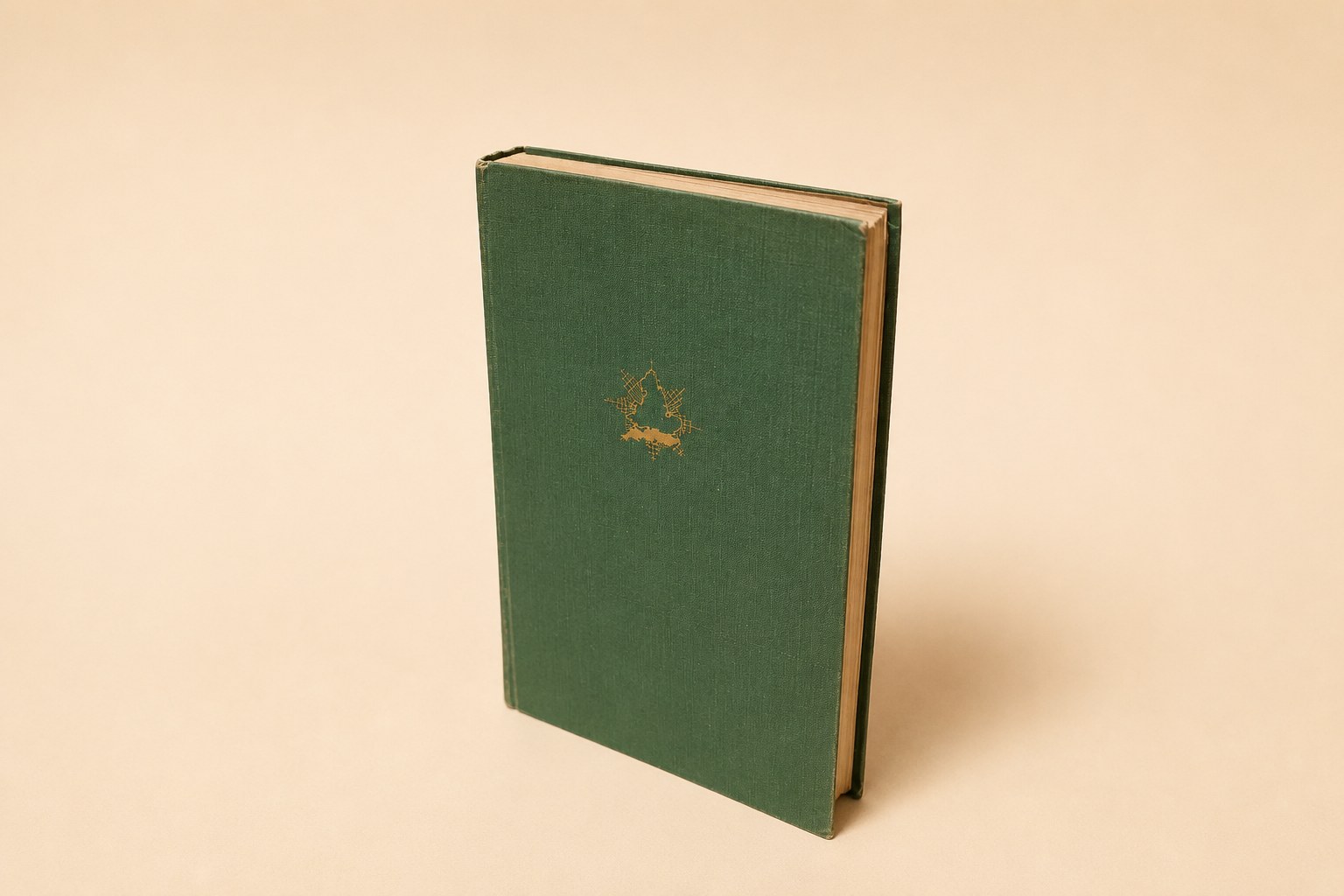
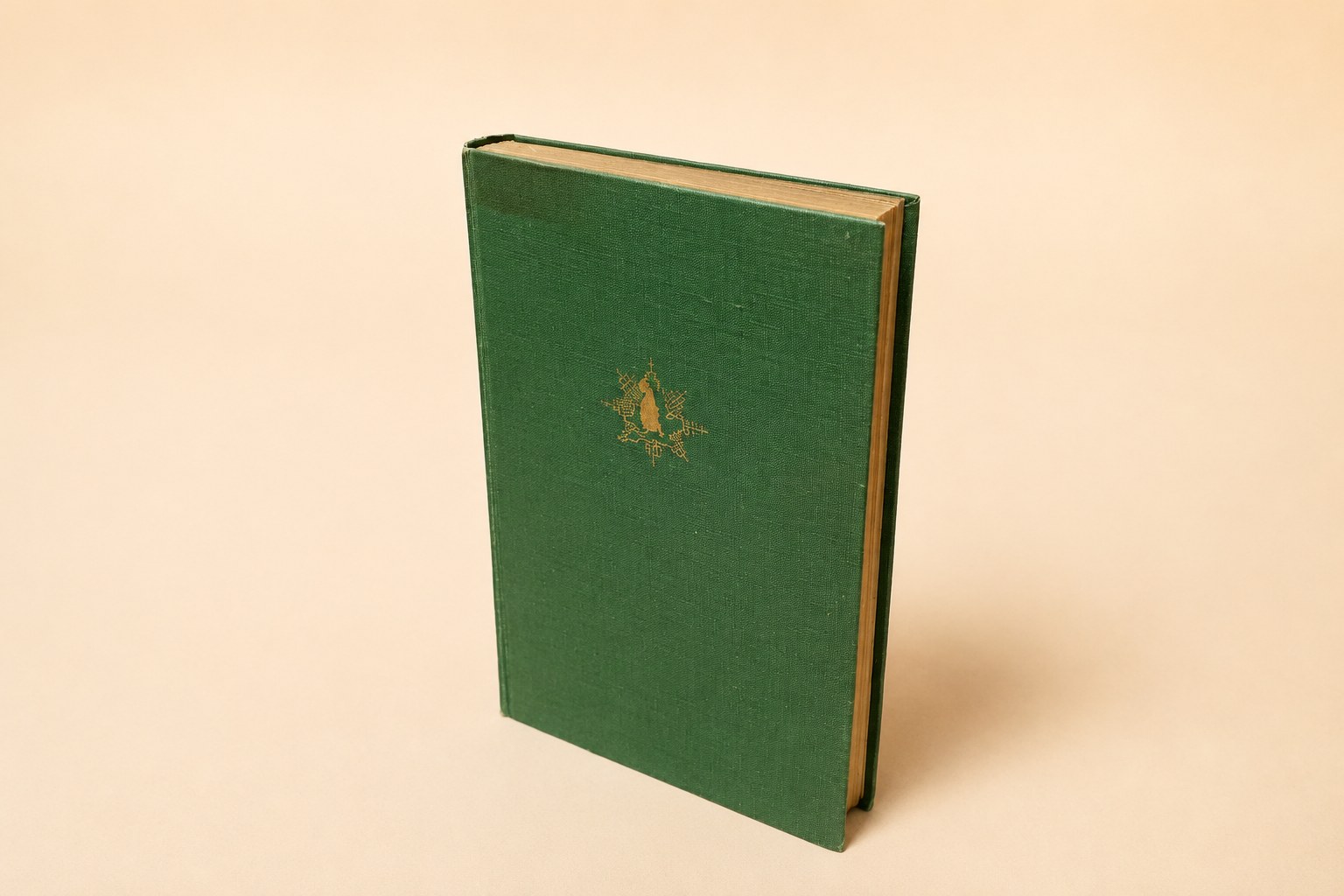
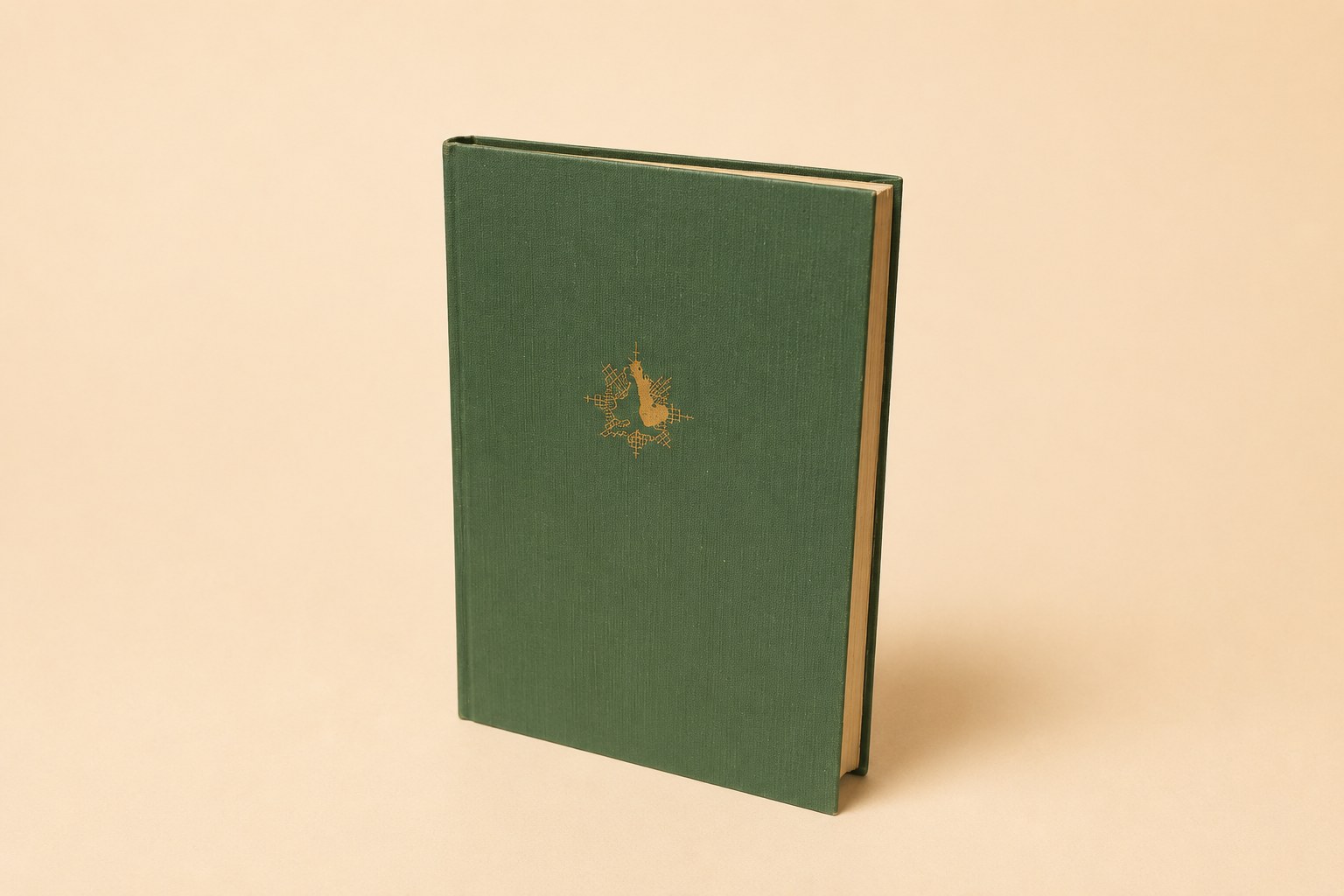
Italian Pictures, Drawn with Pen and Pencil is a classic Religious Tract Society gift-book, bound in blue-green cloth stamped in gilt and black with a classical bust, the domes of St Mark's, and a Roman ruin, its page-edges gilt on all three sides. Inside, a wood-engraved frontispiece (The Coliseum by Moonlight) opens a richly illustrated tour arranged in four movements — Rome and the Romans, Naples and Pompeii, Florence, Pisa, and Genoa, and Northern Italy (Venice, Verona, Milan, Turin) — the plates running from the Forum and the Catacombs to Vesuvius in eruption, the Leaning Tower, and the horses of St Mark.
Two Authors, and the RTS
The title page tells a small story of succession. The book is by the late Rev. Samuel Manning, LL.D. — Samuel Manning (1822–1881), the Baptist minister who was the Religious Tract Society's general book editor from 1863 and the originator of the whole Pen and Pencil series (Italian, Spanish, Swiss, English, American). But it is “a new edition, revised and partly rewritten by the Rev. S. G. Green, D.D.” — the same Samuel Gosnell Green who wrote the collection's French Pictures, and who took up and revised Manning's books after Manning's death in 1881. The two volumes in this collection are therefore not only companions in a series but linked by a single editorial hand.
The World It Came From
These lavishly illustrated, improving travel books were a staple of the late-Victorian household — the sights of Europe brought into the parlour for readers who might never cross the Alps. Italy, the land of the Grand Tour and of the classical and Christian past, was the natural jewel of the series, and the RTS gave it the full treatment: engravings by English and foreign artists, the antique and the picturesque side by side. It belongs with the collection's French Pictures and its German Album von Bremen as evidence of how the nineteenth century looked at Europe from an armchair.
This Copy
Honest, well-read condition: the blue-green cloth rubbed and the gilt dimmed, the spine frayed and chipped at head and tail with some cloth loss, and the text-block foxed in places, but sound and complete with its frontispiece and tissue guard. Its only ownership mark is a pair of pencilled initials, “DH,” on the floral pastedown — a quieter trace than the French volume's crowd of family names, but the same kind of small human signature.
Why It Matters
On its own it is a common and inexpensive book — the RTS printed the Pen and Pencil series by the thousand. Its value here is as one half of a pair: set beside the collection's French Pictures, it shows the series and its house style, and preserves the neat historical detail that both books pass through the hands of the same editor, S. G. Green — one written by him, one rescued and revised by him after its author's death. Together they are a tidy little monument to how Victorian Britain packaged the Continent.
References
- Italian Pictures, Drawn with Pen and Pencil (Samuel Manning), Internet Archive
- Samuel Manning (1822–1881), The Online Books Page
- Samuel Gosnell Green, Wikipedia
- Religious Tract Society, Wikipedia