Books & Literature
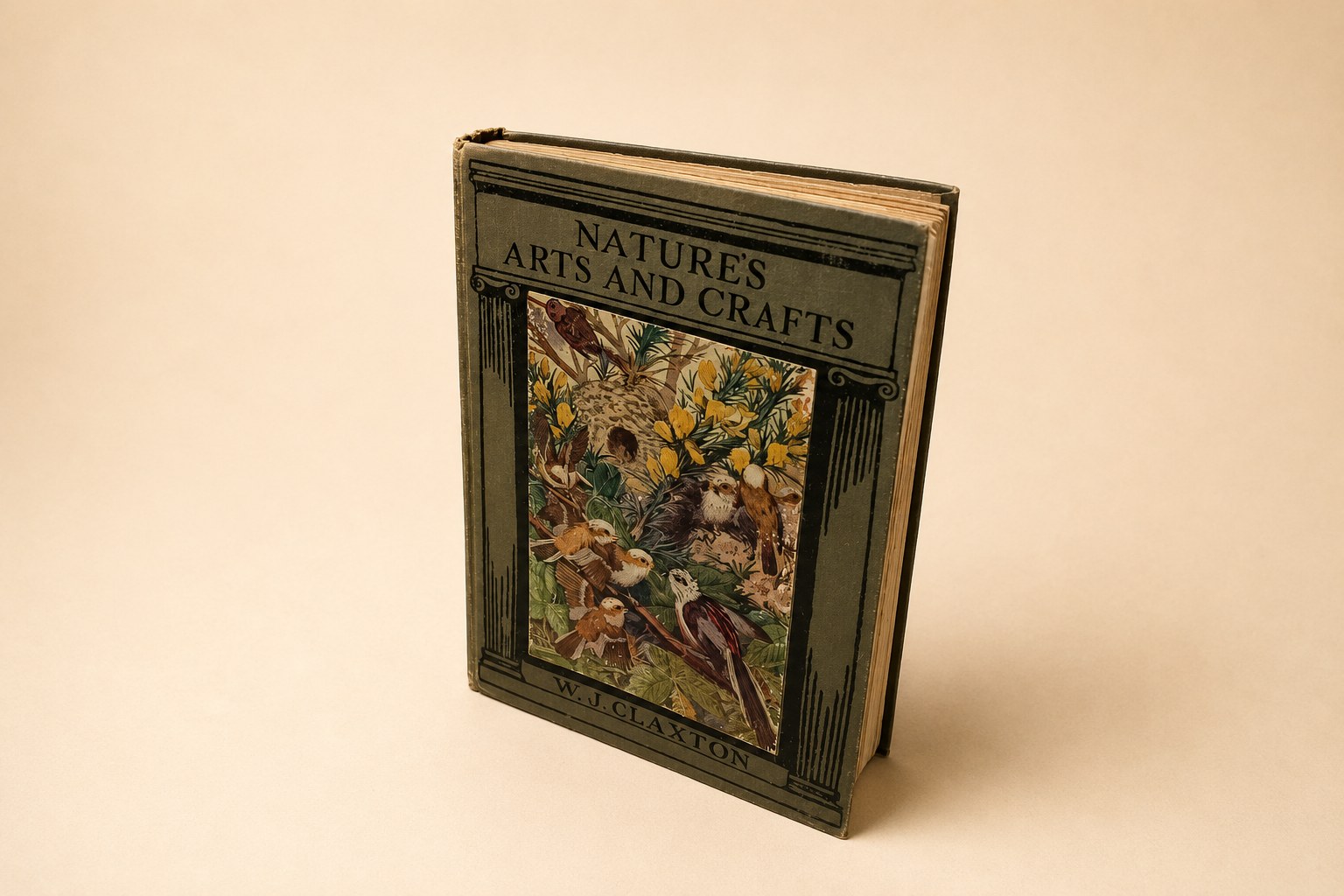
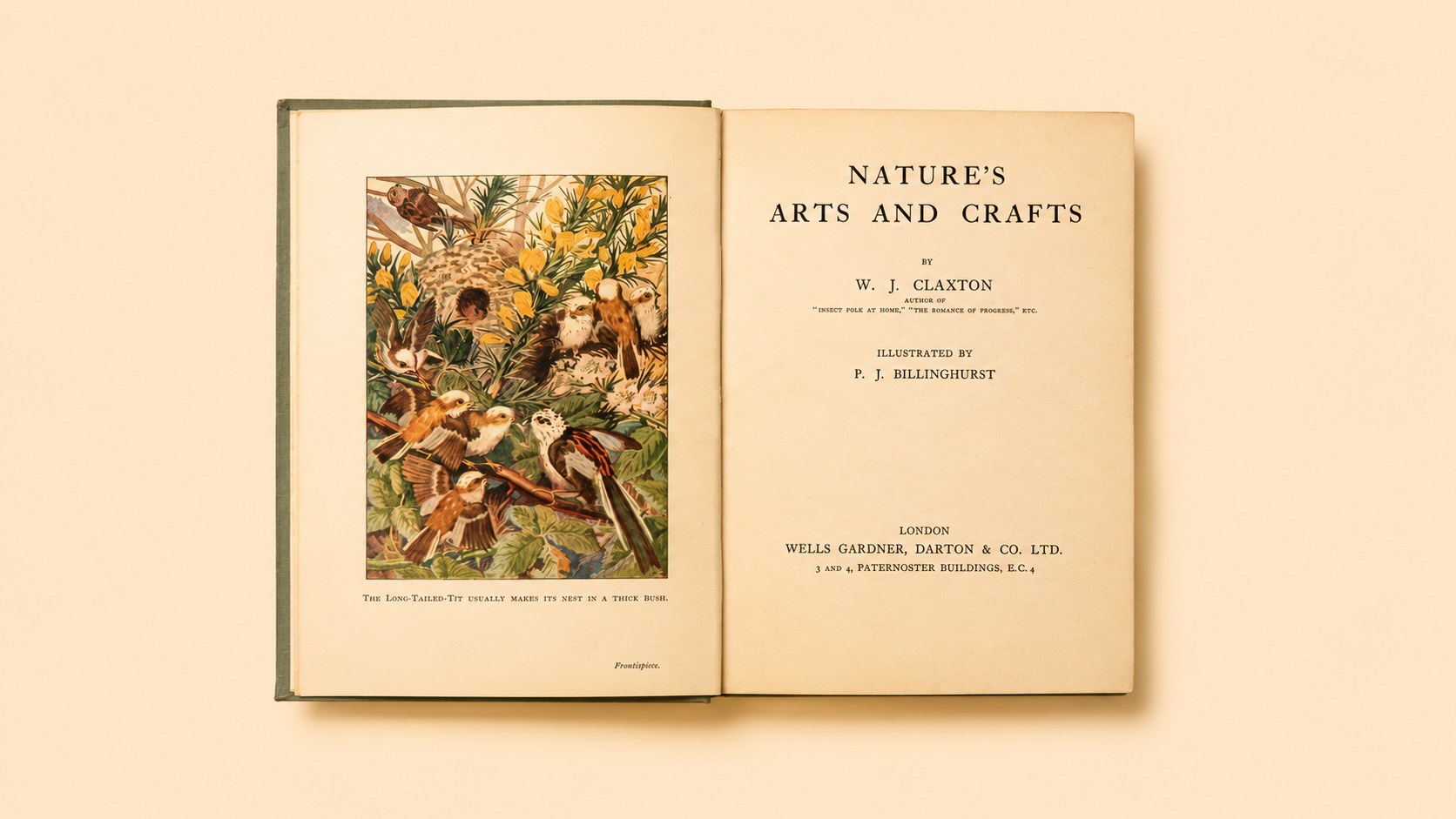
Nature's Arts and Crafts
Spiders as architects, squirrels as bankers, bower birds as upholsterers: an Edwardian nature book for children, awarded as an LCC school prize to Osmond Hollington of Tooting for English, July 1937.
A Private Archive of Antiques & Historical Objects
Books & Literature
Spiders as architects, squirrels as bankers, bower birds as upholsterers: an Edwardian nature book for children, awarded as an LCC school prize to Osmond Hollington of Tooting for English, July 1937.
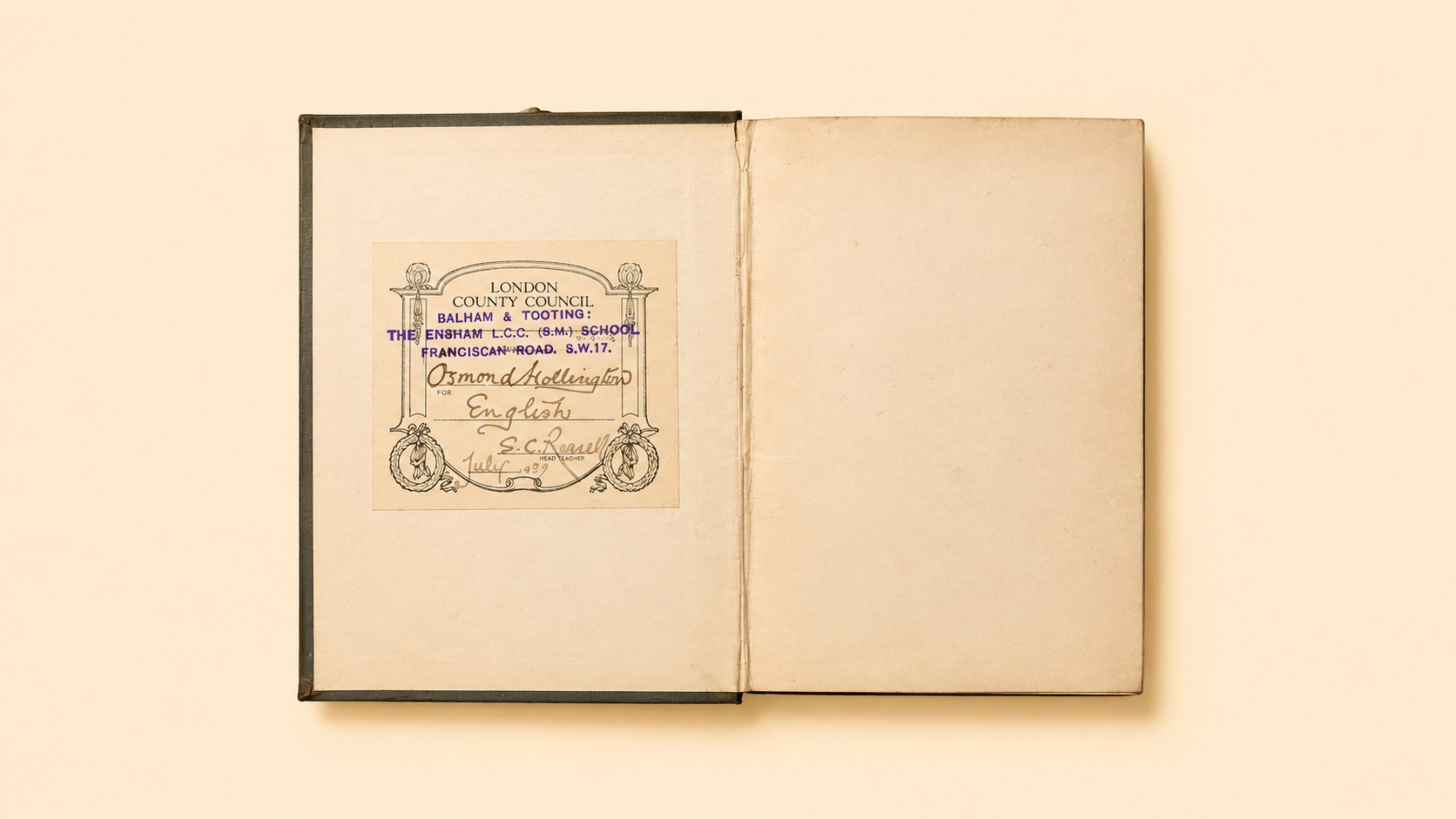
Somewhere in Tooting in July 1937, a schoolboy named Osmond Hollington was called up in front of the Ensham School to receive his prize for English: a book explaining that the animal kingdom is full of tradesmen. Spiders are architects. Moles are miners. Glow-worms are lamp-lighters, squirrels are bankers, and the bower bird, naturally, is an upholsterer. The stamp on the endpaper records the whole transaction: school, borough, subject, head teacher's signature. One small ceremony of interwar London public education, preserved in cloth and ink.
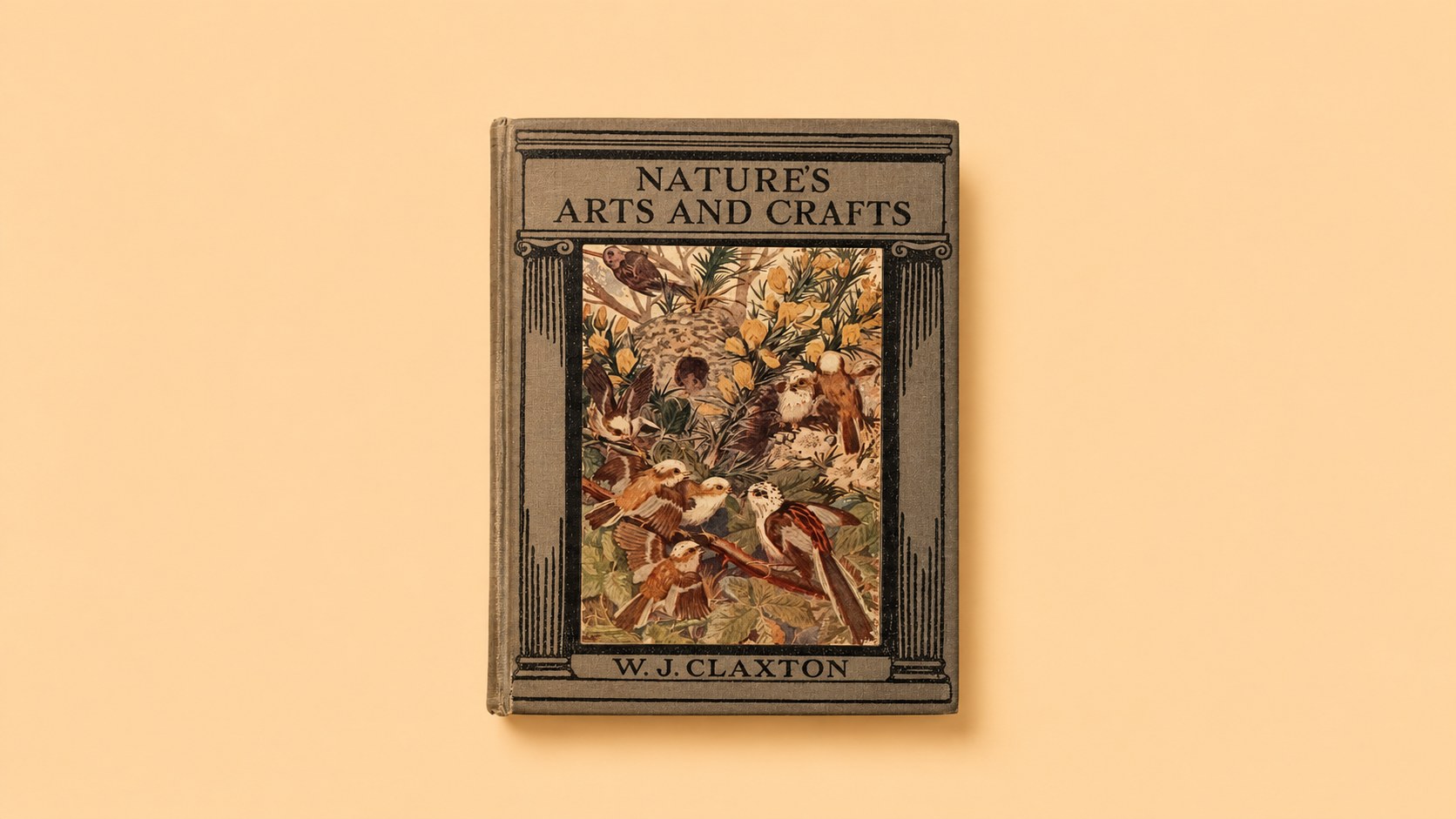
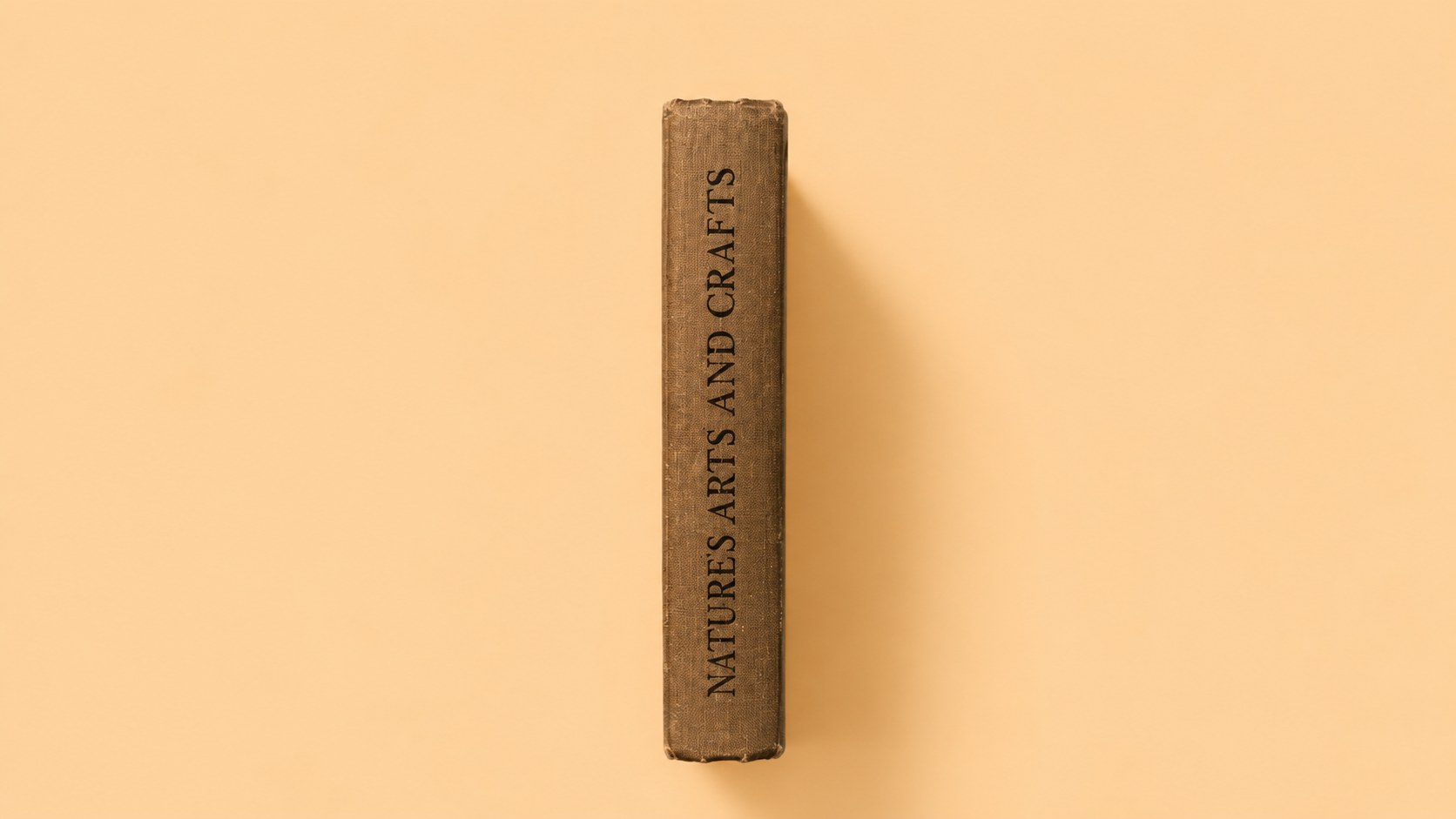
Nature's Arts and Crafts is a children's natural history book by W. J. Claxton, illustrated with seventeen black-and-white drawings by P. J. Billinghurst, published in London by Wells Gardner, Darton & Co. of Paternoster Buildings, beside St Paul's. The title page is undated (common for the period), but the publisher's E.C. 4 postal address (a district created in 1917) and the style of the uniform series advertised at the rear place it in the later 1910s of the firm's children's list — and since the E.C. 4 district only came into being in 1917, the imprint cannot predate that year. The dating (c. 1917–1920s) is inferred from such internal evidence rather than from any printed date.
Its twelve chapters assign the animals their professions: The Architects, The Builders, The Lamp-Lighters, The Miners, The Weavers, The Four-Footed Hunters, The Feathered Hunters, The Fishermen, The Scavengers, The Warriors, The Bankers, and The Upholsterers. The frontispiece shows the long-tailed tit nesting in a thick bush; a later plate explains that "the bees' cleverly constructed cells make admirable banking-houses." It is biology taught by metaphor: the natural world made legible to a child through the trades of the human one.
W. J. Claxton was a prolific Edwardian educational writer, author of titles ranging across nature study, industry, and early aviation including The Mastery of the Air and The Romance of Progress, about whom personally almost nothing is recorded; he survives entirely through his books. His illustrator is better documented: Percy James Billinghurst (1871–1933) specialised in finely observed animal pen-work; his fable books — A Hundred Fables of Æsop, A Hundred Fables of La Fontaine (1900) and A Hundred Anecdotes of Animals (1905) — remain his best-known work. (Claims sometimes repeated of Royal Academy Schools training and a chief-artist post at Pearson's periodicals have not been independently verified; his 1933 obituary is the outstanding source to check.) His cross-section of a trap-door spider's burrow in this volume, hinged lid and waiting spider rendered with a draughtsman's economy, is the style in miniature.
The publisher carries its own pedigree: Wells Gardner, Darton & Co. descended in part from the Darton family, pioneers of children's publishing since the 1780s, meaning this modest school prize stands at the end of more than a century of London juvenile bookmaking.
The book belongs to the great wave of nature study that swept British schooling in the early twentieth century: the conviction that observation of hedgerow and pond was moral as well as scientific education. And the prize stamp embeds it in a very specific institutional world: the London County Council school system, which marked achievement with book prizes chosen to be improving. The Ensham School building on Franciscan Road, Tooting, "(S.M.)" for Senior Mixed, still stands, now Franciscan Primary School, and is Grade II listed by Historic England.
The front endpaper carries the completed prize stamp: London County Council, Balham & Tooting / The Ensham L.C.C. (S.M.) School, Franciscan Road, S.W.17 / Osmond Hollington, FOR English / S.C. Russell, Head Teacher, July 1937. Of Osmond Hollington nothing further has been traced on the open record — but the rare surname-and-forename pairing makes him one of the most genealogically tractable names in the collection: the FreeBMD birth index (Wandsworth/Streatham, c. 1922–1926) and the 1939 Register, which would give his address, exact birthdate, and occupation two years after the prize, are the next steps. By the time he received it, the book was already a generation old; LCC schools commonly drew prize stock from established educational lists. Condition is good, consistent with a book that was kept rather than knocked about.
Most surviving Edwardian children's books are anonymous survivors. This one is a complete social document: author, illustrator, publisher, school, borough, head teacher, pupil, subject, and date, all connected in one object. It records how a great city taught its children to look at nature (by analogy, with charm, in good pen-and-ink) and how it rewarded a boy who was good at English in the summer of 1937, two years before the war that would scatter that world. The building where it happened still stands; the book is the smaller, more portable monument.
Provenance
LCC school prize: stamp on front endpaper records award to Osmond Hollington for English, The Ensham L.C.C. (S.M.) School, Franciscan Road, Tooting, S.C. Russell Head Teacher, July 1937. The school was recorded in the 1930s as The Ensham Central Council School; the listed building now serves as a Wandsworth council professional centre. Publication date (c. 1917–1920s) inferred from the E.C.4 imprint (district created 1917) and series evidence; title page undated. Hollington untraced on the open record; next steps are FreeBMD (Wandsworth births c. 1922–26) and the 1939 Register.
England South
Forty years of sketch-books opened in the year England needed them most: the first volume of Sydney R. Jones's illustrated journey through the southern counties, from London to the very end of Cornwall (1948).
England West
The trilogy's longest journey: Thames to Hadrian's Wall through Cotswold wool churches, Shakespeare country, the Marches, and the industrial North. The richest of the three volumes in architectural range (1950).
England East
The farewell volume: Jones closes his life's work with a journey from the Thames to the Scottish border, saluting Durham coalminers alongside Northumbrian castles, under an epigraph about ashes and graves (1954).