Opening
The book opens with a death. The frontispiece shows a dying figure in bed, two mourners kneeling, an angel descending, and beneath it the caption: "Say unto my Soul, 'thy sins be forgiven, depart in peace.'" This was not considered morbid; it was considered useful. The pocket prayer book was the most intimate object in Georgian print culture: small enough for a coat pocket, carried daily, consulted in sickness, on journeys, in wakeful nights, and at deathbeds. The spine of this one carries no title at all. It did not need one. Its owner knew exactly what it was.
The Object
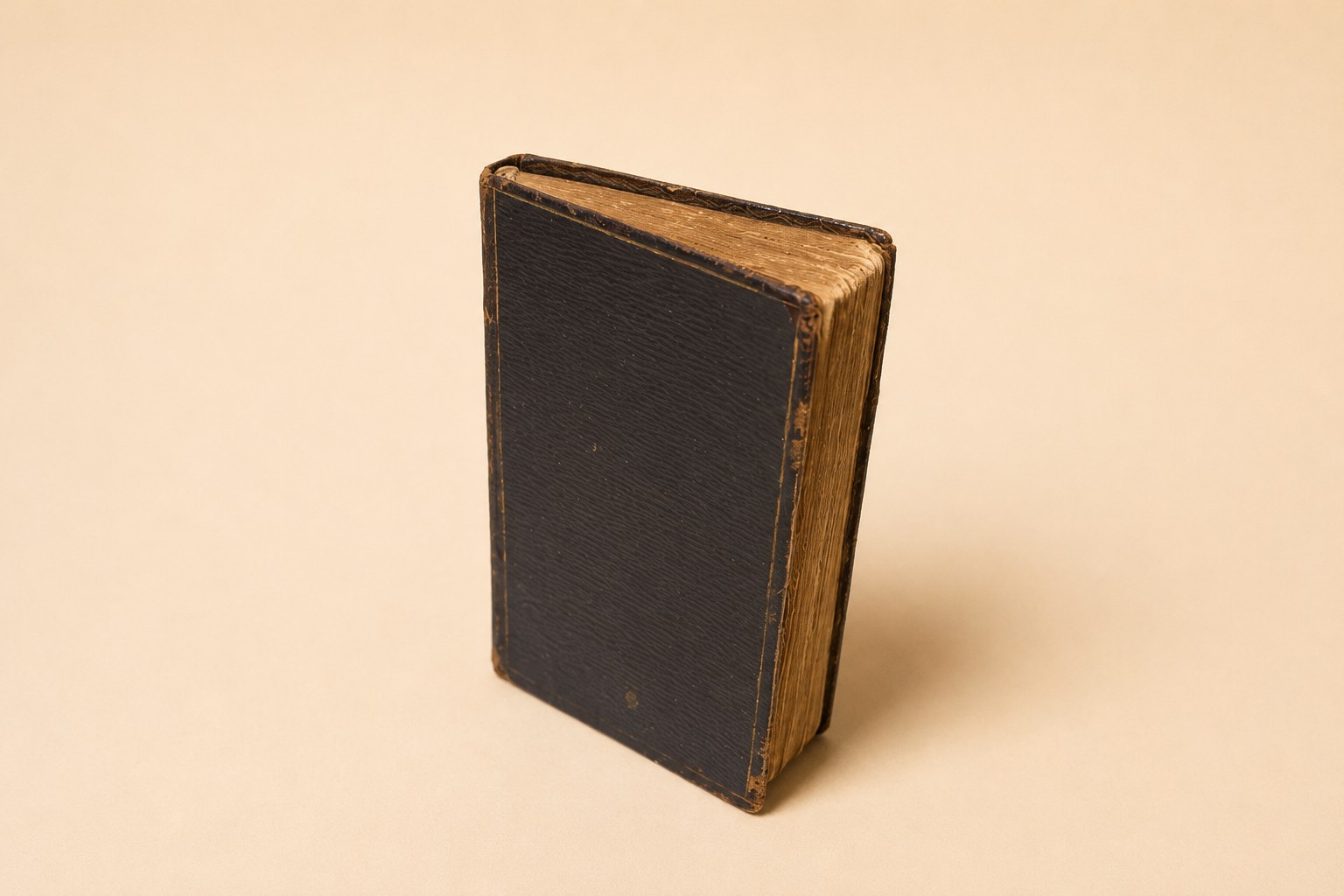
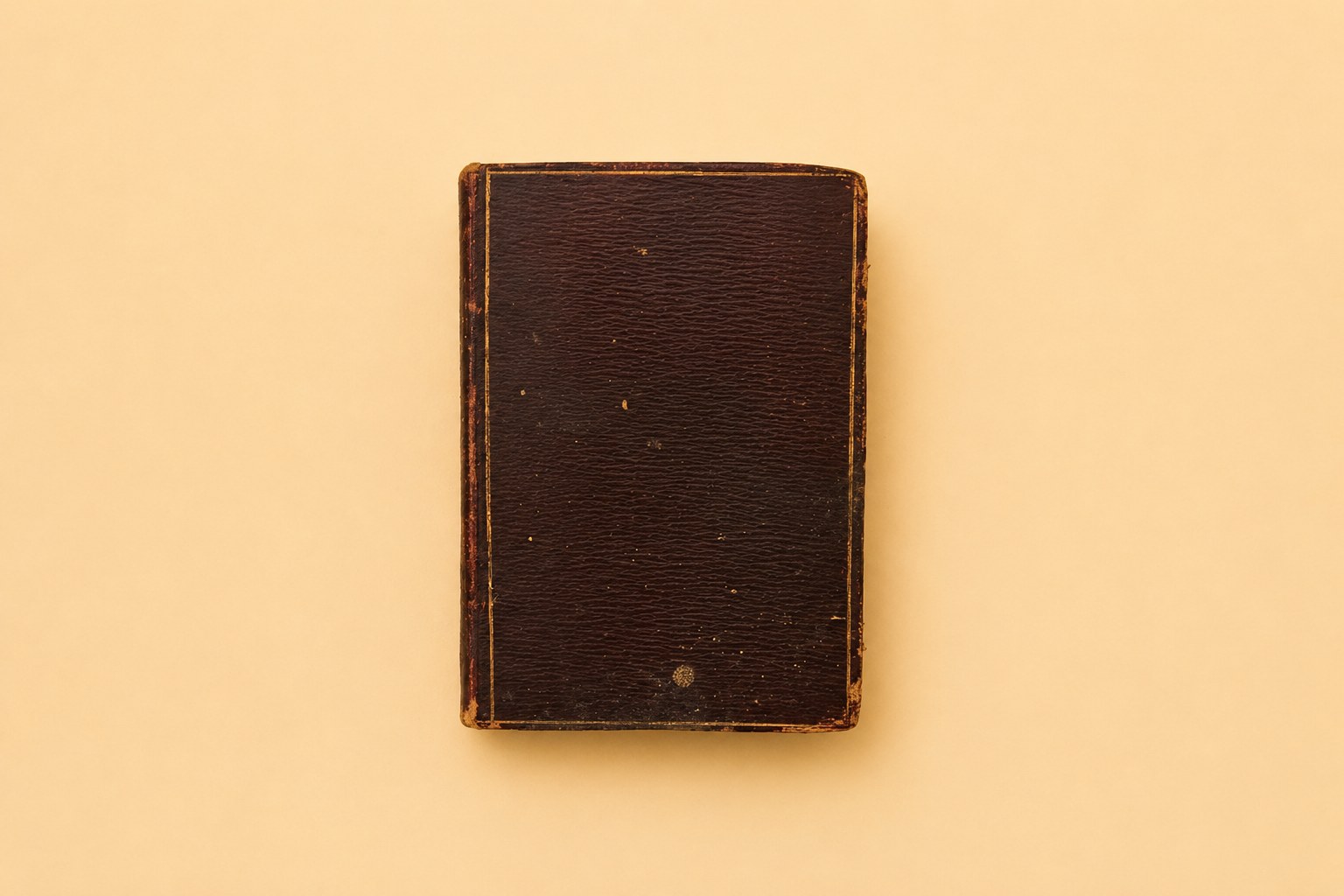
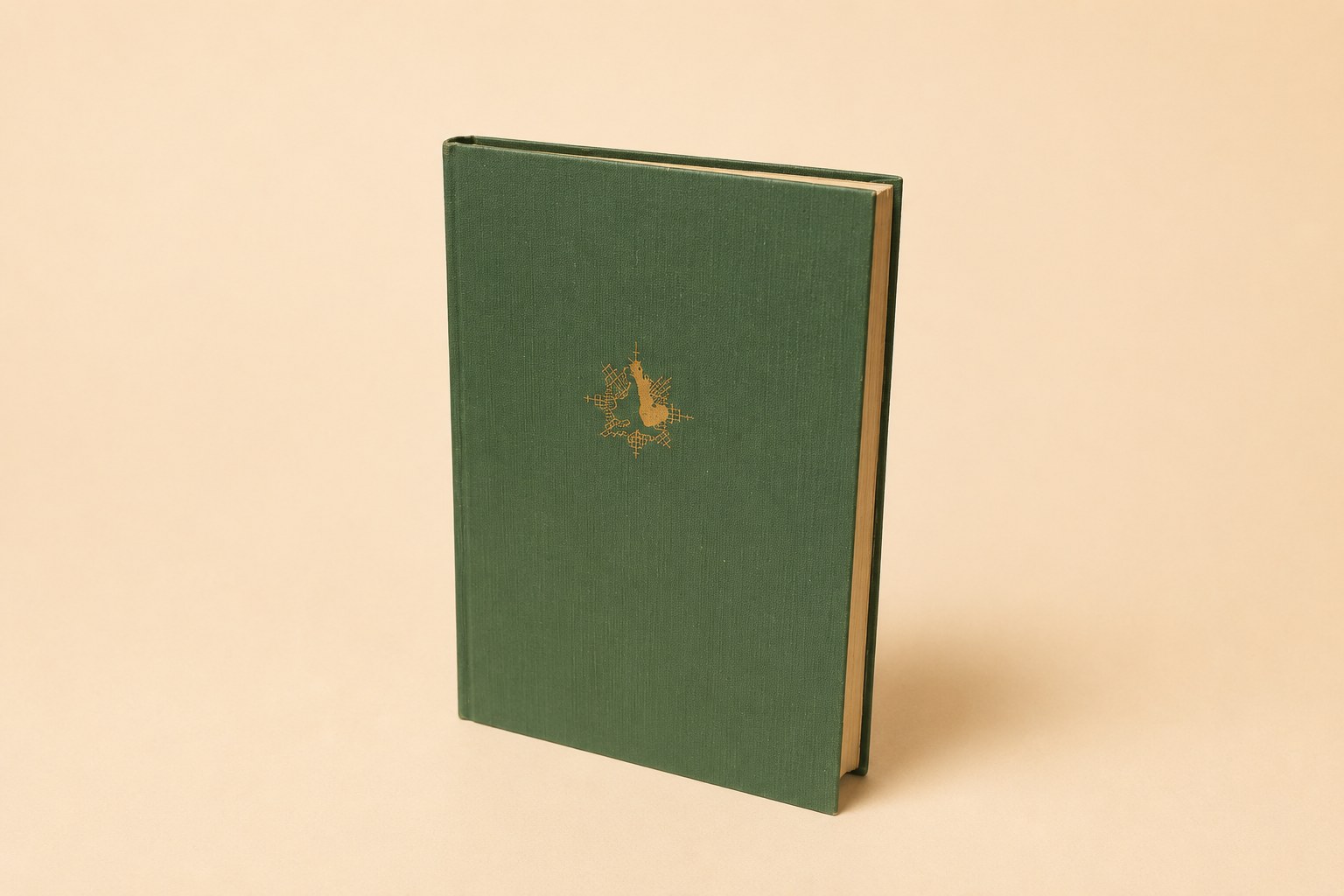
Pietas Quotidiana ("Daily Piety"), Prayers and Meditations for Every Day in the Week, and on Various Occasions is a pocket-octavo devotional of 112 pages, bound in dark navy pebbled leather with gilt-ruled boards and fully gilded page edges. The title page names no author or compiler, only a consortium of three London publishers: Peacock & Mansfield of Salisbury Square, Bowdery & Kerby of Oxford Street, and Charles Tilt of Fleet Street. The printer's imprint at the rear reads W. Willcockson, Rolls Buildings, Fetter Lane.
The volume is undated, but the imprint itself is the clock. Tilt traded on Fleet Street from about 1823 to 1844, and Willcockson appears in the 1843 Post Office Directory at Rolls Buildings with a second address in Salisbury Square, tying printer to publisher. Triangulating the firms' active years dates the book to roughly 1826–1840, an inference from the directories, not a printed date, but a tight one.
Inside is a complete architecture of private devotion: morning prayers for each day of the week; evening prayers; occasional prayers for everything from Easter to In Depression of Spirits, On going a Journey, and For the Use of a Friend labouring under a painful and fatal Illness; one-line "ejaculations" for sudden need; meditations on death, judgment, and the wakeful night; and closing hymns under the heading Lyrica Sacra.
The Maker
The compilation is anonymous, as the genre demanded; authority rested with the "eminent Divines and Moral Writers" being excerpted, not the editor. Later reprints attribute the compilation to Thomas Dale, the Anglican clergyman and poet, though this copy itself makes no such claim and the attribution should be treated as probable rather than certain. The work was clearly a steady seller: editions as late as a twenty-third are recorded, and a copy survives in the Royal Collection.
The frontispiece, by contrast, is signed. It was drawn by Henry Corbould (1787–1844), middle of three generations of Corbould artists, a Royal Academy silver medallist under Fuseli who spent thirty years drawing the British Museum's marbles, and engraved by C. Davenport, a stipple engraver who worked regularly with the Corbould designers for the London trade.
The World It Came From
Two details give this small book a longer reach than its size suggests. First, among the occasional prayers is one headed By Madame Elizabeth of France: Élisabeth, sister of Louis XVI, who refused exile, stayed with the royal family, and was guillotined in 1794. Her presence in an English Protestant pocket book is quietly remarkable: Regency piety made room for a Catholic princess-martyr of the Revolution. Second, the "ejaculations" (instant prayers for temptation, affliction, danger) descend from the Augustinian idea of prayer as the mind cast toward God, giving the book coverage of every spiritual tempo from the structured daily office to the involuntary cry.
This Copy
This copy survives in good condition: the navy leather sound, the gilt edges bright, the engraved frontispiece clean. The only mark of ownership is a pencilled 11 on the rear pastedown, an old stock or shelf number. No name, no date, no dedication: an object built for a privacy it still keeps.
Why It Matters
This is the oldest book in the collection and the most intimate. Bibles and sermon volumes were household furniture; the pocket devotional lived on the person, closer to a wallet than to a library. Between its covers sit the daily rhythm of Georgian private faith, the engraving trade of Regency London, a publishers' consortium traceable through street directories, and a guillotined French princess: 112 pages, no author, no title on the spine, and nearly two centuries of survival on its own quiet terms.
References
- Pietas Quotidiana, Royal Collection Trust
- Pietas Quotidiana, Google Books (scan)
- Pietas Quotidiana, 23rd edition, Google Books
- Pietas Quotidiana reprint attributed to Thomas Dale
- Henry Corbould, Wikipedia
- Charles Tilt, British Museum
- Charles Tilt, London Street Views
- William Willcockson, 1843 London Street Directory
- Élisabeth of France, Wikipedia
- Salisbury Square, Wikipedia
- Augustine of Hippo, Wikipedia
- Society for Promoting Christian Knowledge, Wikipedia