Opening
The first volume of the collection's six-volume Hammerton Popular History — the Amalgamated Press's red-cloth history of the First World War, sold to the interwar household. This is Volume I, and it opens the whole story: The First Phase — 1914.
The Object
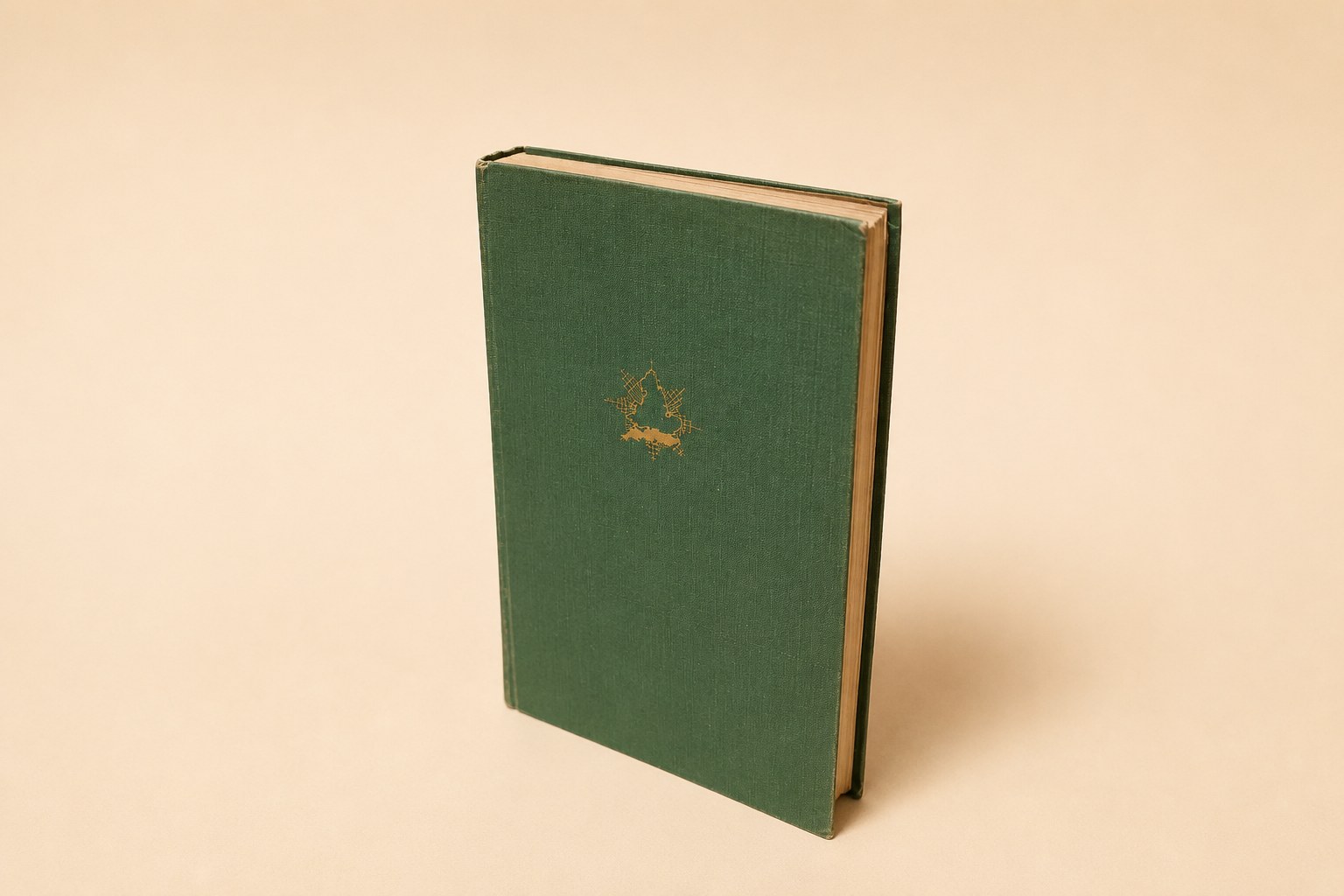
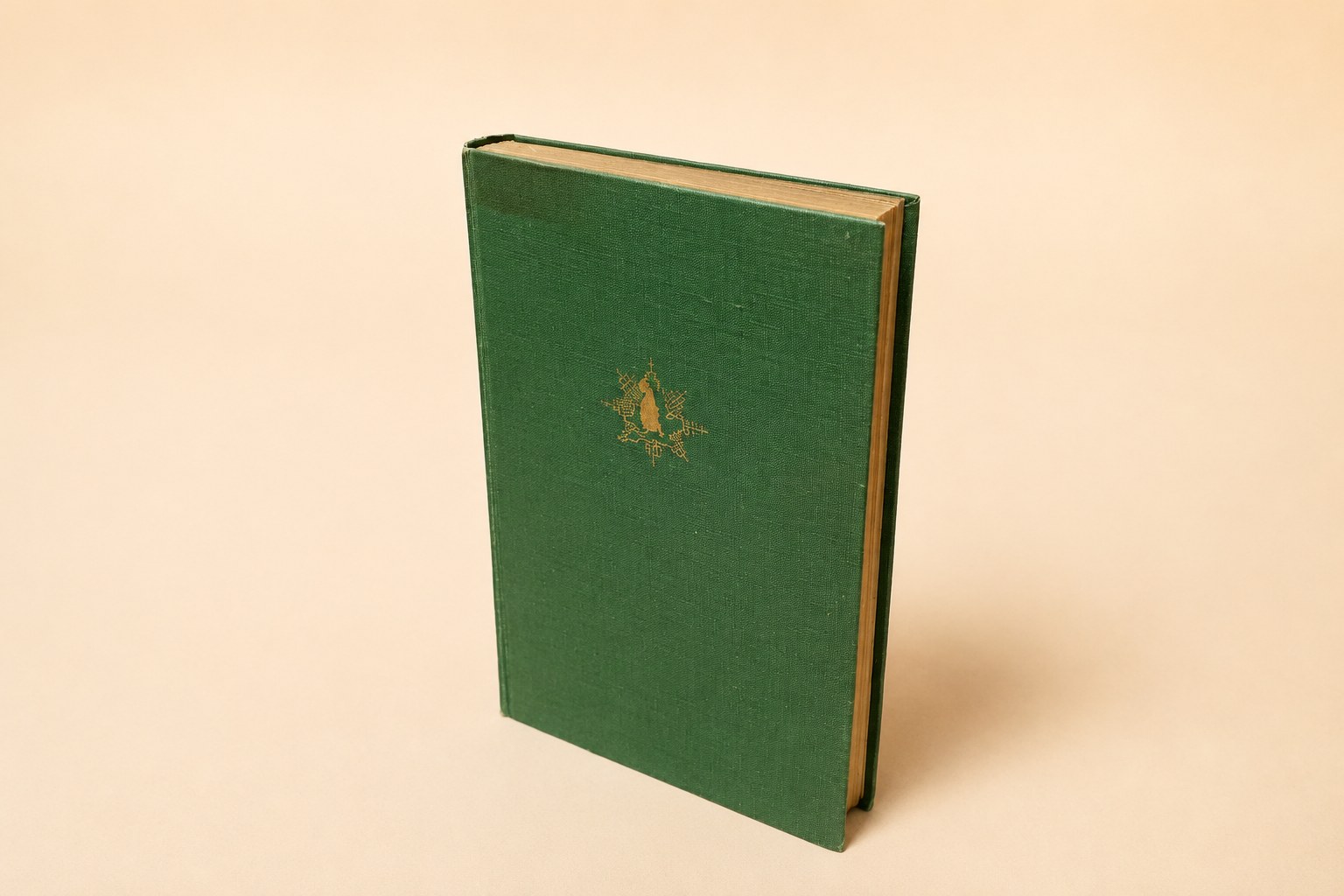
Uniform with the rest of the set: red cloth, the front board blocked in black with a heavy field-gun, the spine gilt-lettered Hammerton at the head and The First Phase 1914 / Volume 1 at the foot around a rising-sun-and-torch device. The title page carries the standard imprint — edited by Sir J. A. Hammerton, “complete in six volumes with about 1000 maps & illustrations,” London, The Fleetway House. Inside, thirty chapters of Literary Contents and a List of Plates past sixty images — this being the opening volume, its frontispiece is Sir John French Arrives at Boulogne.
The Editor
Across the set the editor is Sir John Alexander Hammerton (1871–1949), the Dictionary of National Biography's “most successful creator of large-scale works of reference in the history of publishing,” knighted in 1932. A Popular History of the Great War is his retrospective, mass-market account of the war he had already chronicled fortnightly for the Amalgamated Press while it was being fought.
The First Phase
Volume I holds 1914 — the year the world fell in. Its chapters run from The World Drift to War and The Fateful Thirteen Days through the German invasion of Belgium and the loss of Antwerp; the Battle of Mons and the British retreat to Le Cateau; the First Battle of the Marne that saved Paris; the Russian disaster in East Prussia; the Race to the Sea and the First Battle of Ypres; and, at sea, Coronel and the Falklands. It is the war of movement — cavalry, retreats, open flanks — before the trenches set and the killing became industrial.
The World It Came From
Like its companions, this is popular print culture doing public memory: the war sold volume by volume, bound in bright cloth for the family shelf. It belongs with the collection's Volume III and Volume IV of the same set, the Odhams Fifty Amazing Stories of the Great War, and the News Chronicle Gilbert & Sullivan part-work — the interwar Fleet Street machine at work.
This Copy
Honest reading condition — Fair. The red cloth is rubbed and a little sunned, the spine toned and worn at the ends, and the paper browned, but the volume is sound and complete with its title page, contents and plate lists. No ownership inscription. From the February 2026 lot of twenty-seven books.
Why It Matters
Inexpensive on its own, but as Volume I it is the natural head of the run: with the collection's Volumes III and IV it now holds three of the six, and it carries the war's beginning — the outbreak, Belgium, Mons and the Marne. It stands, with its fellows, as a specimen of how interwar Britain remembered the Great War through the mass-market part-work of Sir John Hammerton and the Amalgamated Press.
References
- Sir John Alexander Hammerton, Wikipedia
- A Popular History of the Great War, Vol. 1 (Internet Archive)
- Amalgamated Press, Wikipedia
- First Battle of the Marne, Wikipedia
- Battle of Mons, Wikipedia
- First Battle of Ypres, Wikipedia