Books & Literature
Song-Tide
An 1888 shilling selection of 'the Blind Poet' Philip Bourke Marston — friend of Rossetti and Swinburne — edited with a memoir by William Sharp, later the secret 'Fiona Macleod'.



A Private Archive of Antiques & Historical Objects
Books & Literature
An 1888 shilling selection of 'the Blind Poet' Philip Bourke Marston — friend of Rossetti and Swinburne — edited with a memoir by William Sharp, later the secret 'Fiona Macleod'.
This small, red-ruled shilling book holds the saddest poetry in the collection, and one of its most interesting literary backstories. Its author, Philip Bourke Marston, known to his age simply as “the Blind Poet,” wrote elegies out of a life of darkness and loss; its editor, William Sharp, would go on to lead one of the strangest double lives in English letters. And it opens, astonishingly for a pocket reprint, with an original sonnet by Dante Gabriel Rossetti.
The book is Song-Tide by Philip Bourke Marston, issued in The Canterbury Poets — the celebrated shilling poetry series published by Walter Scott of London and Newcastle and edited by William Sharp — dated 1888 and printed at Scott's works in Felling, Newcastle-on-Tyne. It is a dark blue cloth pocket volume with a paper spine label and red-ruled pages, gathering work from Marston's three collections (Song-Tide, All in All, Wind-Voices) and the Garden Secrets assembled in America by Louise Chandler Moulton. Sharp prefaces it with a memoir, and immediately after stands Rossetti's sonnet To Philip Bourke Marston, inciting me to poetic work. The advertisement leaves list the whole Canterbury Poets and the companion prose Camelot Series (edited by Ernest Rhys) — a roll-call of the cheap-classics revolution of the 1880s.
Marston (1850–1887) lost his sight at the age of three and much of the rest of his life to grief: his fiancée, his sisters and his closest friends all died young, one after another. Rossetti made him a friend and introduced him to his circle; Swinburne, who wrote a sonnet to his memory, was another. The result is verse steeped in sorrow, sleep and the sea — sonnets titled In Praise of Sleep, Haunted Rooms, No Death, and the Garden Secrets lyrics in which roses and the wind speak. It is minor Pre-Raphaelite poetry, but unusually pure in its single, dark key.
The man who assembled this memorial was William Sharp (1855–1905) — also brought into Rossetti's orbit, also a friend of Marston — who edited Marston's posthumous prose and poetry for Walter Scott in 1887–88. Sharp's real fame, though, was still to come, and it was extraordinary: from 1894 he wrote a celebrated body of mystical Celtic-Revival work under the name “Fiona Macleod,” maintaining the fiction of a separate, reclusive woman author — corresponding in her hand, inventing her biography — so completely that the secret held until his death. To find his name on the title page of this quiet 1888 reprint is to catch one of literature's great impersonators early, doing the patient work of friendship.
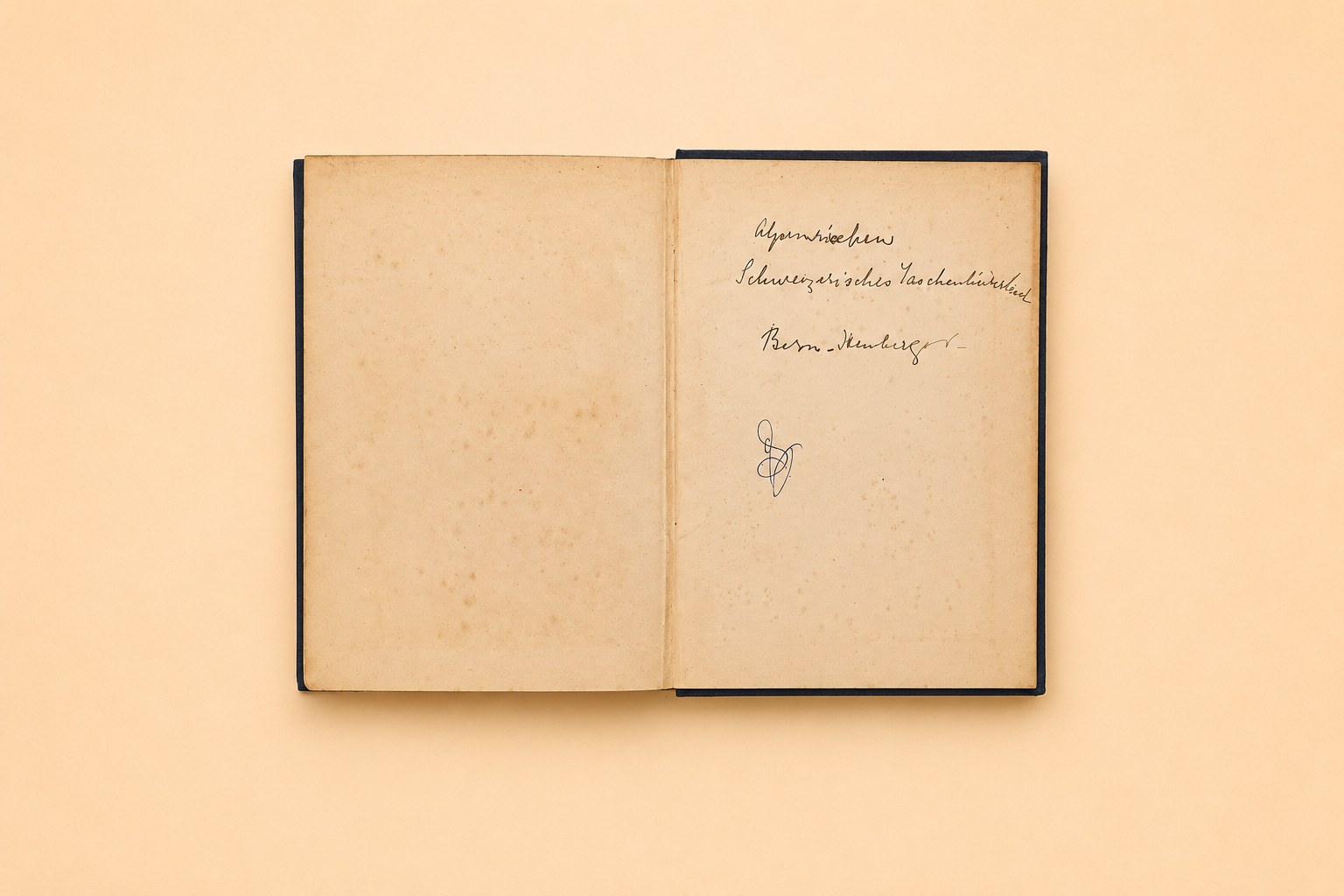
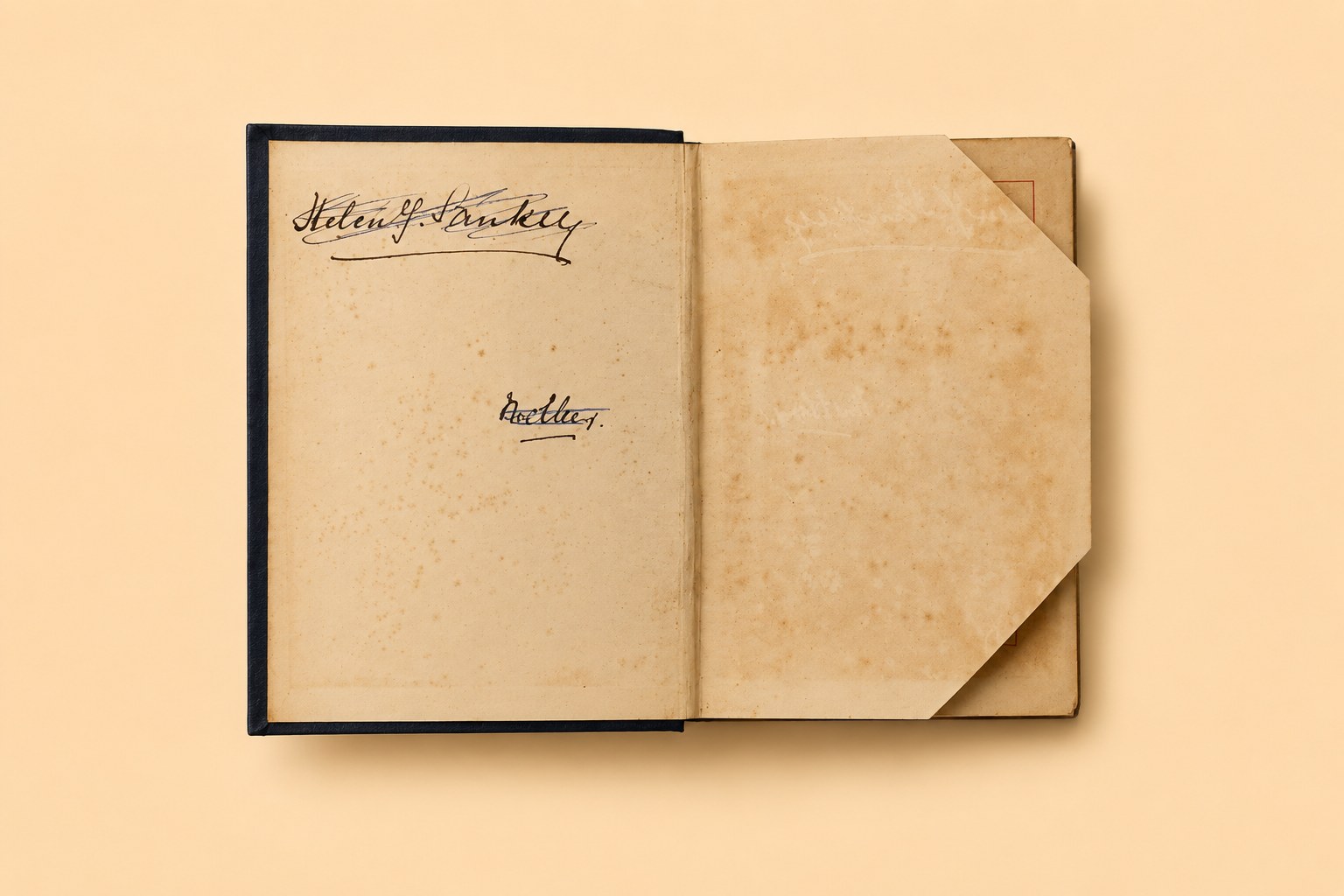
The volume is in good but well-worn condition: the blue cloth rubbed, the spine ends frayed and the paper spine label chipped with loss, and the preliminaries foxed — an inexpensive book that was clearly read. It carries two layers of ownership. In ink on the endpaper are the signatures Helen G. Sankey and Mother — suggesting a book passed within a family. And in pencil on a flyleaf, in a German hand, someone has noted Alpenröschen, Schweizerisches Taschenliederbuch, Bern: Heuberger — the title of a Swiss pocket songbook, unrelated to the text and unexplained, the kind of stray marginal trace that makes a used book its own small mystery.
For a shilling reprint it is remarkably well connected: a memorial volume of a genuine member of the Pre-Raphaelite circle, opening with a Rossetti sonnet, edited by the future “Fiona Macleod,” and issued in the series that helped put serious poetry into ordinary pockets in the 1880s — the Victorian forerunner of the Penguin Classics impulse elsewhere in this collection. Add a family's signatures and a wandering German note, and a common little book becomes a dense knot of literary and human history.
Provenance
The Canterbury Poets (ed. William Sharp); Walter Scott, London, 1888; printed at Felling, Newcastle-on-Tyne. Posthumous selection of Philip Bourke Marston's verse with Sharp's memoir; includes D. G. Rossetti's sonnet 'To Philip Bourke Marston'. Ink ownership signatures on the endpaper: 'Helen G. Sankey' and 'Mother'. A separate pencil annotation on a flyleaf, in German, references a Swiss pocket songbook — 'Alpenröschen, Schweizerisches Taschenliederbuch, Bern: Heuberger' — unexplained, possibly a former owner's note of another book. One of a group of 27 books acquired together in February 2026; acquisition cost in the Ledger.
England South
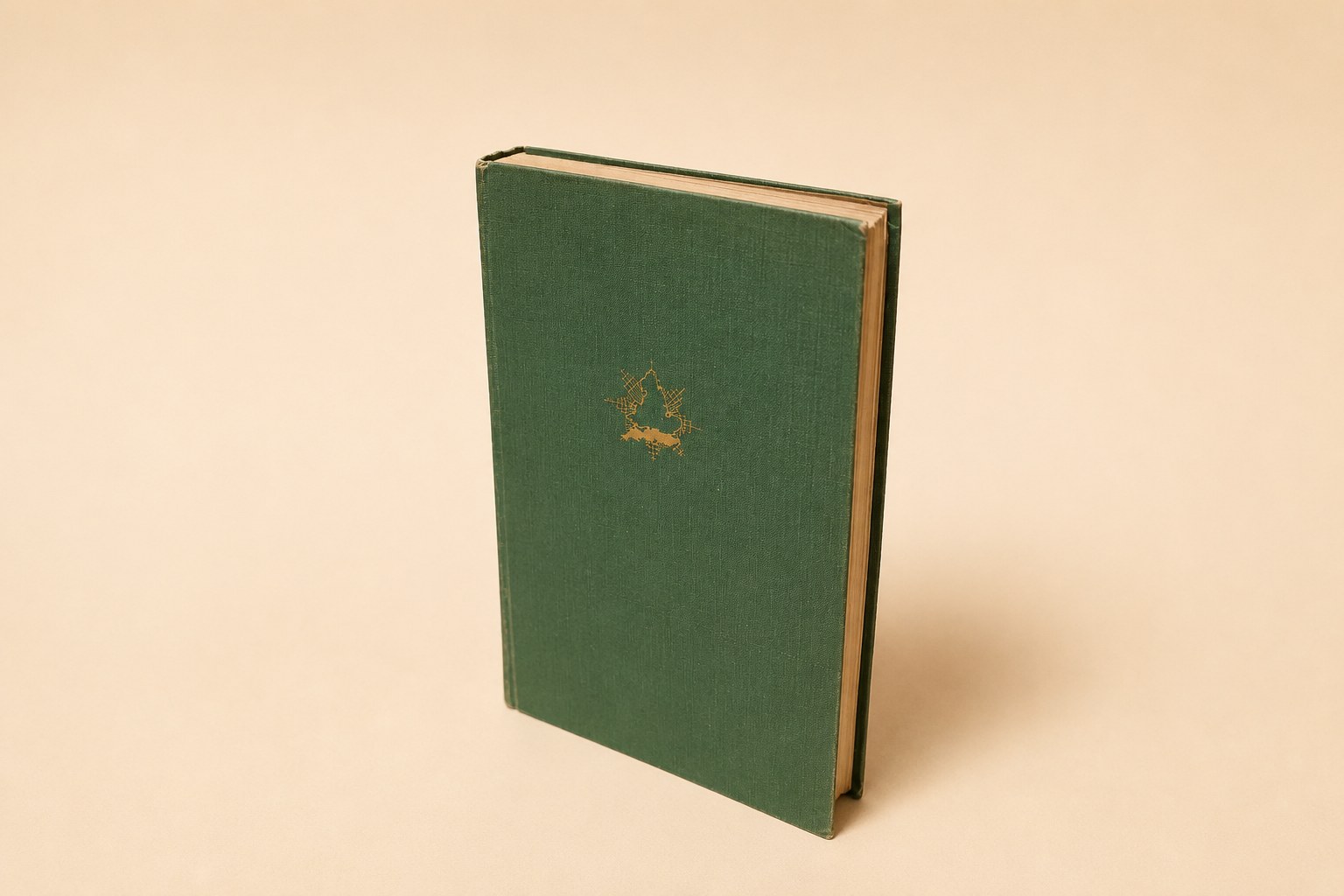
Forty years of sketch-books opened in the year England needed them most: the first volume of Sydney R. Jones's illustrated journey through the southern counties, from London to the very end of Cornwall (1948).
England West
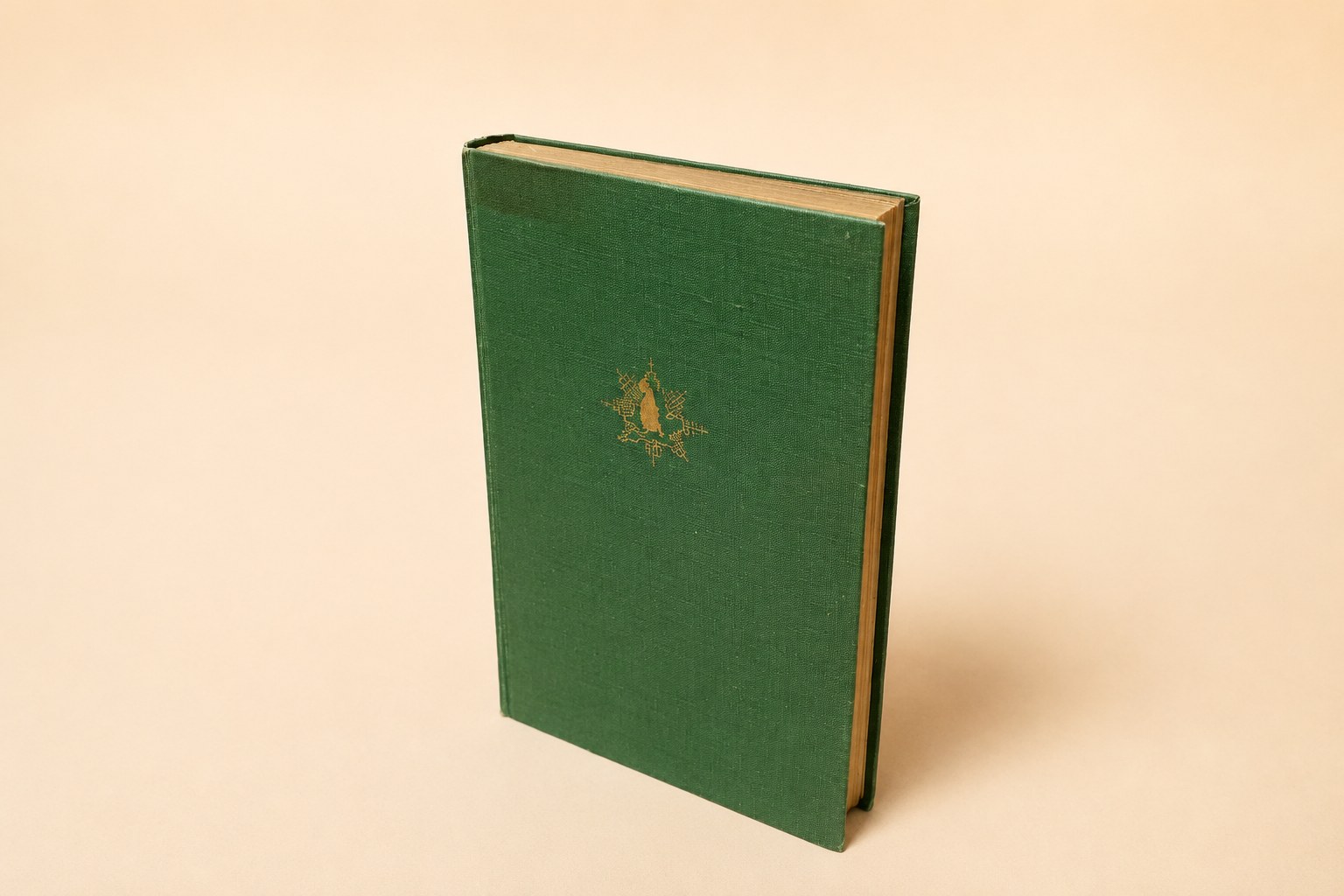
The trilogy's longest journey: Thames to Hadrian's Wall through Cotswold wool churches, Shakespeare country, the Marches, and the industrial North. The richest of the three volumes in architectural range (1950).

England East
The farewell volume: Jones closes his life's work with a journey from the Thames to the Scottish border, saluting Durham coalminers alongside Northumbrian castles, under an epigraph about ashes and graves (1954).