Opening
First, the spelling. The title page says Shakspeare, and it is not a misprint. The poet's own surviving signatures read Shakspere, Shakspeare, Shakspear, never the form we use today; the spelling was genuinely unsettled, and Victorian editors who dropped the first "e" were signalling fidelity to the documents over convention. That tells you what kind of book this is: a complete Shakespeare for ordinary households, edited with deliberate modesty by an editor who never even gives his name, and sold, in this series edition, by the hundred thousand.
The Object
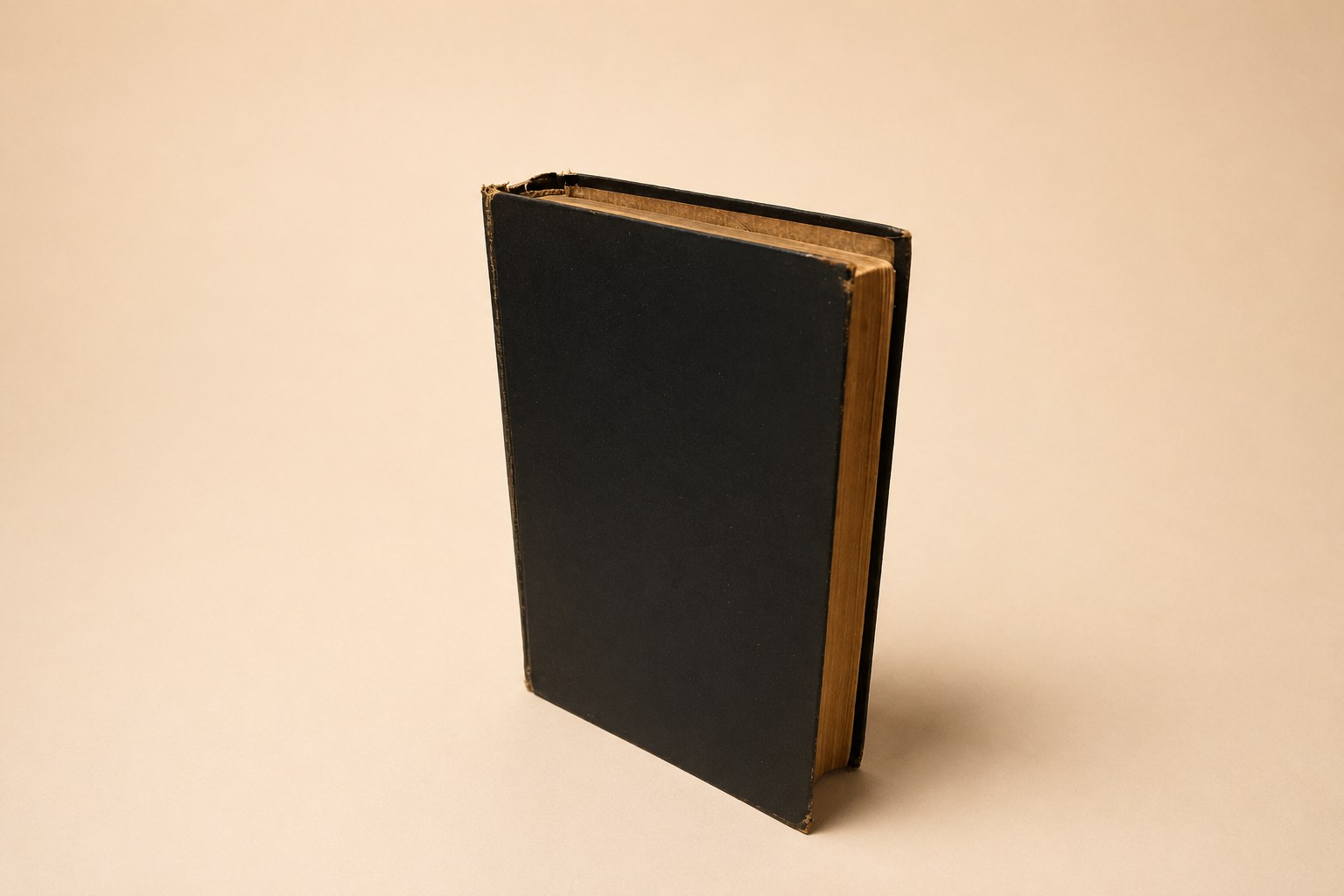
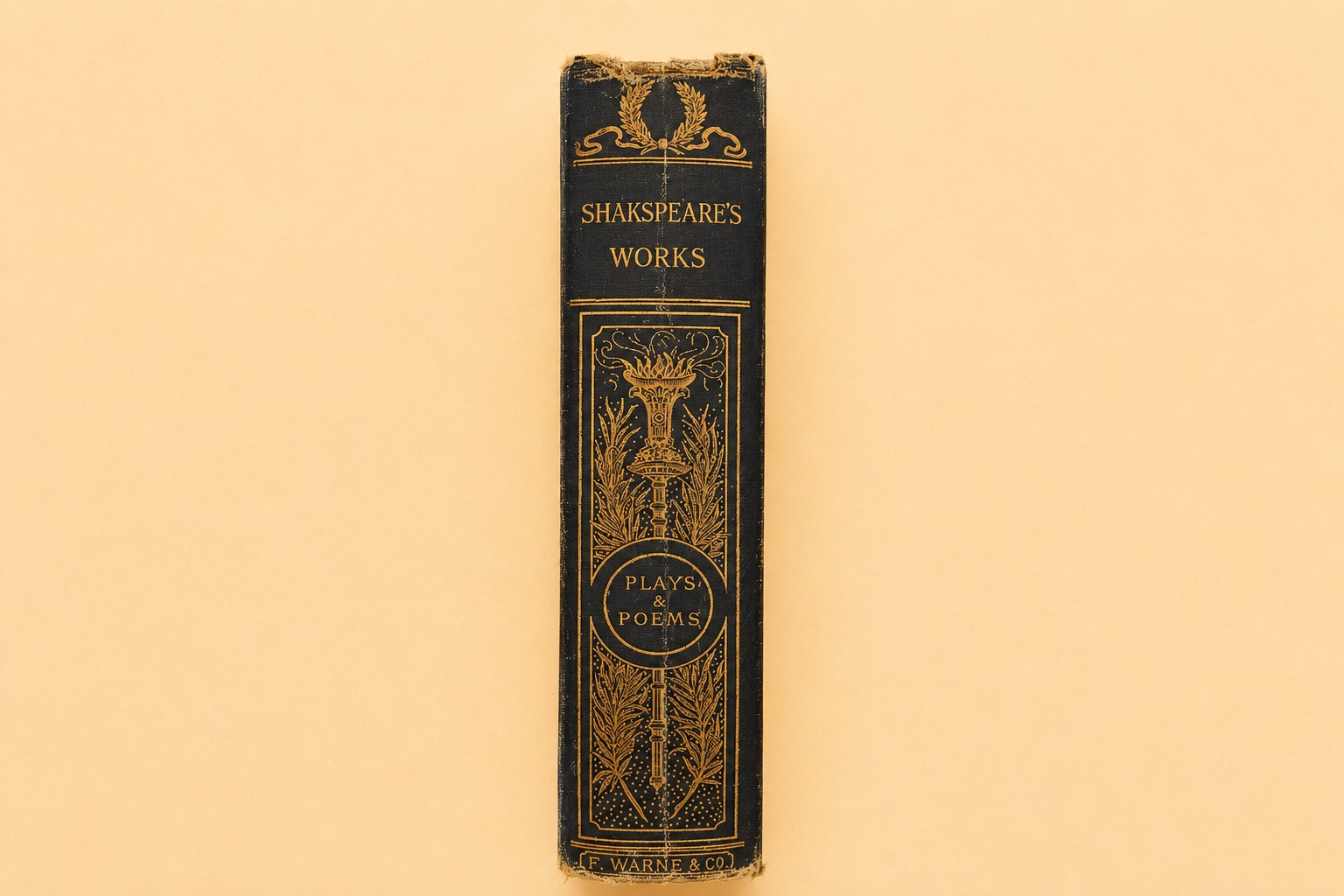
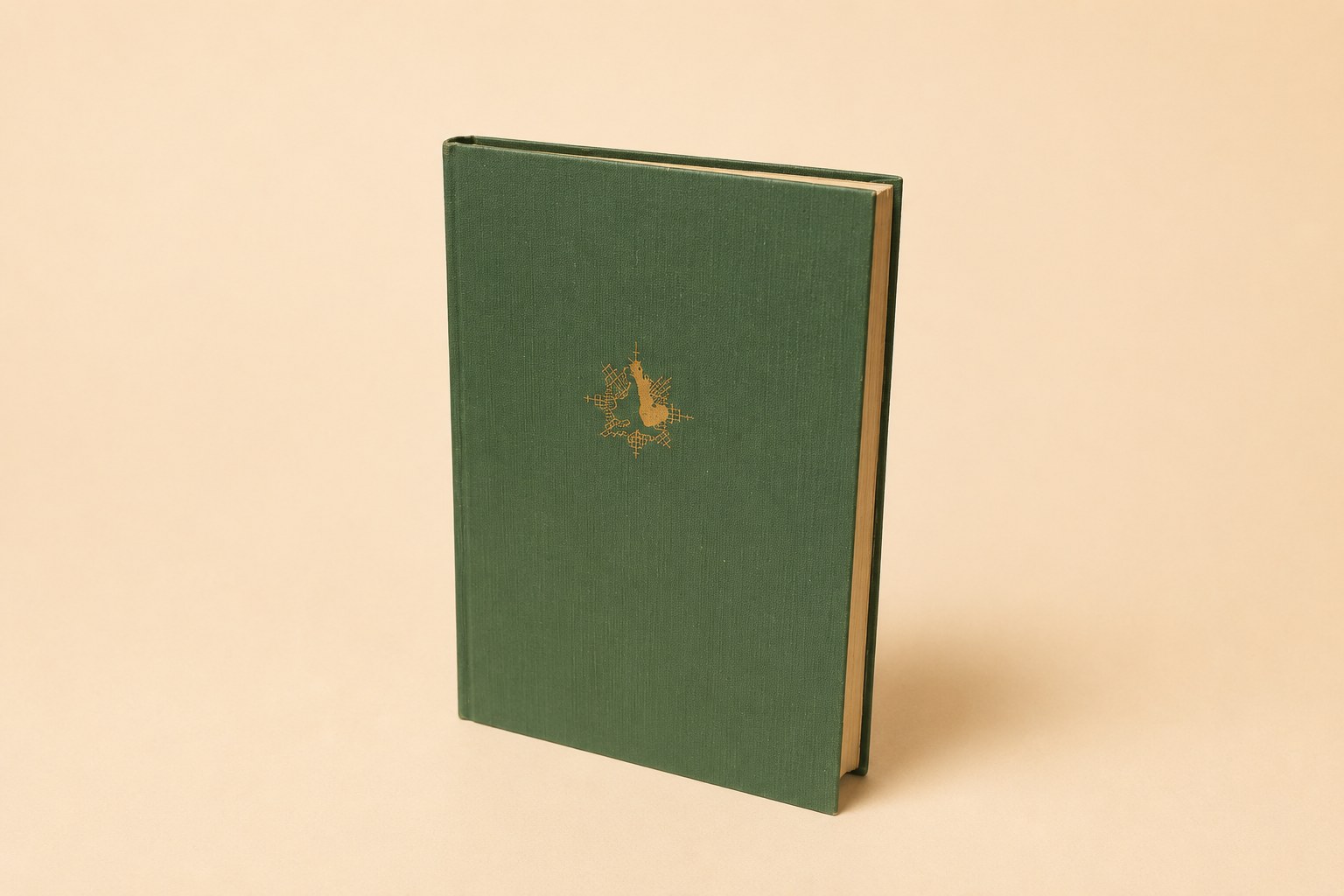
The Works of William Shakspeare is a single-volume complete works in Frederick Warne & Co.'s Chandos Classics series ("Carefully Edited from the Best Texts. With a Memoir, Glossary, etc."), printed in Edinburgh by Morrison and Gibb and published from London and New York. The volume is undated, as cheap Victorian reprints usually were; the Morrison & Gibb imprint and the series advertisements at the rear place it around 1879–1900, a dating from internal evidence rather than any printed year.
Onto thin India-style paper the publisher compressed an entire shelf: a Memoir of Shakespeare, the text of his will, thirty-seven plays, Venus and Adonis, Lucrece, the Sonnets, the remaining poems, and a glossary: 921 pages in one hand-sized volume. The unsigned preface declares the editorial creed: text compared against the First Folio and the Quartos, emendations only where the early printings were manifestly in error, and no new readings introduced. The plays follow Folio order to Henry VIII, after which the editor quietly regroups them: classical plays together, Titus Andronicus and Pericles held to the end as "doubtful."
The Maker
Frederick Warne (1825–1901) set up on his own in 1865 at Chandos House, Bedford Street (the address that named the series) after fourteen years as a partner in Routledge, Warne and Routledge. The Chandos Classics, launched in 1868, were his manifesto: standard English literature, decently printed and bound, at prices working households could pay. The series grew to 154 volumes and five million copies sold, of which the Shakespeare alone accounted for some 340,000, making this one of the most widely owned Shakespeares of the Victorian age. The same firm would later publish Kate Greenaway, Randolph Caldecott, and, from 1902, Beatrix Potter's Peter Rabbit. The Edinburgh–London production split (Scottish presses, Strand imprint) was the standard economics of the cheap reprint trade.
The World It Came From
The Victorian era democratised Shakespeare. For two centuries the complete works had been a luxury object; the railway age, cheap paper, and stereotype printing turned them into a parlour staple, and publishers like Warne, Routledge, and Cassell competed to put the national poet in every home. A one-volume complete works was a particular kind of promise: not a book to dip into but a possession, often the most serious book in the house after the Bible, given as prizes, wedding gifts, and tokens of self-improvement. The print runs tell the story: a third of a million copies of this edition alone, absorbed by a reading nation.
This Copy
This copy is in good condition for a book designed to be used hard, with one honest flaw: the front free endpaper is lacking, very possibly removed precisely because it once carried an inscription. The thin paper remains supple and the Victorian cloth binding sound. The rear advertisements for Warne's Imperial Poets and Cavendish Library series survive, small windows into the catalogue this book once shared.
Why It Matters
As a text, this edition contributed nothing new to Shakespeare scholarship, by design. As an object, it documents something larger: the moment the complete works stopped being property of the educated few. Its anonymous editor, its defiant documentary spelling, its 921 india-paper pages, and its 340,000 siblings together represent the high-water mark of the Victorian campaign to make the best literature ordinary: arguably the most consequential thing that ever happened to Shakespeare's readership.
References
- Frederick Warne — Dictionary of National Biography (1912 Supplement), Wikisource
- Frederick Warne & Co, Wikipedia
- The Chandos Classics series list, publishinghistory.com
- Warne St Clair Collection, University of Reading Special Collections
- Morrison and Gibb, Wikipedia
- Spelling of Shakespeare's name, Wikipedia
- First Folio, Wikipedia
- Shakespeare quarto, Wikipedia
- William Shakespeare, Wikipedia
- Beatrix Potter, Wikipedia