Dorothy Kathleen Broster wrote about lost causes for a generation that had just lived through the largest lost cause in its history. These three Heinemann hardbacks, all from the late 1920s, sat on British shelves while the country counted what the Great War had taken — and what they offered, in place of an answer, was loyalty, sacrifice, and honourable defeat, dressed up in the tartan of an eighteenth-century rebellion that had failed two centuries before.
The cause was the Jacobite rising of 1745, when Charles Edward Stuart — Bonnie Prince Charlie, the Young Pretender — landed in the Highlands to win back his family's three crowns and very nearly did. It ended in the sleet at Culloden in April 1746 and in a long, brutal pacification of the glens. Broster took that doomed, romantic, comprehensively beaten adventure and made it the emotional engine of three novels.

The Flight of the Heron, first published in October 1925, made her name: the story of the Highland gentleman Ewen Cameron and the Englishman whose fate keeps crossing his through the disaster of the '45. The copy on this shelf is the February 1927 cheaper edition at 3/6 — the printing that finally brought the book within reach of an ordinary purse — and someone, that very year, was given it as a present and wrote Xmas 1927 on the front endpaper. The Gleam in the North, in this October 1930 impression from the Whitefriars Press, carries the story nine years past the rising to follow the real, historical Dr Archibald Cameron — the last man hanged for Jacobitism. The Wounded Name, first a John Murray title of 1922 and reissued by Heinemann from the Windmill Press in 1928–29, transplants the same obsession to Royalist France; its title comes from the dying Hamlet, begging Horatio to report him and his cause aright — a wounded name, a story that must be told correctly or not at all.
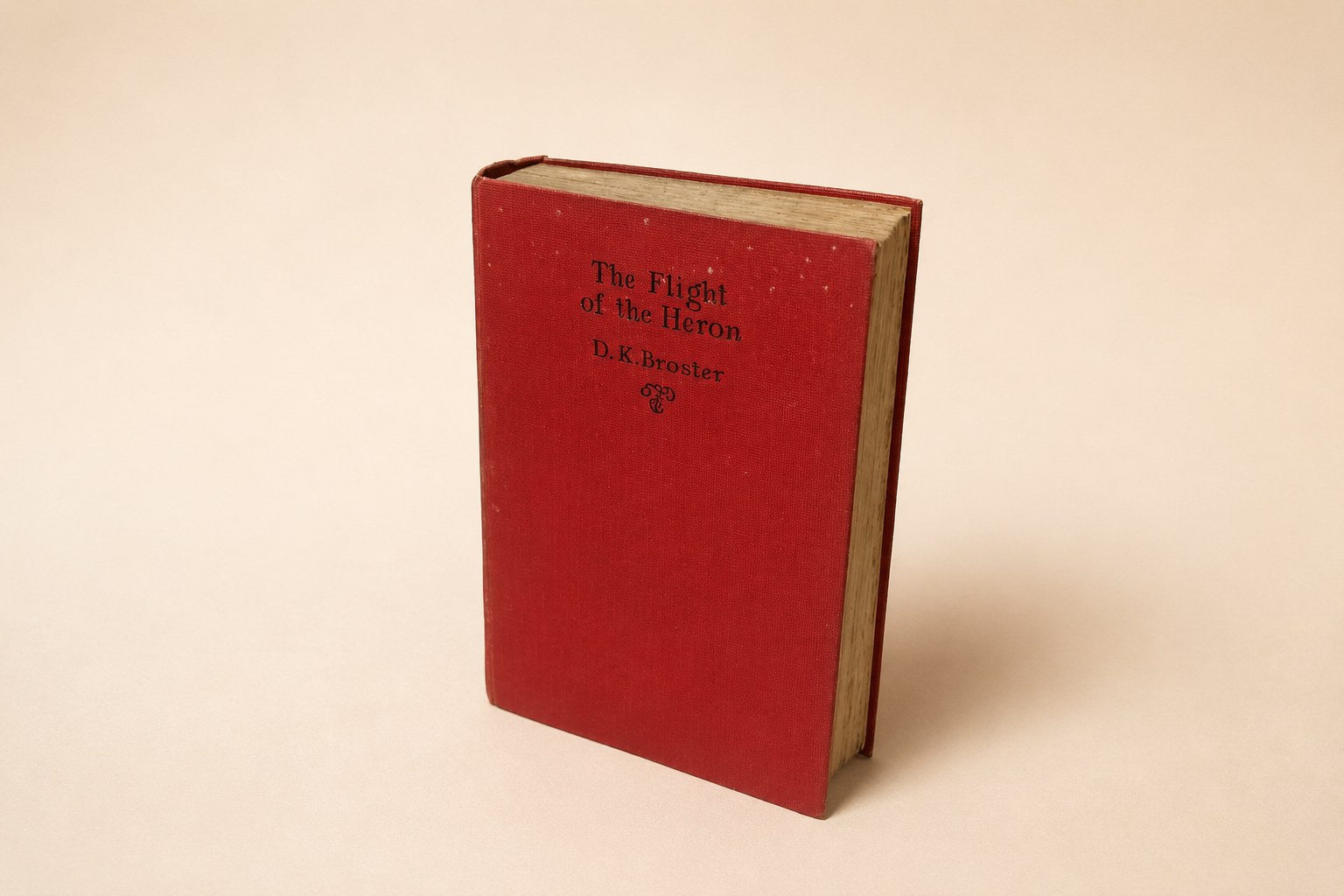
The defining Jacobite novel of the 20th century, built on a heron prophecy and an impossible friendship across enemy lines; this copy from the 1927 cheaper edition, inscribed by its first owner, Dickie Mackenzie.
View object →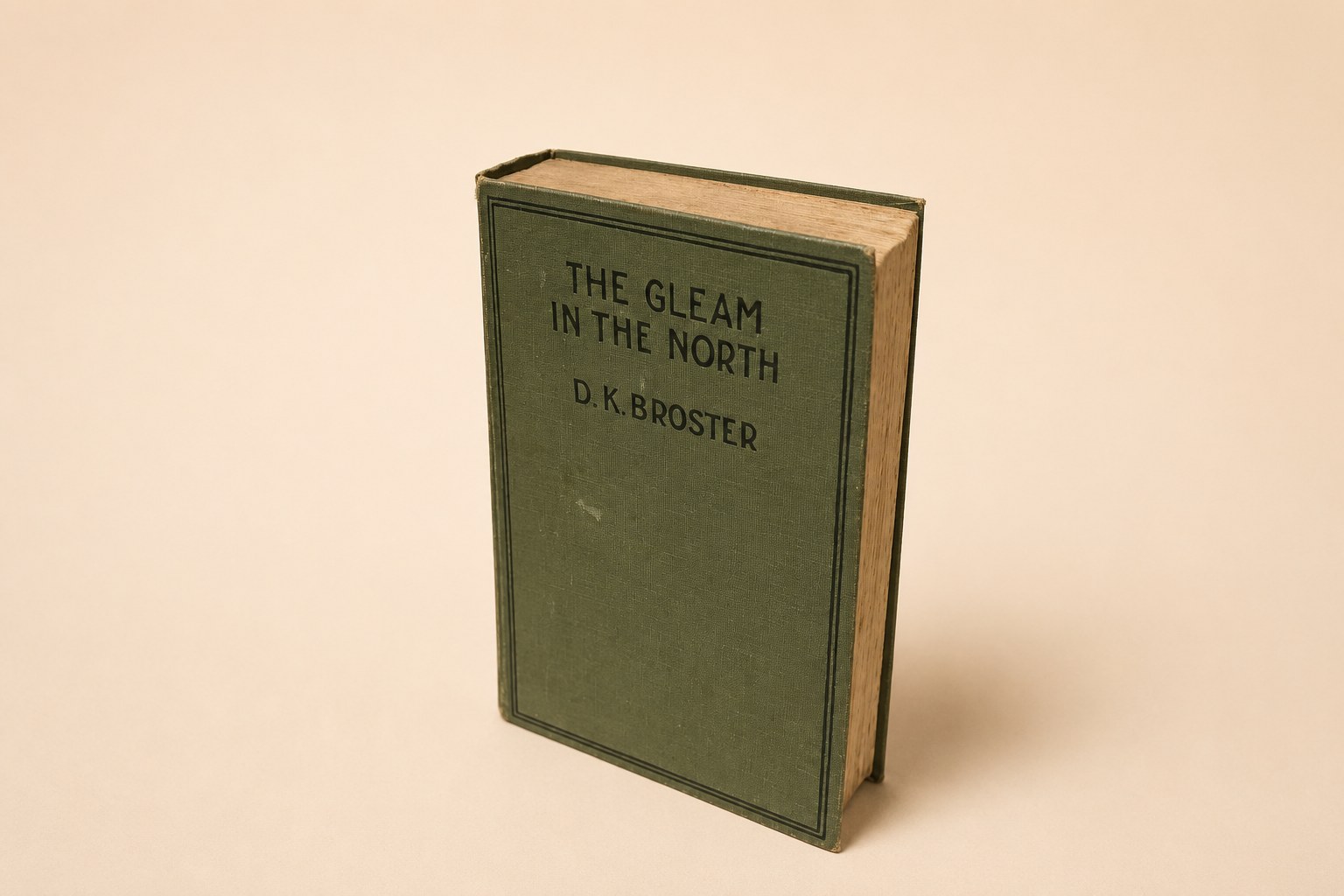
A novel that keeps a promise: its final scenes use the actual last words of Dr Archibald Cameron, the last Jacobite executed for treason. Heinemann, 1930 impression, the trilogy's fifth printing in three years.
View object →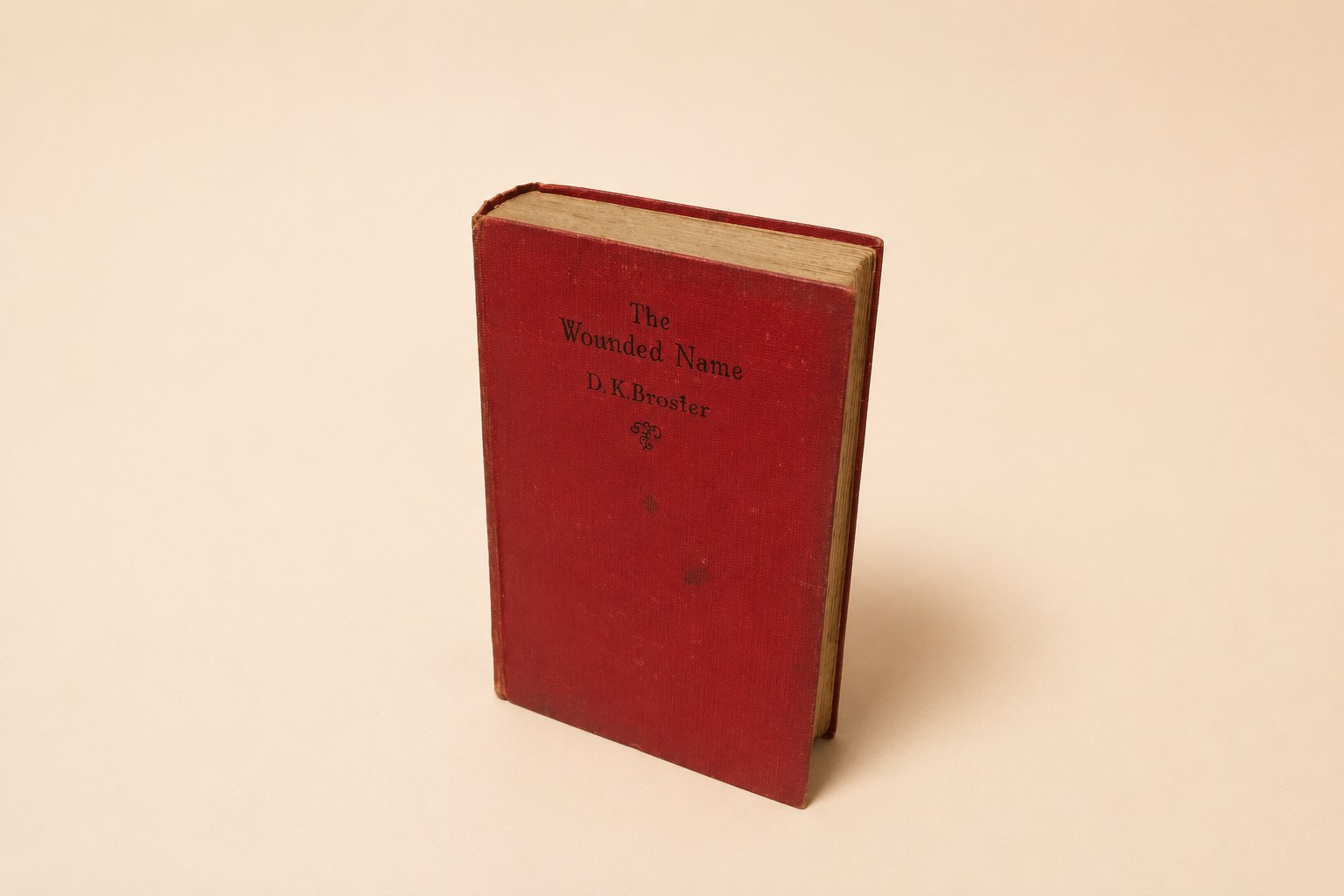
Dedicated 'to friendship' and titled from Hamlet's dying words: Broster's 1815-set novel of a hero falsely disgraced, here in two Heinemann impressions (1926–27 and 1928–29) from the Windmill Press.
View object →
So here is the question the shelf forces on you: why did interwar Britain, of all places and moments, fall in love with stories about beautiful failure? Perhaps because after 1918 victory itself had stopped feeling like victory. A generation that had buried its sons in Flanders found, in Broster's brave and loyal and defeated Highlanders, a way of thinking about sacrifice that the actual war — industrial, anonymous, senseless — had refused to give them. Defeat with dignity was a thing you could mourn cleanly. The trenches were not.
A wounded name — and a story that must be told rightly.
The pencil on the endpaper makes the argument better than any critic could. Xmas 1927. This was not a book bought to be read alone; it was a book chosen to be given, from one person to another, at the season of family and memory, in the years when Britain understood loss better than it understood anything else.
The shelf keeps one honest absence. The Gleam in the North is the middle volume of a trilogy that closes with The Dark Mile (1929), and until a sound interwar copy of that last book surfaces, the set stays one short. The collection's charter is firm on the point: the story is told with what is here, and quietly improved by what is still being hunted. A lost cause, fittingly, with one piece still lost.