Some books are furniture, made to stand on a shelf and be admired from across the room. These two were made to be carried — held in a hand, slid into a pocket, opened on a train or a park bench or at the edge of a bed each morning — and though eighty years and a whole shift in belief separate them, they solve that single problem in precisely the same way: small format, gilded edges, and a binding worth the touch of a thumb.
The elder of the pair is a prayer book. Pietas Quotidiana: Prayers and Meditations for Every Day in the Week was co-published in London around 1826–40 by Peacock & Mansfield, Bowdery & Kerby, and Charles Tilt — full dark leather, gilt borders, every single page-edge gilded, and a delicate stipple-engraved frontispiece by C. Davenport after Henry Corbould. Its title states its whole rhythm in one Latin word: Quotidiana, daily. And the gilding is not decoration. Gild the edges of a book and you seal the paper against damp, dust, and the grease of a thousand handlings — the gold is armour, the practical luxury of an object built to be opened every day for an entire lifetime and to survive it.
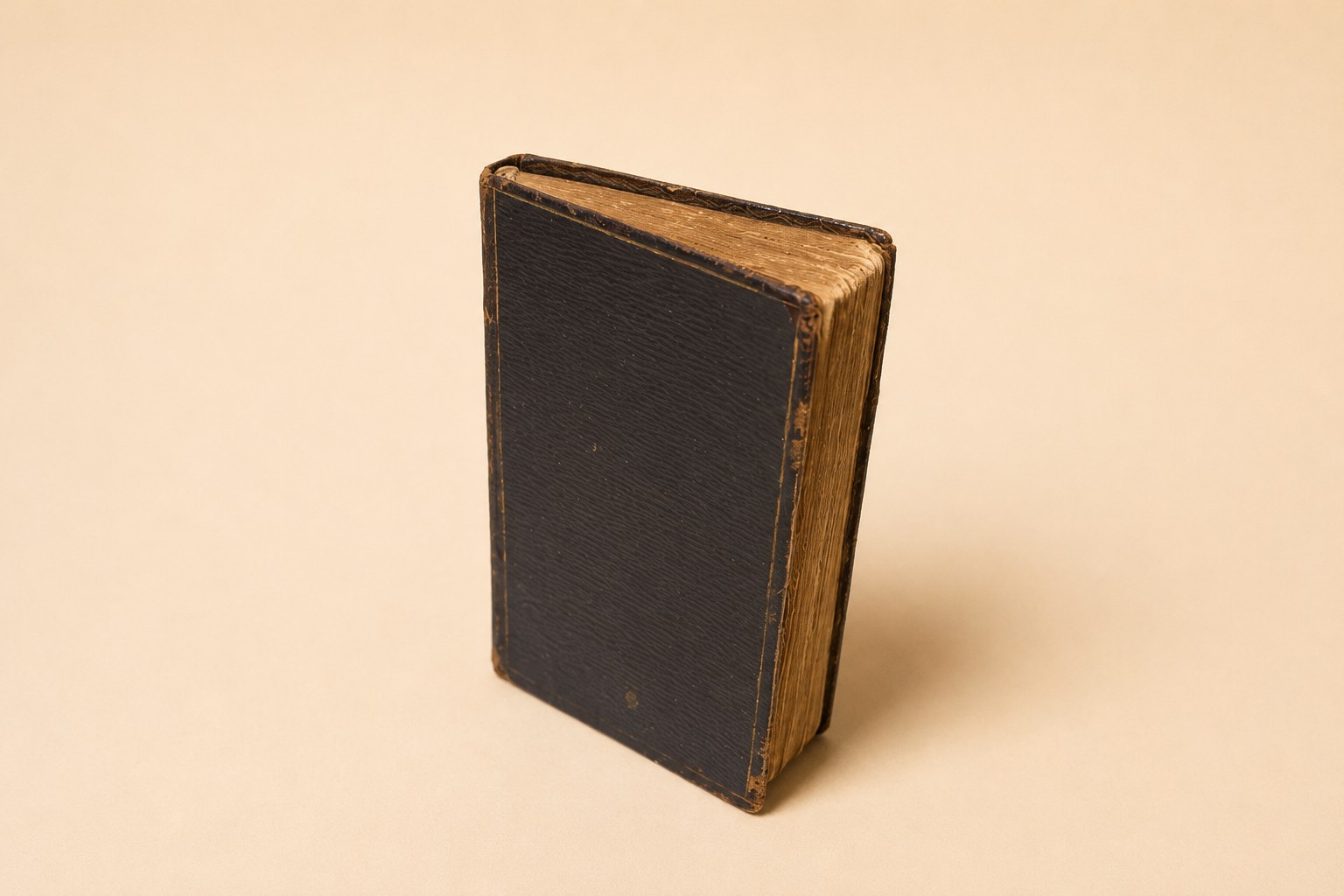
A Georgian pocket prayer book with no title on its spine and a deathbed angel for a frontispiece: daily piety in navy leather and gilt, London c.1826–1840, with a prayer by a guillotined French princess inside.
View object →
Eighty years on, Blackie & Son's Red Letter Library issued Poems by Lord Byron in exactly the same spirit and to exactly the same end: a small green cloth binding stamped with an Art Nouveau gilt design, patterned endpapers, gilt page-edges, and an introduction by Arthur Symons. Over fifty poems crammed into 279 pocket-sized pages — The Prisoner of Chillon, She Walks in Beauty, and the rest — a complete Byron sized for the coat pocket and the daily commute. On 12 February 1906, a reader named Cecile Mary Davies wrote her name inside it, and you can almost see the gesture: a new little book, claimed and pocketed.
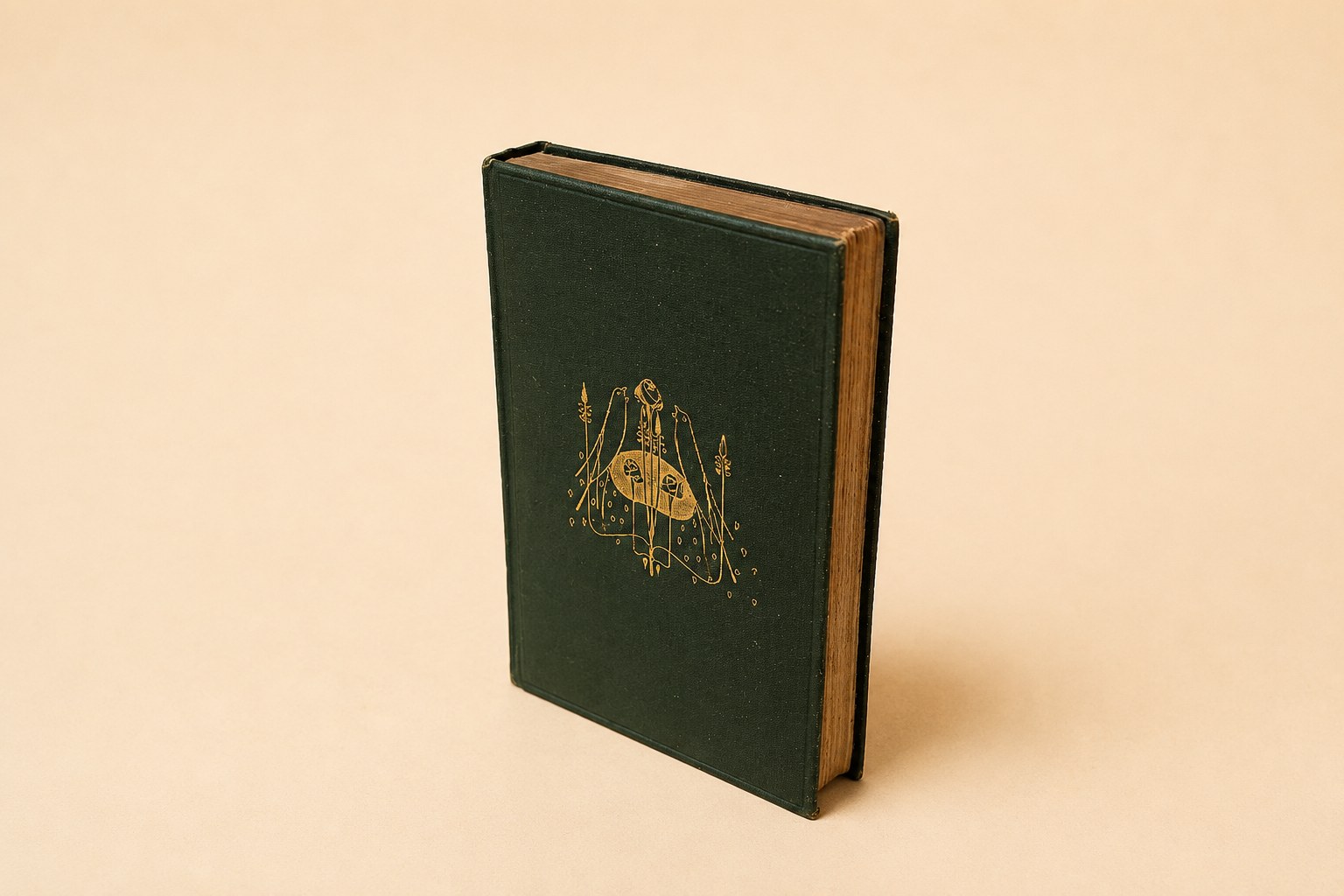
Byron in Art Nouveau gilt, introduced by the critic who brought Symbolism to England, signed in pencil by Cecile Mary Davies two days before Valentine's Day, 1906. Price: one shilling and sixpence.
View object →The things we keep closest, publishers agreed across eighty years, deserve gilt.
What changed between the two is what an English reader chose to carry for sustenance. The Georgian pocket held prayers; the Edwardian one held poems — and it is no small thing that the man entrusted to introduce Byron to that new audience was Arthur Symons, the great critic of the Decadents. By 1906 readers were seeking in literature something very like what their great-grandparents had sought in devotion: consolation, intensity, a few perfect lines to turn over on a grey morning. The altar had quietly become the bookshelf.
What did not change is the conviction — held by publishers eighty years and an ocean of theology apart — that a book meant to be opened every day ought to be beautiful, and that the things we keep closest to the body deserve to be finished in gold. Both of these little volumes are arguments, bound in leather and cloth, that daily use and genuine beauty are not opposites. They are the whole point of each other.