Here is a sentence that sounds like a riddle and is simply true: no English reader has ever read Tolstoy or Dostoevsky. What they have read is Louise and Aylmer Maude, Constance Garnett, Eva M. Martin — the translators through whom the Russians crossed into English, and whose word-choices, rhythms, and quiet decisions are the only Tolstoy and Dostoevsky the language has ever known. Every great foreign book reaches us wearing a face that someone else gave it. These four volumes hold three of those crossings.

The Maudes were not strangers to their author. They knew Tolstoy, corresponded with him, lived for a time in his orbit, and he gave their work his blessing — which is why their War and Peace remains the version carrying the author's own seal of approval. This copy is the 1943 Macmillan and Oxford University Press reprint of the 1942 edition, and its date is the whole drama of it. A novel about Napoleon's catastrophic 1812 invasion of Russia, reprinted in London in 1943, in the very months when another invader's armies were freezing to death on the same endless plains.
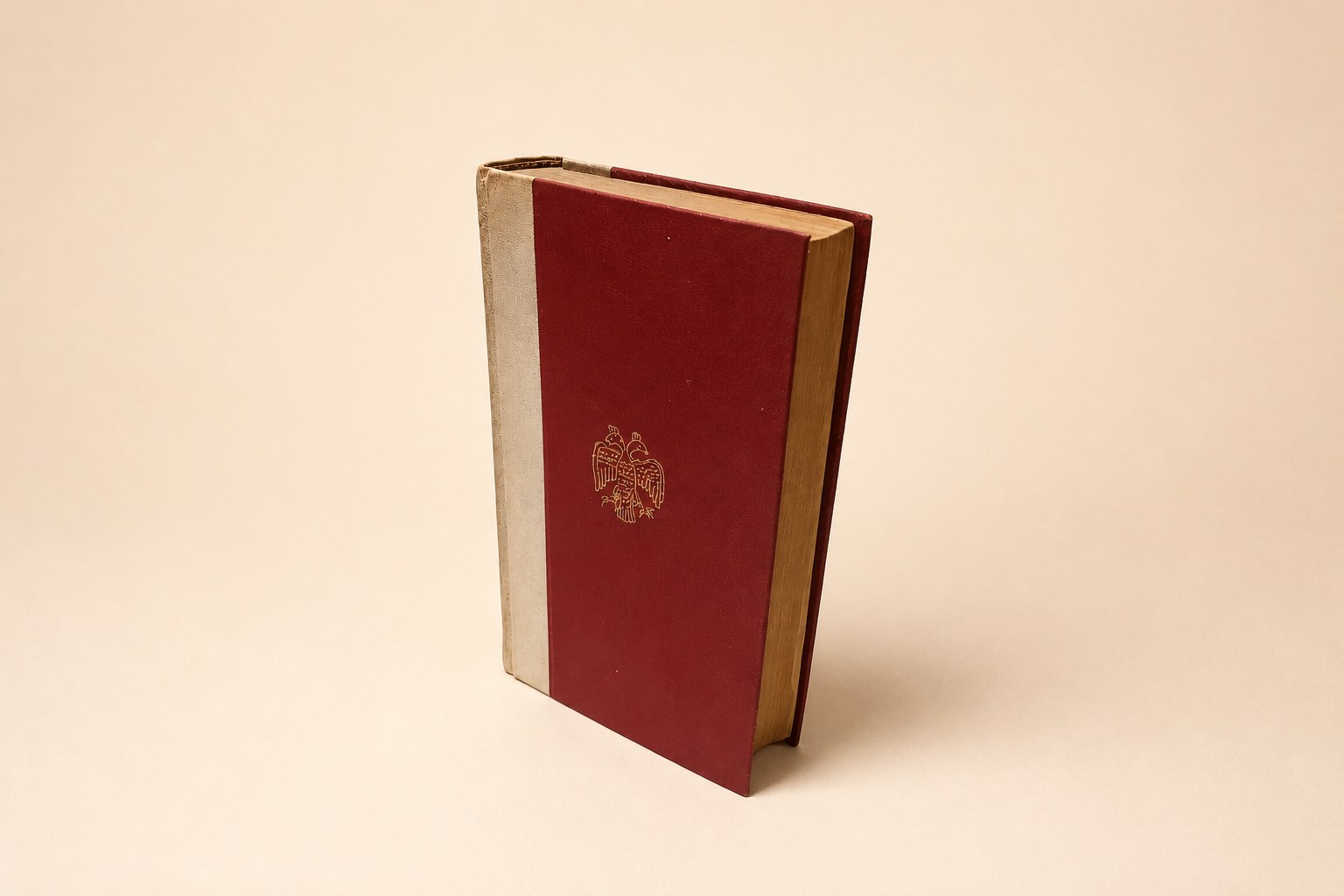
Tolstoy's epic of the 1812 invasion, printed in Britain in 1943, while history repeated itself outside Moscow. The Tolstoy-endorsed Maude translation on wartime paper, with the invasion fold-out map intact.
View object →
The book still folds out its map of the 1812 campaign, and it carries the rubber stamp of D. A. McLean, Bookseller, Belfast — a city the Luftwaffe had blitzed two years earlier. Picture the transaction: a reader in a bombed Northern Irish city, in the worst year of a world war, buying a 130-year-old Russian novel to understand the headlines. That is what a classic is for.
The Dostoevsky volumes belong to a different and gentler chapter — not war, but the democratization of the masterpiece. In 1968 Heron Books issued "The Greatest Masterpieces of Russian Literature," a uniform run of illustrated hardbacks with built-in yellow ribbon markers, sold by subscription straight into ordinary front rooms. The Idiot came in Eva M. Martin's translation. The Brothers Karamazov, in two volumes illustrated by Pietro Sarto, used Constance Garnett's — the translation that, half a century earlier, had introduced Dostoevsky to nearly the entire English-speaking world. A pencilled £1.25 on one endpaper records, with perfect candour, what a masterpiece cost.
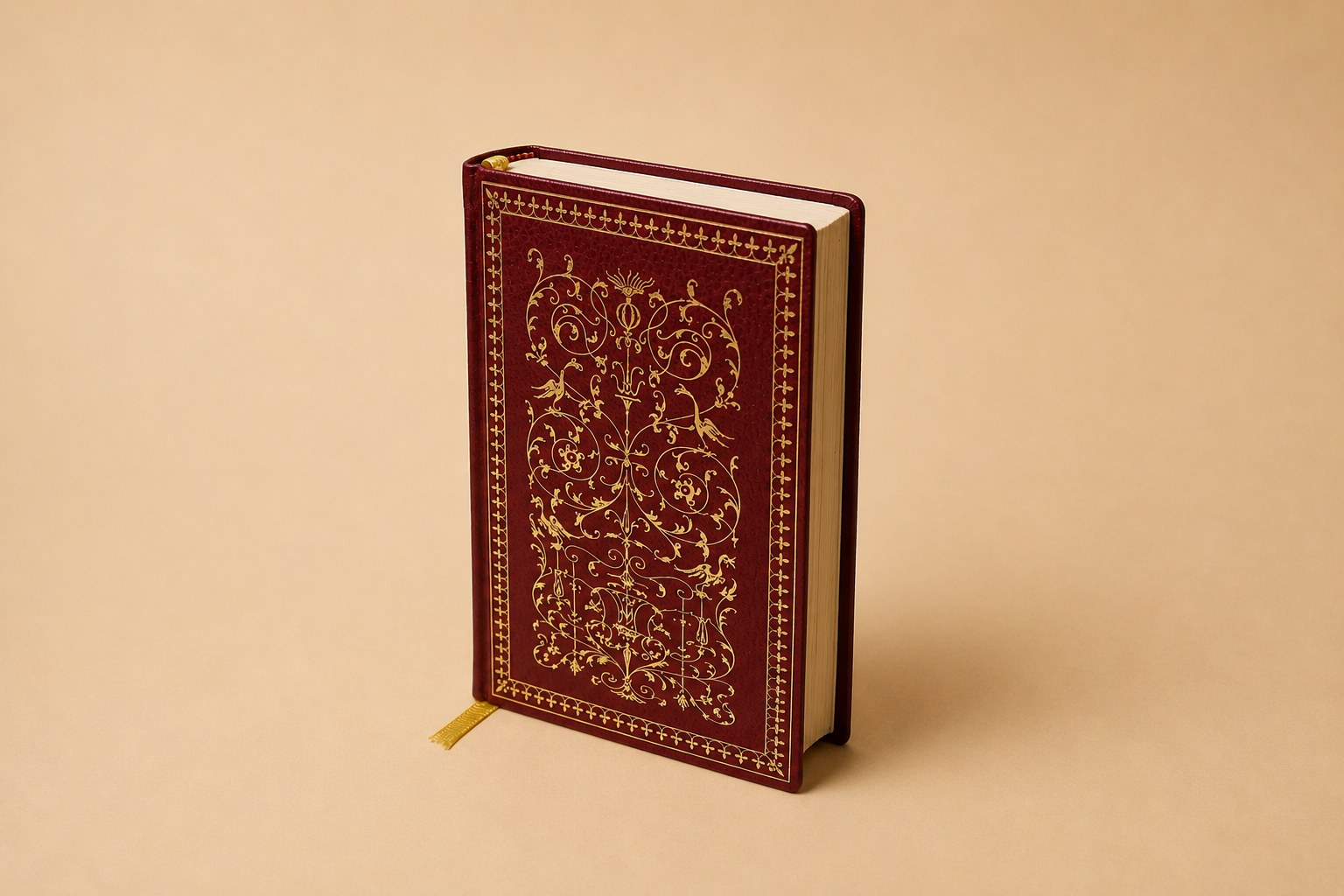
Dostoevsky's experiment in dropping a genuinely good man into society: the 1968 Heron Books gilt-and-leatherette edition, ribbon bookmark intact, spine spelled 'DOSTOEVSKI'.
View object →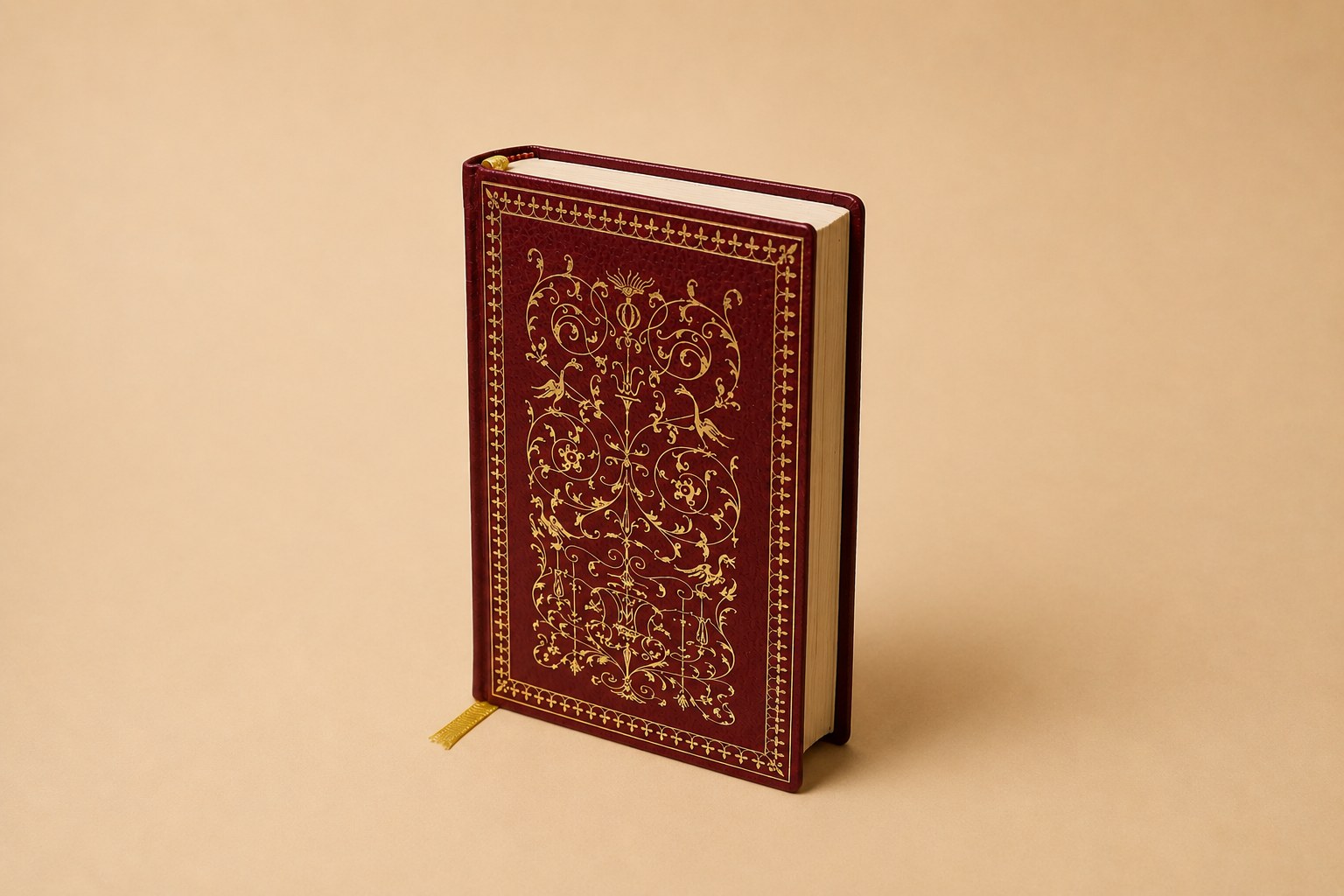
The first half of what Freud called 'the most magnificent novel ever written': Garnett's pioneering translation in the 1968 Heron gilt edition, containing the Grand Inquisitor, with an old £1.25 pencil price as a fossil of its travels.
View object →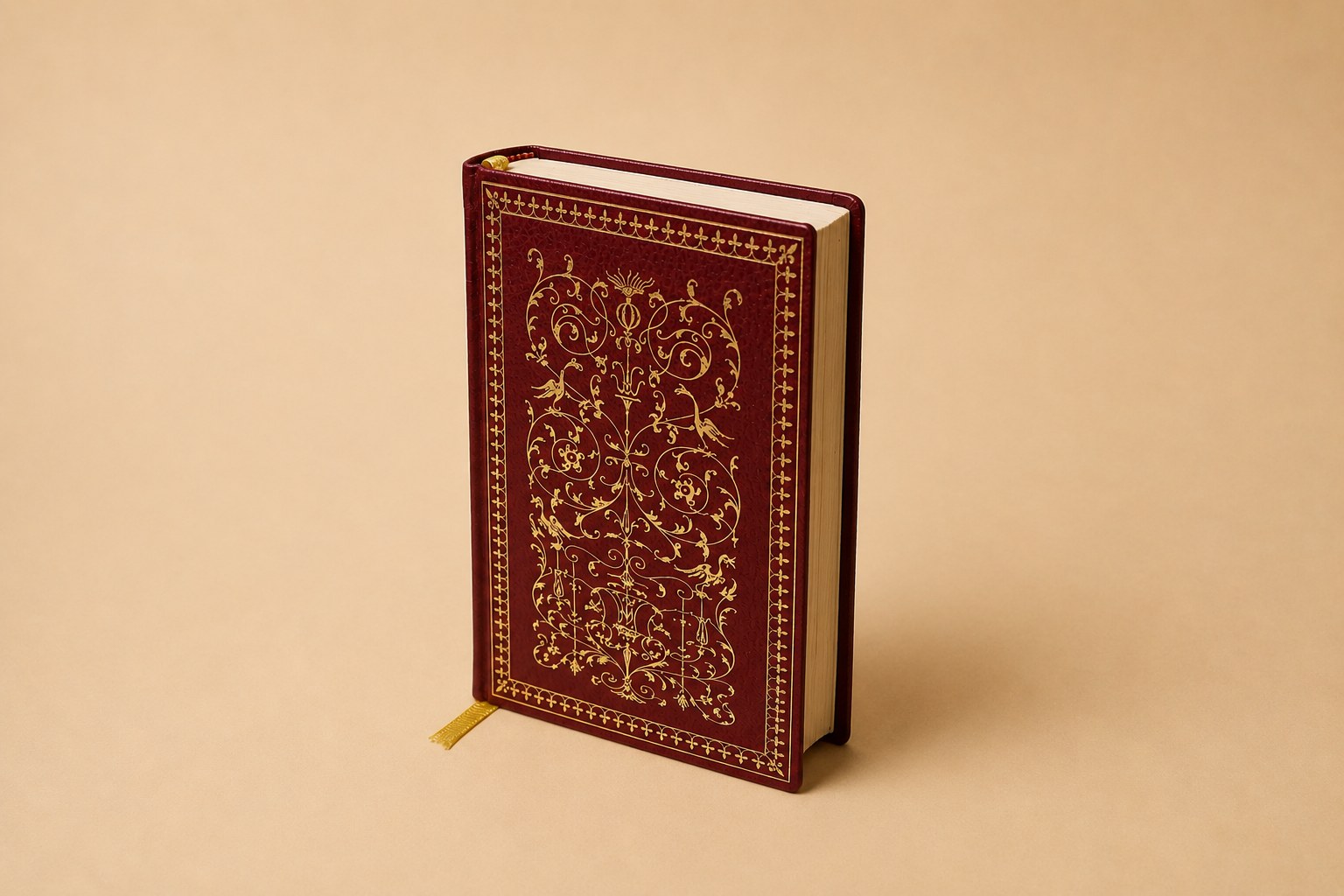
The trial, the devil, and Dostoevsky's last written word of hope: the concluding volume of his final masterpiece in the 1968 Heron gilt edition, completing the set with Volume I.
View object →
Between them these four books span the two great machines by which world literature actually reaches people. One is the authoritative edition — made with the author's blessing, defended by scholars, reprinted even through paper rationing and war. The other is the affordable series — made just handsome enough for the sitting-room shelf and just cheap enough for any sitting room at all. Both are acts of transmission; both are how a Russian sentence ends up in an English head. And the ribbon bookmark and the fold-out map agree on the only thing that finally matters: these were books built to be read, not displayed.