Opening
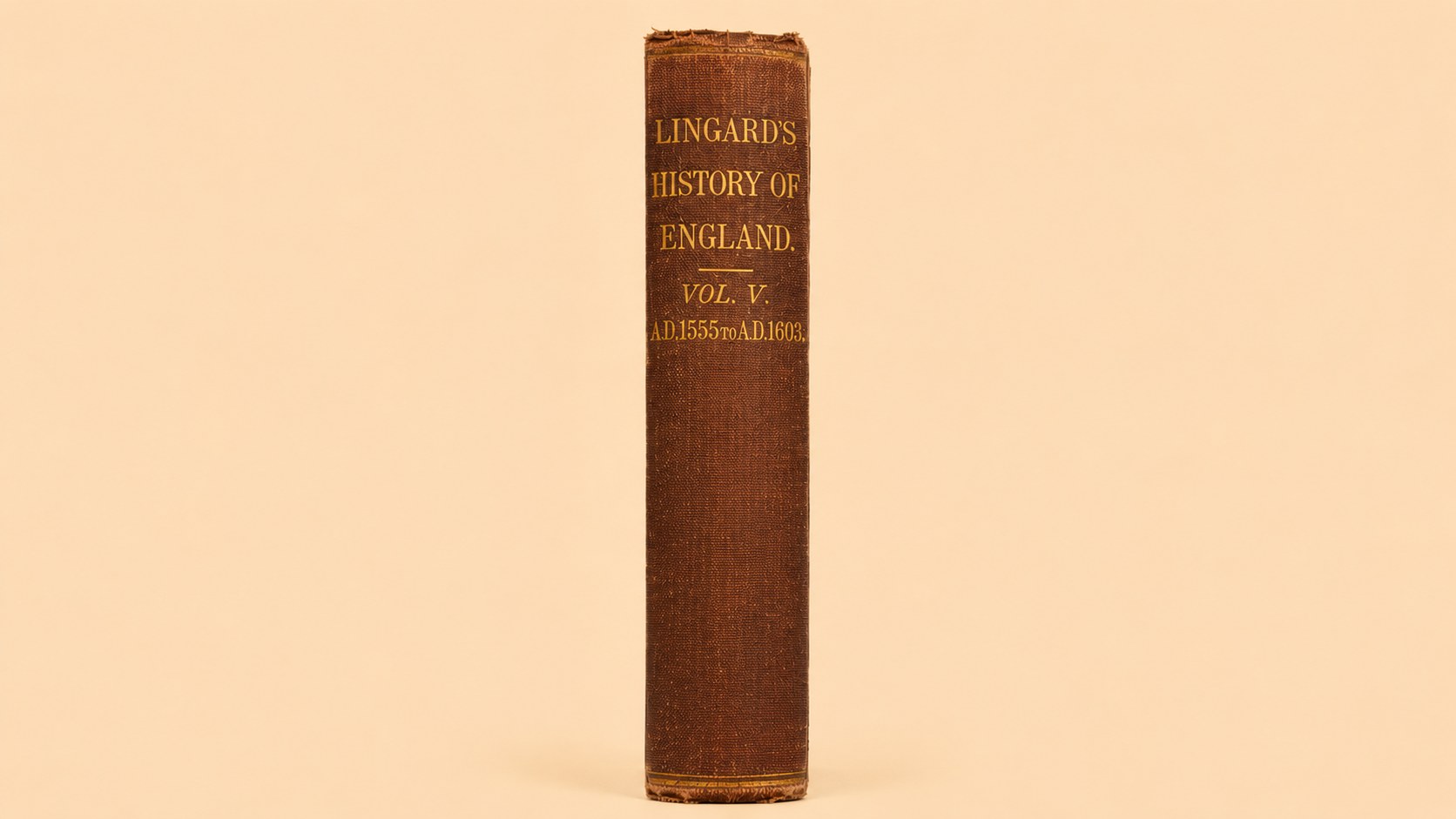
"Good Queen Bess," seen from the other side. Volume VI covers the second half of the sixteenth century, and in it Lingard mounted his most daring revision: a reign Protestant England remembered as a golden age, retold from the standpoint of the Catholics it persecuted.
The History in This Volume
The end of Mary I's reign and the burnings of Protestants later immortalised in Foxe's Book of Martyrs; the accession of Elizabeth I and the Religious Settlement of 1559; the long duel with Mary, Queen of Scots, ending on the scaffold at Fotheringhay in 1587; the war with Spain and the defeat of the Armada in 1588; the Tudor conquest of Ireland; and, threaded through the reign, the penal laws against Catholics, the seminary priests trained at Lingard's own Douai, and the executions at Tyburn of men such as Edmund Campion.
Lingard's Reading
Here Lingard did something genuinely subversive of the national myth. Where Protestant tradition set Mary's Protestant martyrs against Elizabeth's glorious deliverance, Lingard set Elizabeth's Catholic "traitors" — priests hanged, drawn and quartered for their faith — beside them, and invited the reader to weigh the two persecutions by a single measure. He did it not with invective but with the trial records and the statutes, and the coolness was the point: a Douai-trained priest documenting the killing of Douai-trained priests, letting the evidence indict the golden age. It is the most pointed revisionism in the set, and it drew the fiercest fire from Whig reviewers.
Why This Volume Matters
The reign of Elizabeth is the keystone of England's Protestant self-image, and Volume VI is Lingard's boldest challenge to it. As history, and as a document of the Catholic Emancipation era in which it was written, it shows exactly what his "impartial" method was for.
References · 8 sources ↓
- John Lingard, Wikipedia
- Elizabeth I, Wikipedia
- Elizabethan Religious Settlement, Wikipedia
- Mary, Queen of Scots, Wikipedia
- Spanish Armada, Wikipedia
- Recusancy, Wikipedia
- Edmund Campion, Wikipedia
- 'Mary's Protestant Martyrs and Elizabeth's Catholic Traitors in the Age of Catholic Emancipation', Church History (Cambridge)