

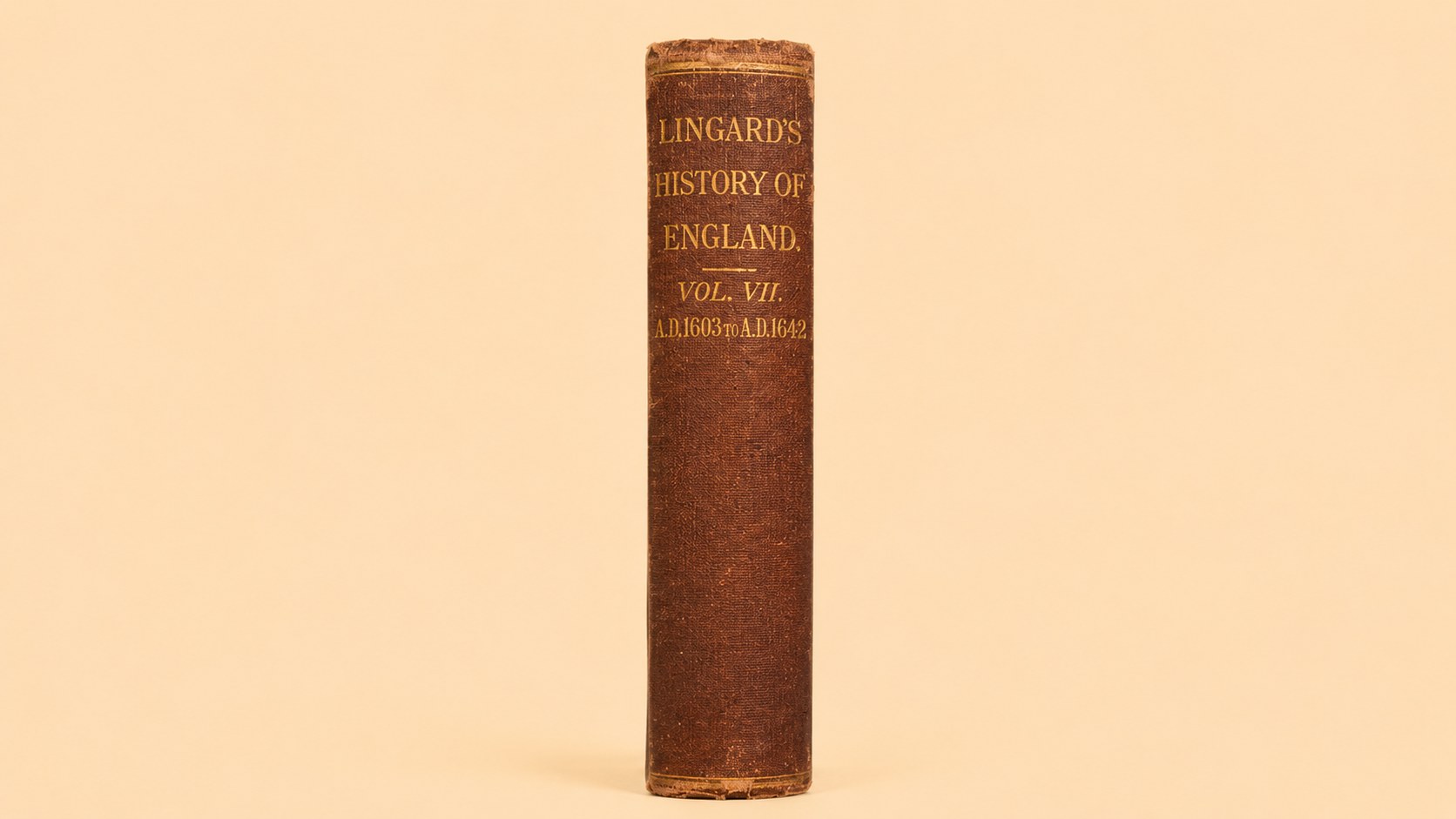
Opening
The Stuart century opens, and with it the long quarrel between king and Parliament that would end on a scaffold. Volume VII runs from the union of the crowns to the brink of civil war — and contains the episode that tested a Catholic historian's impartiality most sharply: the Gunpowder Plot.
The History in This Volume
The accession of James VI and I and the union of the English and Scottish crowns; the Gunpowder Plot of 1605 and its savage aftermath for English Catholics; the Hampton Court Conference and the Authorised "King James" Version of the Bible (1611); the rise and assassination of the Duke of Buckingham; and the reign of Charles I — the Petition of Right (1628), the eleven years of Personal Rule, Ship Money, Archbishop Laud, and the Scottish Bishops' Wars — to the eve of the Civil War in 1642.
Lingard's Reading
The Gunpowder Plot was the single hardest test in the entire History for a Catholic writer. The conspiracy was real and the conspirators were Catholic; the official version was lurid and politically useful. Lingard's response is a model of his method: he neither excuses the plotters nor swallows whole the government's account, but weighs the evidence — scrutinising the Monteagle letter and the convenient timing of its discovery — and arrives at a measured judgement that historians still take seriously. It is the clearest demonstration in the set of his governing principle: to watch "with jealousy the secret workings of my own personal feelings and prepossessions."
Why This Volume Matters
It is the volume of the King James Bible and the road to revolution, and the volume where Lingard's impartiality is under the most personal strain — a Catholic historian narrating Catholic terrorism. That he handles it with documentary coolness rather than defensiveness is among the strongest vindications of his whole approach.